
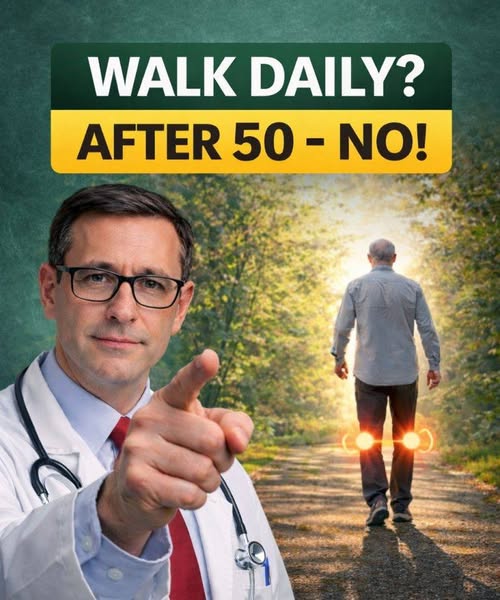
Walking is universally praised as one of the simplest, safest, and most accessible forms of exercise available. It requires no expensive equipment, can be done anywhere, and offers clear cardiovascular and mental health benefits. For decades, adults over 50 have been advised to hit a target of 10,000 steps every single day to stay fit, protect their hearts, and manage body weight.
However, recent clinical research in sports medicine, rheumatology, and orthopedic health reveals a surprising truth: daily continuous walking without rest days or functional cross-training can actually accelerate joint wear, aggravate osteoarthritis, and cause muscular imbalances in adults over 50.
As our bodies age, cartilage thins, recovery times lengthen, and muscle mass naturally declines. Relying solely on repetitive daily walking can overwork aging knees and hips while ignoring key physical requirements like resistance training, flexibility, and balance.
In this ultimate health and longevity guide, we explore why daily walking alone can backfire after age 50, detail the hidden biomechanical risks, outline a balanced fitness framework, and examine how proper movement habits protect your long-term health, independence, and personal finances.
The Hidden Problem with Daily Walking After 50
Walking is a repetitive, linear, low-impact exercise. While low-impact movement is generally gentle on the body, performing the exact same repetitive motion thousands of times a day—without adequate muscle strength to support your weight—places continuous stress on specific joint surfaces.
[ Repetitive Daily Walking ] ──> Joint Stress on Thinning Cartilage ──> Inflammation & Pain ──> Reduced Mobility
1. Cartilage Wear and Joint Compression
As we age, the protective articular cartilage lining our knee and hip joints naturally thins. Every step taken transfers impact forces up through the heels directly into the knee joint. Without rest days to allow synovial fluid nourishment and joint tissue recovery, continuous daily walking can lead to chronic joint inflammation and accelerated osteoarthritis flare-ups.
2. The Muscle Loss Trap (Sarcopenia)
Starting around age 30, adults lose approximately 3% to 8% of their muscle mass per decade, a process that accelerates significantly after age 50. Walking is an aerobic endurance activity—it does not build significant muscle strength. Relying solely on walking allows crucial muscle groups like the glutes, core, and hamstrings to weaken, leaving knee joints without adequate muscular support.
3. Neglecting Lateral Stability and Balance
Human locomotion during walking occurs entirely in a single motion plane (the sagittal plane). Walking forward does not strengthen the stabilizing lateral muscles (such as the gluteus medius) required for side-to-side stability. Over time, this creates muscular imbalances that increase the risk of accidental trips, slips, and falls.
5 Exercise Mistakes Adults Over 50 Make
To maximize physical longevity and avoid chronic pain, steer clear of these five common exercise mistakes:
1. Skipping Resistance and Strength Training
Many adults over 50 abandon weightlifting or resistance exercises out of fear of injury. However, progressive strength training is the single most effective way to stimulate bone density, preserve lean muscle mass, and stabilize painful joints.
2. Pushing Through Joint Pain
There is a major difference between mild muscular fatigue and sharp joint pain. Walking through persistent knee, hip, or lower back pain damages inflamed joint structures and forces your body to adopt compensatory limps that strain other muscle groups.
| Exercise Approach | Joint Stress | Muscle Retention | Fall Risk Reduction |
| Walking 7 Days a Week Only | High (Repetitive friction) | Low (Cardio only) | Moderate |
| Walking 3 Days + Strength 2 Days | Low (Balanced recovery) | High (Muscle building) | Very High |
| High-Impact Running Only | Extreme | Moderate | Low |
3. Ignoring Rest and Recovery Days
As human tissue ages, cellular repair processes slow down. Muscles, tendons, and ligaments require adequate recovery intervals—typically 24 to 48 hours—to repair micro-tears and build resilience after physical exertion.
4. Overlooking Core and Pelvic Stability
A weak core forces the lower back and pelvis to tilt forward during walking, placing excessive mechanical strain on the lower spine, hip flexors, and knee joints.
5. Wearing Worn-Out Walking Shoes
Walking shoes lose their shock-absorbing cushioning long before the outer soles look visibly worn. Walking thousands of steps in collapsed footwear transfers raw impact force directly into your ankle, knee, and hip joints.
The Perfect Exercise Blueprint for Adults Over 50
Instead of walking every single day without variation, physical therapists and medical professionals recommend a well-rounded weekly routine built around three core pillars: Strength, Low-Impact Cardio, and Recovery.
Pillar 1: Resistance Training (2 to 3 Days Per Week)
Incorporate bodyweight exercises, resistance bands, or light dumbbells targeting major muscle groups:
-
Squats / Chair Stands: Strengthens quadriceps and glutes to support knee joints.
-
Glute Bridges: Activates posterior chain muscles to protect the lower back.
-
Bird-Dogs / Planks: Strengthens core stabilizers for posture and balance.
Pillar 2: Varied Low-Impact Cardiovascular Movement (3 to 4 Days Per Week)
Rotate your cardio activities to avoid repetitive joint stress:
-
Walking: Limit long structured walks to 3 or 4 days a week, allowing rest days in between.
-
Swimming / Water Aerobics: Provides zero-gravity cardiovascular conditioning that takes 100% of body weight off aging joints.
-
Stationary Cycling: Strengthens leg muscles through a smooth, guided circular motion without heel-strike impact.
Pillar 3: Mobility, Flexibility, and Balance (Daily)
Spend 5 to 10 minutes every day working on gentle stretching, ankle mobility, and single-leg balance exercises to maintain joint range of motion and prevent fall injuries.
Financial and Health Benefits of Smart Movement Strategies
Adopting a balanced, joint-friendly fitness approach yields profound long-term advantages for your overall physical health, personal finance budget, and quality of life.
-
Preventing Expensive Joint Replacement Surgeries: Overworking knees through improper daily walking routines can accelerate severe joint degeneration, eventually requiring total knee or hip replacement surgeries. Avoiding major surgeries prevents thousands of dollars in out-of-pocket medical costs, co-pays, and rehabilitation expenses.
-
Maintaining Personal Independence: Preserving muscle strength and joint mobility ensures you can continue living independently, eliminating the need for assisted care services or home modifications.
-
Protecting Health & Life Insurance Rates: Regular, balanced physical activity keeps blood pressure, blood sugar, and body weight within optimal ranges, helping maintain favorable rates on life and health insurance policies.
Essential Tips for Healthy Walking
When you do go for walks, maximize benefits while protecting your joints with these practical tips:
-
Replace Walking Shoes Every 300–500 Miles: Invest in supportive athletic footwear with cushioned midsoles and ample arch support.
-
Walk on Softer Surfaces: Choose dirt trails, rubberized park tracks, or grassy paths over hard concrete sidewalks whenever possible to minimize impact force.
-
Shorten Your Stride: Avoid overstriding, which forces your heel to strike the ground far ahead of your body, creating a braking force that shocks your knee joint.
-
Maintain Upright Posture: Keep your head lifted, shoulders relaxed back, and core lightly engaged to distribute body weight evenly across your hips and legs.
Frequently Asked Questions (FAQ)
Should I stop walking entirely if I have knee osteoarthritis?
No! Walking remains a beneficial activity for managing mild arthritis when done correctly. However, instead of taking 10,000 steps daily without rest, break your walking into shorter 15-minute sessions 3 to 4 days a week, and combine it with leg-strengthening exercises.
How many steps per day should adults over 50 aim for?
Recent clinical studies indicate that health benefits—such as reduced mortality risk and cardiovascular support—peak between 6,000 and 8,000 steps per day for older adults. Forcing yourself to hit 10,000+ daily steps often causes unnecessary joint wear with diminishing health returns.
Is cycling or swimming better than walking for joint pain?
Yes. Swimming and stationary cycling are non-weight-bearing exercises that provide excellent cardiovascular workouts without compressing knee or hip joints. They are ideal alternatives on recovery days.
What should I do if my knees feel sore after walking?
Apply cold ice packs for 15 to 20 minutes to reduce localized inflammation, elevate your legs, and take 1 to 2 rest days from walking. If pain persists or causes swelling, consult an orthopedic physician or physical therapist for a professional evaluation.
Final Thoughts
Walking is a wonderful tool for maintaining physical vitality, mental clarity, and cardiovascular health. However, as we cross the threshold of 50, our exercise approach must evolve from simple repetition to intelligent balance.
By pairing moderate walking with targeted strength training, low-impact cross-training, and dedicated rest days, you can protect your joint cartilage, preserve lean muscle mass, and enjoy pain-free mobility for decades to come.
