
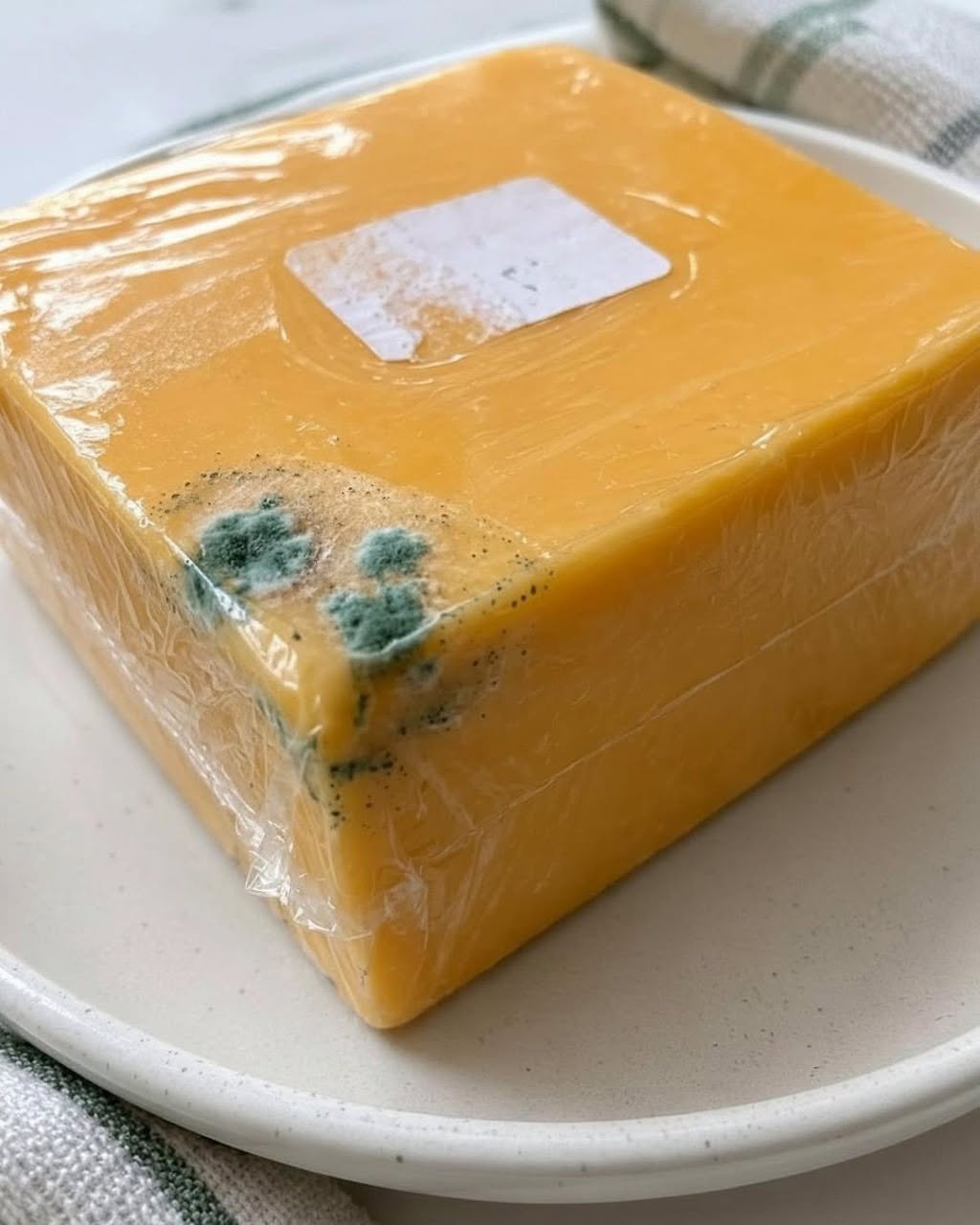
We have all experienced that disappointing moment: reaching into the refrigerator for a block of cheddar, Swiss, or parmesan, only to discover a small patch of green or blue mold blooming on one corner. With food prices rising, throwing away an entire block of cheese over a tiny spot of spoilage feels wasteful. Yet, eating spoiled food raises immediate concerns about food poisoning, harmful toxins, and gastrointestinal illness.
So, can you simply trim away the moldy section and eat the rest, or should the entire block go straight into the trash can?
The answer isn’t a simple yes or no—it depends entirely on the type and moisture content of the cheese. Food safety experts, mycologists, and agricultural authorities have clear guidelines on which cheeses can be safely salvaged by cutting away mold, and which varieties present severe health risks if consumed.
In this ultimate food safety guide, we break down the scientific “1-Inch Cut-Off Rule,” categorize hard vs. soft cheeses, explore the health risks of mold toxins, detail proper storage techniques to prevent spoilage, and discuss how smart food preservation protects your health and household budget.
The Science of Mold: Why Hard vs. Soft Cheeses Behave Differently
To understand food safety rules regarding moldy cheese, it helps to examine how mold fungi grow.
What we see on the surface—the green, white, or fuzzy blue spots—is only the fruiting body (sporangia) of the mold. Beneath the surface lies a invisible, root-like network called hyphae or mycelium that penetrates deep into the food.
[ Surface Mold Spot ] ──> Visible Fruiting Body (Green/Blue)
[ Invisible Hyphae ]  ──> Thread-like Roots Penetrating Deep Inside Food
How far these invisible roots can spread depends on the density and moisture level of the food:
1. Hard Cheeses (Low Moisture, High Density)
In hard and semi-hard cheeses like Cheddar, Swiss, Parmesan, Colby, and Gouda, the dense structure and low moisture content make it extremely difficult for mold hyphae roots to penetrate deep into the block. As long as the mold spot is localized, the roots remain confined to the outer surface layer.
2. Soft Cheeses (High Moisture, Low Density)
In soft, high-moisture cheeses like Ricotta, Cottage Cheese, Cream Cheese, Brie, Camembert, and shredded or crumbled cheeses, microscopic mold roots and accompanying bacteria spread rapidly throughout the entire container, even if you only see mold on one tiny corner.
The 1-Inch Cut-Off Rule for Hard Cheeses
If you discover mold on a block of hard or semi-hard cheese (like the block of cheddar pictured above), you do not need to discard the entire item. You can safely salvage the remaining cheese by following USDA and food safety protocols:
Step-by-Step Salvage Protocol:
-
Measure 1 Inch Beyond the Mold: Cut off at least 1 inch (2.5 cm) around and below the entire moldy spot. This safety margin ensures you remove all invisible, microscopic mold roots extending past the visible surface spot.
-
Keep the Knife Clean: Do not touch the knife blade to the mold patch while cutting. If the knife blade contacts the mold, wash it thoroughly with soap and hot water before making any further cuts to avoid cross-contaminating the clean section of cheese.
-
Re-wrap in Fresh Material: Discard the old plastic wrap or original packaging immediately. Re-wrap the clean, trimmed block of cheese in fresh parchment paper or cheese paper before returning it to the refrigerator.
Cheese Safety Guide: Discard vs. Salvage
Use this quick reference guide to determine whether to save or throw away moldy cheese in your kitchen:
| Cheese Category | Examples | Can You Cut Off Mold? | Required Action |
| Hard Cheeses | Cheddar, Parmesan, Swiss, Provolone |
YES
|
Cut 1 inch around/below mold spot & re-wrap |
| Semi-Hard Cheeses | Gouda, Edam, Monterey Jack, Colby |
YES
|
Cut 1 inch around/below mold spot & re-wrap |
| Soft Cheeses | Cream Cheese, Cottage Cheese, Ricotta |
NO
|
Discard entire container immediately
|
| Shredded / Sliced | Pre-shredded bags, sliced American |
NO
|
Discard entire bag (mold spores spread fast) |
| Soft Bloomy Rind | Brie, Camembert |
NO (If uninvited mold) |
Discard if non-traditional mold appears |
| Cultured Blue | Roquefort, Gorgonzola, Stilton | VARIES | Edible blue veins are safe; discard if uninvited green/pink mold grows |
Crucial Exception: The beneficial mold (Penicillium roqueforti or Penicillium camemberti) used to produce blue cheeses, Brie, and Camembert is intentionally cultured and completely safe to eat. However, if wild, uninvited green, black, or pink fuzzy mold appears on soft rind cheeses, discard them immediately.
The Health Hazards of Consuming Unsafe Mold
While some food molds are harmless, certain wild mold species produce toxic chemical compounds known as mycotoxins (such as aflatoxins).
Consuming food contaminated with toxic mycotoxins or harmful companion bacteria (Listeria, Salmonella, E. coli) poses serious health risks:
-
Acute Food Poisoning: Causes severe nausea, abdominal cramps, vomiting, and diarrhea.
-
Allergic Reactions & Respiratory Issues: Inhaling or ingesting mold spores can trigger severe allergic reactions, asthma attacks, or sinus congestion in sensitive individuals.
-
Long-Term Organ Strain: Chronic exposure to high levels of mycotoxins can place heavy detoxifying stress on the liver and kidneys over time.
Prioritizing proper food handling protects your physical health and helps you avoid unexpected medical emergencies, doctor visits, and out-of-pocket medical costs.
How Smart Food Storage Reduces Grocery Waste and Protects Finances
Food waste directly impacts your household finance budget. Throwing away groceries prematurely drains money, while eating spoiled food increases health risks.
[ Proper Cheese Storage ] ──> Prevents Mold Growth ──> Zero Food Waste ──> Lower Grocery Bills
3 Storage Rules to Prevent Cheese Mold:
-
Ditch Tight Plastic Wrap: Wrapping cheese tightly in non-breathable plastic film traps moisture and condensation against the surface, creating an ideal breeding ground for mold growth.
-
Use Breathable Cheese Paper or Parchment: Wrap hard cheeses in porous parchment paper or specialized wax-lined cheese paper, then place loosely inside a reusable plastic container. This allows the cheese to “breathe” while maintaining humidity without surface moisture accumulation.
-
Store in the Vegetable Crisper Drawer: Place wrapped cheese inside your refrigerator’s humidity-controlled vegetable or dairy drawer, where temperatures remain steady (35°F to 40°F) away from cold air blasts near the back wall.
Frequently Asked Questions (FAQ)
Can you freeze cheese to prevent it from going moldy?
Yes! Hard and semi-hard cheeses like Cheddar, Mozzarella, and Swiss freeze remarkably well. Freeze whole blocks or shredded portions in airtight freezer bags for up to 6 months. Note that freezing alters the texture slightly, making the cheese crumbly when thawed, which makes it ideal for cooking, melting, and baking rather than raw slicing.
What should I do if I accidentally ate a small spot of mold on hard cheese?
In most cases, ingesting a tiny spot of common bread or cheese mold will not cause harm if you have a healthy immune system. Your stomach acid destroys most fungal spores. Drink plenty of water and monitor how you feel. If you experience persistent stomach pain, nausea, or fever, consult a healthcare professional.
Why does pre-shredded cheese go moldy so fast after opening?
Pre-shredded cheese bags contain a high surface area exposed to oxygen and moisture. Every time you reach your hand into the bag, you introduce microscopic mold spores and bacteria from your skin. To extend shelf life, use a clean utensil to scoop out shredded cheese rather than your fingers.
Is white powder on hard cheese mold?
Not always. White spots on aged cheeses like Parmesan, sharp Cheddar, or Gruyère are often harmless calcium lactate crystals or amino acid (tyrosine) deposits formed during natural aging. These crystals are completely safe to eat and add a desirable crunchy texture to aged cheese.
Final Thoughts
You don’t always need to throw away a block of hard cheese just because a spot of mold appears on the surface. By applying the simple 1-Inch Cut-Off Rule, you can safely remove surface mold while keeping the rest of the block completely safe to eat.
However, when dealing with soft cheeses, shredded bags, or cream cheese, always err on the side of caution and throw them away immediately[cite: 13]. Understanding these simple food safety guidelines keeps your family healthy, eliminates unnecessary food waste, and protects your weekly grocery budget!
