
Understanding your unique body composition is fundamental to optimizing your fitness, diet, and overall long-term wellness. While weight and body mass index (BMI) offer general health snapshots, they fail to account for bone density, frame size, or metabolic tendencies. This is where somatotypes—a classification system dividing human physiques into ectomorphs, mesomorphs, and endomorphs—play a powerful role.
One of the oldest, simplest, and most popular physical indicators used to estimate frame size and somatotype is the Wrist Test. By wrapping your thumb and middle finger around the smallest part of your opposite wrist, you can gain immediate insight into your underlying bone structure, metabolic profile, and ideal lifestyle strategy.
How to Perform the Wrist Test
The wrist test is a quick physical measurement of wrist circumference relative to hand size. Because the wrist joint features minimal muscle and fat tissue, its bone structure provides an accurate proxy for overall skeletal frame size.
Step-by-Step Instructions
-
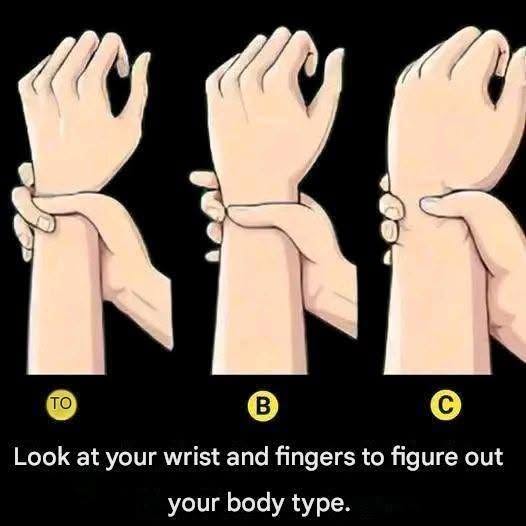
Take your dominant hand and wrap your thumb and middle finger around your non-dominant wrist, right where your wrist creases.
-
Observe how your thumb and middle finger meet:
-
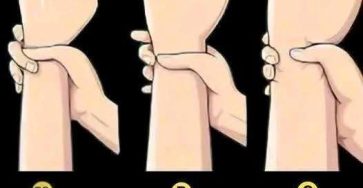
Result A (Ectomorph / Small Frame): Your thumb and middle finger easily overlap with room to spare.
-
Result B (Mesomorph / Medium Frame): Your thumb and middle finger touch gently, barely touching edge to edge.
-
Result C (Endomorph / Large Frame): Your thumb and middle finger do not touch at all, leaving a distinct gap between them.
-
The Three Somatotypes: Features, Metabolism, and Traits
Understanding which category your wrist measurement aligns with allows you to tailor your nutrition and physical activity to work with your genetic baseline rather than against it.
+-------------------------------------------------------------------------------+
|                        SOMATOTYPE CHARACTERISTICS MATRIX                      |
+--------------------------+-----------------------+----------------------------+
| FEATURE                  | ECTOMORPH (TYPE A)    | MESOMORPH (TYPE B)         |
+--------------------------+-----------------------+----------------------------+
| Wrist Test Result        | Fingers Overlap       | Fingers Touch              |
| Skeletal Frame           | Small, delicate, thin | Medium, athletic, muscular |
| Fasting Metabolism       | Extremely fast        | Moderate / Efficient       |
| Primary Fitness Goal     | Muscle hyper-growth   | Athletic performance       |
| Weight Gain Tendency     | Difficult to gain mass| Gains muscle/fat easily    |
+--------------------------+-----------------------+----------------------------+
| ENDOMORPH (TYPE C)       | Fingers Do Not Touch  | Large, broad, heavy-boned  |
+--------------------------+-----------------------+----------------------------+
1. Type A: The Ectomorph (Fingers Overlap)
Ectomorphs typically possess lighter bone structures, narrow shoulders, longer limbs, and fast metabolic rates.
-
Metabolic Profile: Ectomorphs process carbohydrates rapidly and burn calories efficiently even at rest. They often struggle to put on weight or build lean muscle mass (frequently called “hardgainers”).
-
Optimal Diet & Exercise: Focus on higher-calorie intake with balanced complex carbohydrates, healthy fats, and adequate protein. Resistance training with heavy weights and lower reps works far better than excessive high-intensity cardio.
2. Type B: The Mesomorph (Fingers Touch)
Mesomorphs represent a naturally athletic frame with medium bone density, broad shoulders, and a balanced waist-to-hip ratio.
-
Metabolic Profile: Their metabolic engine is highly responsive. They gain strength, build lean muscle, and shed body fat with relative ease compared to other body types.
-
Optimal Diet & Exercise: Balanced macro ratios—combining lean protein sources, complex carbs, and essential fatty acids—support athletic demands. A mix of progressive resistance training and high-intensity interval training (HIIT) produces peak physical condition.
3. Type C: The Endomorph (Fingers Do Not Touch)
Endomorphs carry a naturally larger bone structure with wider hips, broader ribcages, and a sturdier overall frame.
-
Metabolic Profile: Endomorphs possess a slower, highly storage-efficient metabolism. While they excel at building raw physical strength and muscle mass, their bodies tend to store excess energy as body fat more easily.
-
Optimal Diet & Exercise: Endomorphs benefit from lower-carbohydrate, higher-protein, and moderate-fat nutrition strategies. Combining consistent daily aerobic exercise with targeted strength training helps maintain optimal lean body composition.
Financial, Health, and Insurance Benefits of Knowing Your Body Type
Tailoring your lifestyle to your natural somatotype yields massive financial and long-term health advantages, reducing medical expenses and supporting overall health management.
Tailoring Preventative Health and Medical Care
Different somatotypes are naturally predisposed to distinct physiological patterns. For example, endomorphs must monitor cardiovascular metrics and blood sugar levels closely to prevent metabolic conditions, whereas ectomorphs may need to prioritize bone mineral density screenings to prevent osteoporosis later in life. Understanding these tendencies reduces long-term medical intervention costs, doctor copays, and prescription drug expenses.
Optimizing Health Insurance and Fitness Investments
Investing blindly in generic diet trends, unproven weight loss pills, or inappropriate fitness gear often wastes thousands of dollars over a lifetime. Recognizing your genetic body type allows you to invest smartly in targeted nutrition coaching, personal training programs, and health insurance plans that emphasize tailored preventative care.
Practical Fitness and Lifestyle Strategies for Each Type
-
Track Your Personal Progress: Use body composition scans (such as DEXA scans or bioelectrical impedance scale readings) rather than relying solely on bathroom scales, which ignore muscle-to-fat ratios.
-
Adjust Caloric Intake to Your Frame: Ectomorphs need a sustained caloric surplus to build mass, while endomorphs benefit from modest caloric deficits combined with high daily physical activity.
-
Prioritize Sleep and Recovery: Regardless of body type, cortisol spikes from chronic sleep deprivation slow down metabolic efficiency, trigger systemic inflammation, and disrupt muscle recovery.
-
Combine Resistance and Cardiovascular Work: Every body type benefits from strength training to protect joint integrity and support bone density into senior age.
Fascinating Facts About Somatotypes
-
Originated in the 1940s: The somatotype system was developed by American psychologist Dr. William H. Sheldon in the 1940s to classify human physical builds.
-
Most People Are Combination Types: Pure ectomorphs, mesomorphs, or endomorphs are rare; most individuals exhibit hybrid combinations, such as an ecto-mesomorph or endo-mesomorph build.
-
Bone Density Variations: Human skeleton weight can vary considerably among individuals of identical heights, accounting for noticeable differences in wrist circumference and frame strength.
Conclusion
The wrist test provides a fun, instant glimpse into your baseline skeletal frame size and somatotype. Whether your fingers overlap easily, touch edge to edge, or leave a gap, understanding your unique physical foundation empowers you to choose the best nutrition, strength training, and lifestyle habits for your body, ensuring maximum health and long-term vitality.
Frequently Asked Questions (FAQ)
Is the wrist test completely accurate for determining body type?
The wrist test provides a quick, reliable estimation of skeletal frame size. However, because somatotypes exist on a spectrum, consulting a fitness professional or undergoing formal body composition testing provides a more detailed breakdown of your body fat percentage and muscle distribution.
Can your somatotype change over time?
Your underlying skeletal frame size (bone structure) remains constant once you reach adulthood. However, through targeted strength training, cardiovascular conditioning, and strategic nutrition, you can significantly alter your muscle mass and body fat levels, transforming your overall physical composition.
Why do ectomorphs struggle to gain weight?
Ectomorphs typically have higher resting metabolic rates, higher sympathetic nervous system activity, and a lower natural tendency to store unburned calories as body fat, requiring a higher daily intake of nutrient-dense calories to build muscle mass.
Which body type is best for athletic performance?
No single body type is inherently superior; each excels in different physical domains. Ectomorphs often dominate long-distance endurance sports, mesomorphs excel in sprinting and power sports, and endomorphs frequently lead in heavy weightlifting and strength athletics.
