
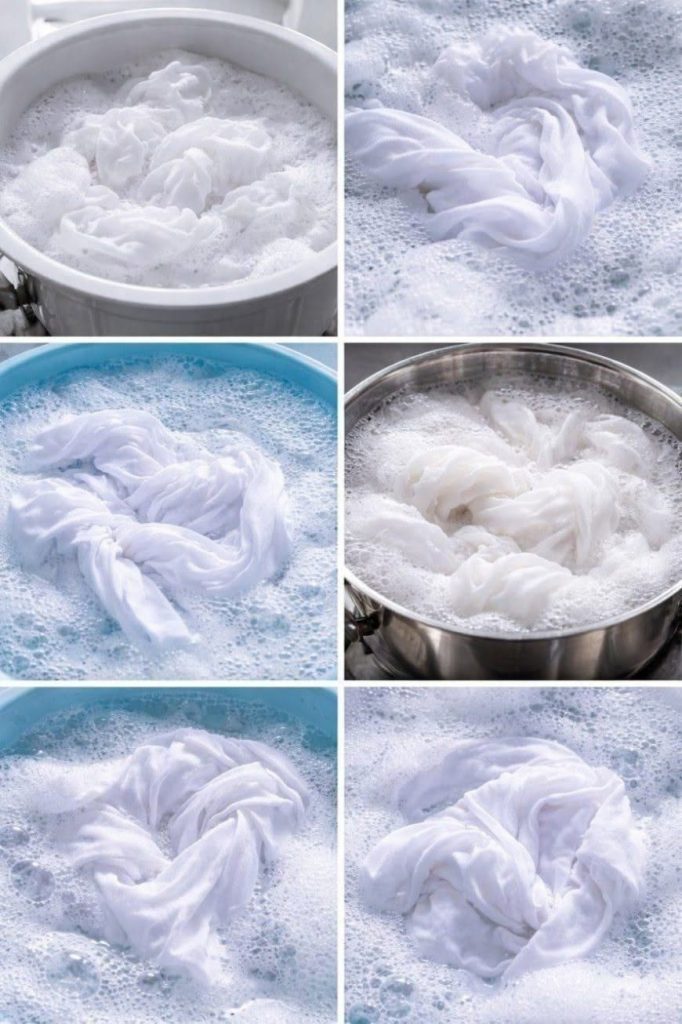
Keeping white clothes, bed sheets, and bath towels bright, crisp, and brilliant is one of the most persistent challenges in household cleaning. Over time, pure white fabrics naturally lose their crisp luster, developing unsightly yellowing, dull grey undertones, or stubborn dingy spots.
While many people immediately reach for harsh liquid chlorine bleach, relying on heavy chemicals can weaken delicate cotton fibers, corrode synthetic blends, and ironically cause white fabrics to turn yellow over time due to chemical oxidation. When you look at a pot or tub filled with soaking, soapy white laundry, you are seeing the foundation of safe, eco-friendly fabric whitening. In this comprehensive guide, we explore the science behind laundry discoloration, detail step-by-step methods for restoring dingy whites using safe household staples, provide practical care tips, discuss household laundry budgeting, and examine commercial textile management standards.
The Science of Laundry Discoloration: Why White Clothes Turn Grey or Yellow
Understanding why bright white fabrics lose their brilliant luster helps you choose the right cleaning method to reverse the damage without harming garment fibers.
1. Hard Water Mineral Deposits
Tap water containing high levels of dissolved calcium, magnesium, and iron minerals reacts negatively with standard laundry detergents. These minerals bond to fabric threads, trapping dirt particles and creating a dull grey or yellowish tint across the garment over successive wash cycles.
2. Detergent and Fabric Softener Residue Build-Up
Using too much laundry detergent or commercial liquid fabric softener creates a microscopic film over cotton fibers. This sticky chemical coating traps body oils, sweat lipids, and dead skin cells, causing white collared shirts, undershirts, and sock heel zones to turn dingy and discolored.
3. Body Oils and Sweat Oxidation
Perspiration contains protein compounds, salt, and sebum oils. When stored in laundry hampers, these organic compounds oxidize, creating yellow underarm stains and discolored collar bands.
4. Overuse of Chlorine Bleach
Chlorine bleach ($\text{sodium hypochlorite}$) reacts negatively with polyester blends, animal fibers (like wool or silk), and resin finishes applied to cotton. Excessive chlorine bleach strips away optical brighteners and oxidizes trace iron in tap water, turning white fabric yellow.
4 Safe, Proven Methods to Restore Bright White Laundry
Restoring brilliant whites does not require expensive commercial stain removers or harsh chemicals. These safe, highly effective soaking and washing methods utilize accessible household staples:
Method 1: The Boiling Pot Whitening Method (Stovetop Soak)
Boiling white cottons on the stovetop in a large stainless steel pot is an age-old method for lifting deep-set oils and stubborn discoloration.
-
Fill a Stainless Steel Pot: Fill a large non-reactive pot 3/4 full with fresh water.
-
Add Whitening Ingredients: Stir in 1/2 cup of baking soda (sodium bicarbonate) or washing soda (sodium carbonate) plus 2 tablespoons of liquid dish soap.
-
Bring to a Gentle Simmer: Place white cotton garments into the pot, ensuring they are completely submerged. Heat the pot until water reaches a gentle simmer over medium heat.
-
Simmer and Stir: Allow the white clothes to simmer for 15 to 20 minutes, stirring occasionally with a wooden spoon.
-
Rinse Thoroughly: Carefully pour off the hot water, transfer clothes to a basin of cold water, rinse thoroughly, and wash in your regular laundry cycle.
Method 2: The Oxygen Bleach (Sodium Percarbonate) Deep Soak
Oxygen bleach is a safe, color-safe alternative to chlorine bleach. When dissolved in warm water, it breaks down into sodium carbonate and hydrogen peroxide, lifting stains without degrading fabric integrity.
-
Mix 2 scoops of oxygen bleach powder into a basin of hot water ($120^\circ\text{F} / 49^\circ\text{C}$).
-
Submerge white garments completely and allow them to soak for 6 to 8 hours (or overnight).
-
Wash in your standard washing machine cycle using a regular detergent.
Method 3: The Distilled White Vinegar and Baking Soda Rinse
White vinegar acts as a natural water softener and acid neutralizer that strips away soapy residue.
-
Add 1/2 cup of baking soda directly to the washing machine drum along with your regular powder detergent.
-
Add 1 cup of distilled white vinegar into the fabric softener dispenser drawer during the final rinse cycle.
-
The vinegar dissolves mineral deposits and detergent film, leaving white fabrics soft, fresh, and bright.
Method 4: Natural Solar Bleaching (UV Sun Drying)
Ultraviolet (UV) rays from natural sunlight act as a natural, chemical-free bleaching agent. After washing, hang damp white garments outside on a clothesline in direct sunlight. Sunlight breaks down organic pigment bonds, naturally bleaching yellowed cotton and destroying odor-causing bacteria.
Step-by-Step Guide for Treating Specific Stains on White Garments
Different stains require targeted pre-treatments before embarking on a full whitening soak:
| Stain Type | Recommended Pre-Treatment Solution | Application Step |
| Yellow Underarm Stains |
Hydrogen Peroxide (3%) + Baking Soda + Dish Soap |
Mix into a paste, scrub into underarms with an old toothbrush, and sit for 30 mins before washing. |
| Collar Ring Dirt | Pure Liquid Dish Soap or Enzyme Stain Spray | Apply directly onto dry collar bands, rub fabric together, and let sit for 15 mins. |
| Coffee, Tea, or Wine |
Cold Water + Oxygen Bleach Powder |
Flush stain immediately with cold water from behind, then soak in oxygen bleach solution. |
| Mud or Clay | Let Dry Completely $\rightarrow$ Brush Off $\rightarrow$ Enzyme Liquid | Allow mud to dry fully before brushing off surface solids; pre-treat with liquid detergent. |
Practical Daily Tips to Prevent White Clothes from Turning Yellow
-
Sort Laundry Meticulously: Never wash bright white items with darks or light pastels. Dye transfer—even from light grey or khaki items—accumulates over time, turning whites dull.
-
Wash Whites in Warm to Hot Water: Check garment care labels. Washing whites in the warmest safe temperature helps activate detergent enzymes and dissolve body sebum.
-
Do Not Overload the Machine: Overloading prevents clothes from tumbling freely, leaving dirty wash water trapped in dense fabric fibers.
-
Use Water Softener in Hard Water Areas: If your home has hard water, add a water-softening booster (such as borax or washing soda) to every wash load to neutralize dissolved minerals.
Financial Efficiency and Household Budget Management
Maintaining linens and white wardrobe staples efficiently offers significant financial advantages for household management.
Extending Garment Lifespan and Reducing Household Replacement Costs
Replacing dingy white dress shirts, bed sheets, and bath towels every few months adds unnecessary expense to family budgets. Using low-cost, natural whitening remedies like baking soda, vinegar, and oxygen bleach extends fabric life significantly, keeping clothes crisp for years.
Strategic Capital Allocation for Family Finances
Minimizing spending on retail replacement clothing frees up disposable household capital. Reallocating small, consistent household savings toward high-yield savings accounts, emergency reserves, debt reduction, or retirement investments strengthens long-term financial security.
Fascinating Historical Facts About Laundry and Whitening
-
Ancient Rome’s Fullers: In ancient Rome, professional laundry workers known as fullers used aged fermented urine (rich in natural ammonia) as a primary chemical cleaning agent to bleach and cleanse white wool tunics!
-
The Invention of Bluing Agent: In the 19th century, households used a synthetic blue powder called “laundry bluing” (Prussian blue). Adding a tiny drop of blue dye to white wash water created a subtle optical illusion, making yellowed cotton look stark white to the human eye.
-
Sun Bleaching Fields: Before modern chemical manufacturing, European textile producers laid miles of freshly woven linen fabric across grassy open fields—known as “bleachfields”—for months at a time to be naturally whitened by dew and sunlight.
-
The Power of Enzymes: Modern laundry detergents contain bio-engineered enzymes (such as lipases and proteases) specifically designed to break down body oil fats and protein stains at lower water temperatures.
Business, Commercial Laundries, and Regulatory Standards
For commercial hotels, healthcare facilities, and dry-cleaning enterprises, managing large volumes of white linens involves strict operational standards and legal compliance:
Commercial Linen Management
Hospitality giants and medical centers rely on industrial tunnel washers, ozone laundering systems, and computerized dosing of peracetic acid to sanitize and whiten hundreds of pounds of sheets per hour while minimizing fabric wear and water usage.
Regulatory Disclaimers and Business Protection
Commercial dry-cleaning and laundry facilities must comply with environmental standards regulated by the Environmental Protection Agency (EPA) regarding chemical disposal. Small business owners operating laundromats or dry-cleaning services should consult an experienced business attorney to establish clear liability waivers, obtain commercial general liability insurance, and comply with consumer protection regulations.
Conclusion
Keeping your white clothes, towels, and sheets bright and brilliant does not require harsh chlorine bleach or expensive store-bought chemical sprays. By using safe, effective methods like baking soda soaks, oxygen bleach, distilled white vinegar, and natural solar drying, you can easily restore discolored white fabrics and keep them looking fresh and new. Incorporate these easy laundry hacks into your home routine to enjoy crisp, brilliant white clothes while extending fabric lifespan and saving money!
Frequently Asked Questions (FAQ)
1. Why does chlorine bleach turn some white clothes yellow?
Chlorine bleach reacts chemically with synthetic fibers (like polyester or spandex), stripping away optical brighteners and exposing the naturally yellow core of synthetic threads. It also oxidizes iron minerals in hard water, depositing rust tints on fabric.
2. Can you boil white clothes made of synthetic fabrics?
No. High boiling temperatures should only be used on 100% natural cotton or linen garments. Boiling synthetic fabrics like polyester, nylon, or spandex can melt synthetic fibers, cause shrinkage, or warp garment shapes.
3. How often should I use oxygen bleach on my white laundry?
Oxygen bleach is gentle and color-safe, making it suitable for use every time you wash a load of white clothes to maintain brightness and prevent dinginess.
4. Is baking soda or washing soda better for whitening laundry?
Both are excellent, but washing soda ($\text{sodium carbonate}$) has a higher pH ($\sim 11$) than baking soda ($\text{pH} \sim 8.3$), making it slightly more powerful at breaking down heavy grease, oil, and mineral deposits in hard water.
5. How do I get rid of deodorant buildup under arms on white shirts?
Create a thick paste of 3% hydrogen peroxide, baking soda, and a few drops of liquid dish soap. Scrub the mixture into the stiff underarm fabric using a soft brush, let it rest for 30 to 60 minutes, and then wash in warm water.
