
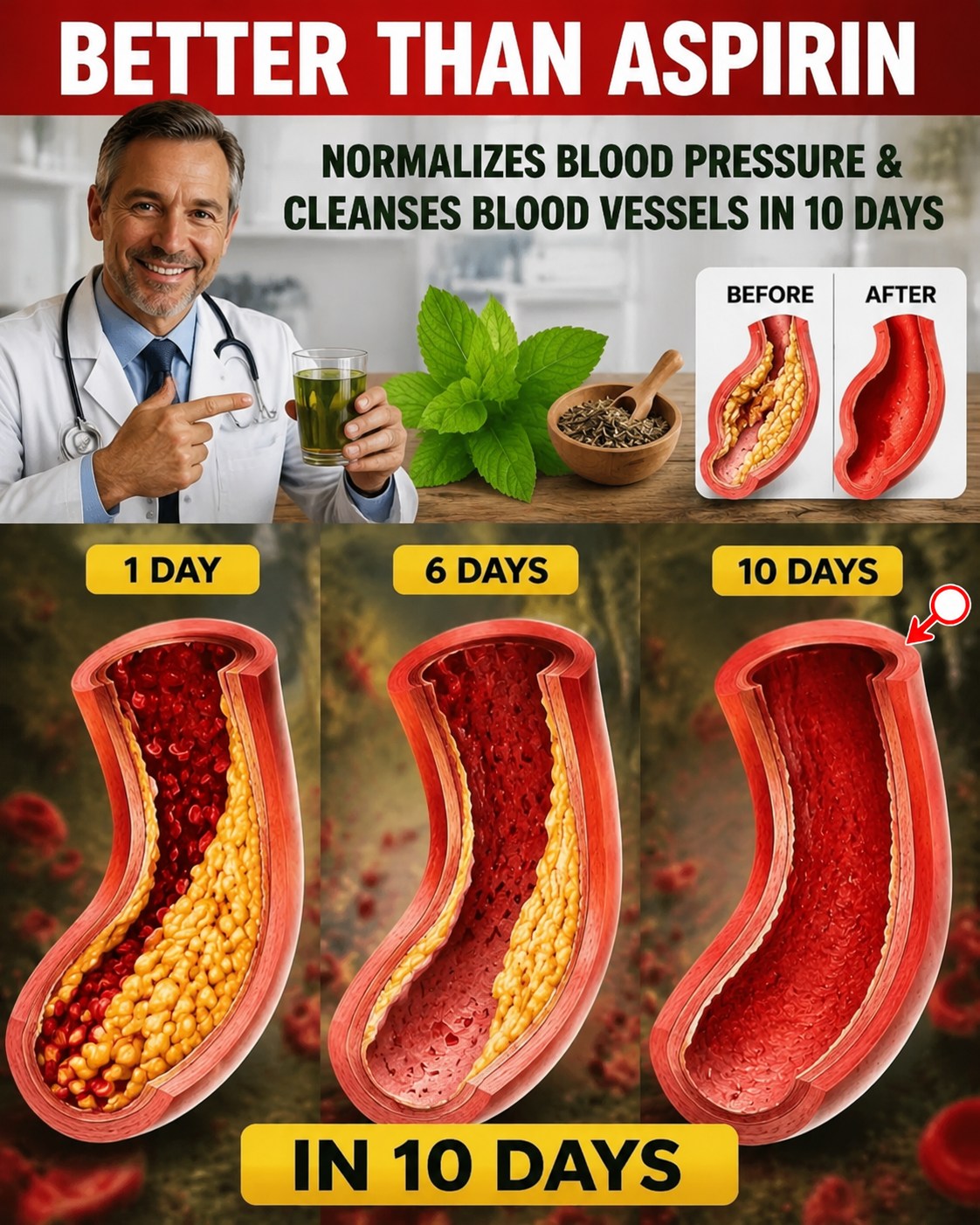
In today’s digital age, social media feeds are often filled with dramatic health claims promising quick fixes for cardiovascular health. Infographics featuring promises to “normalize blood pressure” or “cleanse blood vessels in 10 days” using natural remedies, herbs, or home teas frequently attract widespread attention. For individuals seeking to protect their heart health or manage high blood pressure, these rapid solutions can sound immensely appealing.
However, separating online marketing myths from medically established vascular science is essential for personal health and safety. Can an arterial plaque buildup formed over decades truly be swept away in ten days? How does aspirin function compared to natural lifestyle interventions? And what evidence-based steps actually keep your arteries flexible, clean, and healthy over a lifetime?
In this comprehensive guide, we will evaluate the biology of arterial plaque (atherosclerosis), debunk the “10-day vascular cleanse” myth, examine the clinical role of medical therapy versus natural nutrition, and outline actionable strategies for maintaining long-term cardiovascular health.
Understanding Atherosclerosis: How Blood Vessels Actually Work
To understand why a rapid 10-day arterial cleanse is biologically impossible, it helps to examine how arterial plaque develops inside the human circulatory system.
Arteries are not simple hollow pipes like household plumbing. They are complex, multi-layered living organs composed of smooth muscle cells, elastic fibers, and an inner protective cellular lining called the endothelium.
The Development of Arterial Plaque
Atherosclerosis—the medical term for hardened, narrowed blood vessels—is a slow, progressive inflammatory process that takes decades to form:
-
Endothelial Injury: Factors like high blood pressure, elevated blood sugar, toxins from cigarette smoke, or high circulating low-density lipoprotein (LDL) cholesterol injure the delicate inner lining of the artery.
-
Lipid Penetration: LDL cholesterol particles penetrate beneath the damaged endothelial lining, triggering a localized inflammatory response.
-
Plaque Calcification: White blood cells (macrophages) rush in to consume the oxidized cholesterol, transforming into “foam cells.” Over time, these cells accumulate alongside calcium, smooth muscle cells, and fibrous tissue, creating a calcified, hardened plaque deposit inside the arterial wall.
Because plaque is embedded within the structural layers of the arterial wall—rather than merely resting on the surface like loose debris—no drink, tea, or supplement can instantly “wash” or “flush” it away in a matter of days.
+---------------------------------------------------------------------------------+
|                       STAGES OF ATHEROSCLEROSIS PROGRESSION                     |
+--------------------------+------------------------------------------------------+
| Stage                    | Pathological Process Inside Artery Wall           |
+--------------------------+------------------------------------------------------+
| Initial Damage           | High pressure/toxins injure endothelial cell lining  |
| Fatty Streak             | LDL cholesterol penetrates beneath arterial surface  |
| Plaque Formation         | Inflammatory foam cells accumulate in vessel layer   |
| Fibrous Calcification    | Calcium & tissue harden plaque inside arterial wall |
+--------------------------+------------------------------------------------------+
Debunking the “10-Day Arterial Cleanse” Myth
Online health claims that promise to reverse decades of arterial narrowing in 10 days misrepresent human physiology.
       [Years of Elevated Blood Pressure & LDL Cholesterol]
                                │
                                ▼
         [Hardened Calcified Plaque Inside Artery Wall]
                                │
                                ▼
         ┌──────────────────────┴──────────────────────┐
         ▼                                             ▼
[10-Day Cleanse Myths (UNREALISTIC)]  [Evidence-Based Care (REALISTIC)]
  - Cannot "dissolve" calcified tissue           - Statin therapy stabilizes plaque
  - Cannot flush plaque through digestion        - Blood pressure care halts growth
  - Risk of stopping prescribed meds             - Whole foods improve elasticity
Why Quick Cleanses Do Not Work
-
Plaque Structure Is Biological, Not Surface Waste: Arterial plaque is enclosed behind a fibrous cap inside the vessel wall. It cannot be dissolved by digestive liquids passing through the stomach and intestines.
-
Reversing Plaque Takes Months to Years: Modern cardiovascular medicine can stabilize and modestly regression plaque thickness, but achieving this requires long-term lipid-lowering therapy (such as statins), strict blood pressure management, and consistent lifestyle changes maintained over months and years—not 10 days.
-
Risks of Stopping Prescribed Medication: The greatest danger of viral health claims is that individuals may stop taking essential medications like aspirin, blood pressure therapies, or statins in favor of unproven remedies, dramatically increasing their risk of a heart attack or stroke.
Aspirin vs. Natural Remedies: Understanding the Difference
Infographics often feature headlines comparing natural teas or herbs directly to pharmaceutical aspirin. Understanding the true medical function of aspirin helps put these comparisons into perspective.
How Aspirin Works in the Bloodstream
Aspirin is not a plaque remover or blood vessel “cleaner.” Instead, low-dose aspirin acts as an antiplatelet agent:
-
When a blood vessel plaque cracks or ruptures, blood platelets immediately rush to form a blood clot over the injury site.
-
Aspirin inhibits an enzyme called cyclooxygenase-1 (COX-1), reducing platelet aggregation and preventing dangerous blood clots from completely blocking blood flow to the heart or brain.
The Role of Natural Herbal Teas and Anti-Inflammatory Plants
Herbs like mint, green tea, garlic, and ginger contain valuable antioxidants, polyphenols, and mild vasodilating compounds that support overall vascular relaxation. While drinking natural herbal teas offers genuine metabolic and hydration benefits, natural compounds operate through entirely different physiological mechanisms than antiplatelet medications like aspirin.
+---------------------------------------------------------------------------------+
|                       ASPIRIN VS. NATURAL HERBAL TEAS                           |
+--------------------------+------------------------------------------------------+
| Feature                  | Low-Dose Aspirin Therapy    | Natural Herbal Teas   |
+--------------------------+-----------------------------+------------------------+
| Primary Function         | Inhibits blood clotting     | Provides antioxidants  |
| Target Site              | Platelet aggregation        | Endothelial relaxation |
| Clinical Role            | Secondary stroke/heart care | General wellness support|
+--------------------------+-----------------------------+------------------------+
Health Insurance, Cardiovascular Screenings, and Financial Planning
Protecting your arterial and cardiovascular health requires regular medical monitoring alongside healthy lifestyle choices. Understanding health insurance coverage and financial wellness resources ensures you can access appropriate medical care without unexpected financial stress.
Navigating Healthcare Coverage
-
Annual Preventive Screenings: Most ACA-compliant commercial health plans and Medicare cover standard annual wellness exams, blood pressure checks, and routine lipid panels at zero out-of-pocket cost.
-
Diagnostic Vascular Testing: Advanced imaging tests—such as Coronary Artery Calcium (CAC) scans, Carotid Artery Duplex Ultrasounds, or Ankle-Brachial Index (ABI) tests—are covered when ordered by a physician to evaluate cardiovascular risk.
-
Prescription Drug Coverage: Essential maintenance medications for high blood pressure, high cholesterol, and antiplatelet management are widely available as low-cost tier-1 generics under most prescription insurance formularies.
Utilizing Health Savings Accounts (HSA)
-
Tax-Advantaged Medical Savings: HSA and FSA funds can be used tax-free to purchase home blood pressure monitoring cuffs, cover doctor co-pays, and fund approved prescription treatments.
Evidence-Based Steps for Healthy Blood Vessels
While quick 10-day cleanses are a myth, you can take proven, practical steps to protect your vascular endothelial health and support long-term arterial flexibility.
+---------------------------------------------------------------------------------+
|                       EVIDENCE-BASED VASCULAR PROTECTION                        |
+--------------------------+------------------------------------------------------+
| Pillar                   | Actionable Goal                                      |
+--------------------------+------------------------------------------------------+
| Blood Pressure Control   | Maintain readings consistently below 120/80 mmHg     |
| Lipid Management         | Keep LDL cholesterol within target clinical ranges   |
| Dietary Protection       | Consume fiber-rich, anti-inflammatory whole foods     |
| Active Physical Movement | Engage in 150 minutes of aerobic exercise weekly     |
+--------------------------+------------------------------------------------------+
-
Control Blood Pressure Consistently: High blood pressure acts like constant mechanical strain against vessel walls. Maintaining normal blood pressure preserves arterial elasticity.
-
Adopt an Anti-Inflammatory, Whole-Food Diet: Emphasize Mediterranean-style eating packed with leafy greens, garlic, berries, walnuts, olive oil, legumes, and wild salmon rich in Omega-3 fatty acids.
-
Engage in Regular Aerobic Exercise: Physical activities like brisk walking, cycling, or swimming stimulate the production of nitric oxide—a natural compound that relaxes blood vessels and improves arterial flow.
-
Avoid Tobacco Products: Quitting smoking halts the direct toxic damage to your endothelial lining, immediately reducing blood clot risks.
Fascinating Facts About Human Blood Vessels and Circulation
-
60,000 Miles of Vessels: If laid end to end, the blood vessels in a single human adult would stretch over 60,000 miles—enough to circle the Earth more than twice!
-
The Power of Nitric Oxide: Discovered by Nobel Prize-winning researchers, nitric oxide is produced by inner vessel cells to signal vascular smooth muscle to relax and widen.
-
Self-Healing Endothelium: With proper blood pressure control and reduced LDL cholesterol, damaged endothelial cells can regenerate, restoring normal vascular tone.
-
Dietary Nitrate Benefits: Leafy green vegetables like spinach and beets contain natural inorganic nitrates that the body converts directly into vasodilation-boosting nitric oxide.
Conclusion
The idea of a simple 10-day drink that completely cleanses blood vessels or replaces prescribed medical care is an unrealistic viral myth. Arterial plaque is a complex, long-term biological condition embedded within vessel walls rather than surface buildup that can be flushed away. By managing blood pressure, adopting a nutrient-rich whole-food diet, exercising regularly, and working closely with healthcare professionals, you can protect your cardiovascular system and support healthy blood circulation over a lifetime.
Frequently Asked Questions (FAQ)
Can any natural drink clear blocked blood vessels in 10 days?
No[cite: 15]. Arterial plaque develops inside the vessel wall over many years and cannot be flushed out or dissolved by any home drink or supplement in 10 days[cite: 15].
Is it safe to stop taking aspirin if I start drinking natural herbal teas?
No. You should never stop taking prescribed blood thinners or aspirin without direct guidance from your doctor[cite: 15]. Herbal teas do not provide the same clinical antiplatelet action as low-dose aspirin[cite: 15].
How do doctors actually reduce or stabilize arterial plaque?
Cardiologists use evidence-based therapies like statins and lifestyle modifications to dramatically lower LDL cholesterol, stop new plaque growth, strengthen fibrous plaque caps to prevent rupture, and encourage gradual long-term plaque stabilization[cite: 15].
What is the best natural way to keep blood vessels flexible?
Regular aerobic exercise, managing blood pressure, maintaining a low-sodium diet rich in antioxidant greens and healthy fats, and avoiding tobacco are the most effective ways to support arterial health.
What test measures plaque buildup in heart arteries?
A Coronary Artery Calcium (CAC) scan is a non-invasive CT imaging test that measures calcified plaque in the coronary arteries, helping doctors assess overall cardiovascular risk.
