
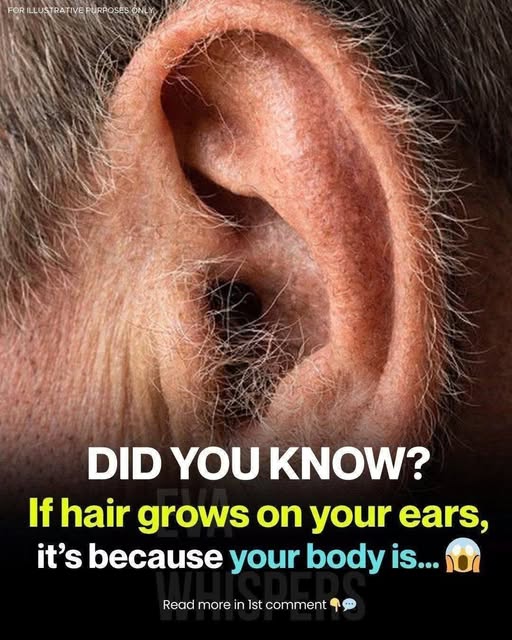
As we age, our bodies undergo a multitude of unexpected changes. Among the most common—and frequently discussed—is the sudden appearance of prominent hair growing in or around the ears. While fine, barely visible hair is present across almost all human skin, coarse ear hair often becomes noticeable in middle-aged and older men, triggering curiosity, social media interest, and plenty of lighthearted health discussions.
A viral image circulating online shows a close-up of a human ear with visible hair growth, accompanied by the intriguing prompt: “DID YOU KNOW? If hair grows on your ears, it’s because your body is…” This clickbait teaser leaves viewers wondering about the biological mechanisms and potential health connections behind ear hair growth.
In this deep dive, we will explore the biological causes of ear hair growth, separate medical facts from online myths, examine safe grooming and hygiene techniques, and discuss how managing personal health supports long-term wellness.
Why Does Ear Hair Grow? Hormones, Aging, and Biology
To understand ear hair growth, it helps to look at the underlying biology of human hair follicles and how they react to hormonal shifts over time.
The Role of Androgens (Testosterone and DHT)
The primary driver of increased ear hair growth is the body’s sensitivity to male sex hormones known as androgens, specifically testosterone and dihydrotestosterone (DHT).
As men age, hair follicles in specific areas—such as the outer ear canal (tragus and pinna) and eyebrows—can become increasingly sensitive to circulating DHT. Rather than producing short, fine, virtually invisible hair (vellus hair), these sensitized follicles transition into producing thicker, darker, and longer hair (terminal hair).
Genetics and Family Traits
Genetics play a major role in determining whether you will develop noticeable ear hair. If your parents or grandparents experienced prominent ear hair growth as they aged, you are significantly more likely to inherit the same follicular sensitivity to hormonal changes.
Myths vs. Facts: Does Ear Hair Signal Health Conditions?
Online articles and viral posts often link ear hair growth to various cardiovascular or metabolic conditions. Here is what modern science and medical research say.
       +-------------------------------------------------------+
       |             EAR HAIR & HEALTH: FACT VS. MYTH          |
       +-------------------------------------------------------+
                                   |
              +--------------------+--------------------+
              |                                         |
              v                                         v
   +-----------------------+               +-----------------------+
   |   THE "FRANK'S SIGN"  |               |  EAR CANAL HAIR GROWTH|
   |      CORRELATION      |               |     & HEART DISEASE   |
   +-----------------------+               +-----------------------+
   | * Diagonal earlobe    |               | * Observational studies|
   |   crease (DELC)       |               |   show loose correlation|
   | * Studied in relation |               | * Shared aging factor,|
   |   to arterial health  |               |   NOT a direct cause  |
   +-----------------------+               +-----------------------+
              |                                         |
              +--------------------+--------------------+
                                   |
                                   v
                      +-------------------------+
                      |   MEDICAL CONSENSUS     |
                      | Focus on general vascular|
                      | health, diet, & exercise|
                      +-------------------------+
The Ear Canals and Cardiovascular Studies
In the 1970s and 1980s, preliminary observational studies suggested a statistical correlation between ear canal hair growth and an increased risk of coronary artery disease. Researchers hypothesized that the vascular degeneration affecting hair follicles in the ear might mirror changes taking place in arterial walls.
However, modern cardiologists emphasize that ear hair growth is primarily a benign sign of aging and androgen exposure, rather than a direct indicator or cause of heart disease. Standard health indicators like blood pressure, cholesterol levels, blood sugar, and family medical history remain far more reliable measures of cardiovascular wellness.
Comparing Hair Types Across the Human Body
Not all body hair serves the same purpose. Here is a comparison of hair types, their primary functions, and how they change over a lifetime.
| Hair Type | Characteristics | Primary Locations | Function / Behavioral Response |
| Vellus Hair | Short, thin, light-colored, barely visible | Most of the body surface (face, ears, arms) | Thermal regulation and sensory perception |
| Terminal Hair (Head) | Thick, pigmented, long growth cycle | Scalp, beard area | UV protection and temperature insulation |
| Ear Canal Hair | Coarse, variable length, grows with age | Tragus, canal entrance, ear lobe edge | Traps dirt, dust, and insects from entering the inner ear |
| Eyebrow / Nose Hair | Coarse, thick, dense brush structure | Eyebrows, nostrils | Protects eyes and respiratory system from debris |
Grooming, Hygiene, and Health Management
Managing ear hair safely is an important aspect of personal hygiene and self-care. Because the ear canal and outer skin are delicate, following proper grooming practices prevents irritation and infection.
Safe Ways to Groom Ear Hair
-
Electric Ear and Nose Trimmers: Trimmers designed specifically for ears use rotary blades behind protective guards to safely trim long hairs without tugging or nicking sensitive skin.
-
Precision Tweezing: Tweezing individual hairs along the outer ear rim (pinna) is effective, but avoid inserting tweezers deep into the ear canal.
-
Laser Hair Removal: For a permanent reduction, professional laser treatments target melanin in the hair follicle, preventing future growth along the outer ear.
What to Avoid
Never insert sharp scissors, safety pins, or cotton swabs deep into the ear canal. Doing so risks puncturing the eardrum, pushing earwax deeper, or causing painful bacterial infections.
Supporting General Vitality, Healthcare, and Financial Stability
Understanding body changes as we grow older is part of maintaining lifelong wellness. Pairing proper hygiene with reliable health and financial management ensures long-term peace of mind.
Prioritizing Preventative Healthcare
Regular medical checkups allow doctors to monitor key health markers like blood pressure, lipid panels, and blood sugar levels. Maintaining comprehensive health insurance ensures access to routine screenings, hearing tests, and specialist care without financial stress.
Achieving Peace of Mind Through Smart Life Management
Managing everyday responsibilities effectively lowers stress and supports overall health:
-
Financial Security: Consolidating debt, managing mortgages, evaluating low-interest personal loans, and maintaining savings provide a stable foundation.
-
Legal and Business Preparedness: Updating estate plans, legal services, home insurance, and business agreements protects family assets for future generations.
-
Healthy Habits: A balanced diet rich in whole foods, regular physical exercise, and quality sleep support circulatory health and hormone balance.
Practical Tips for Overall Ear Health
Keeping your ears healthy involves more than just trimming external hair:
-
Keep Ears Clean and Dry: Gently pat the outer ear dry after showers or swimming to prevent trapped moisture, which can lead to swimmer’s ear.
-
Manage Earwax Naturally: Avoid aggressive cleaning inside the canal. Earwax naturally moves outward on its own, carrying dust and dead skin cells with it.
-
Protect Your Hearing: Use earplugs or noise-canceling headphones when exposed to loud environments, concert venues, or heavy machinery.
-
Get Regular Hearing Screenings: Include annual hearing evaluations in your healthcare routine, especially as you age.
Fascinating Facts About Human Hair and Aging
-
Follicle Reset: Every single hair follicle on the human body goes through three phases: anagen (growth), catagen (transition), and telogen (resting). Age shifts the duration of these phases for different body parts!
-
Natural Defense System: Ear hair combined with earwax forms a vital biological barrier that protects the delicate eardrum from foreign dust, dirt, and microscopic debris.
-
Dermatology Advances: Modern dermatological research into androgen receptors continues to yield new insights into hair growth, thinning, and skin health.
Conclusion
Noticing ear hair growth as you age is a completely natural, harmless response to changing hormone sensitivity and genetics. While viral posts often tease dramatic explanations, the reality is simply a reflection of normal human biology at work.
By practicing safe grooming habits, scheduling regular checkups, keeping up with health insurance, and maintaining balanced lifestyle choices, you can stay healthy and confident through every stage of life. Share this guide with friends to clear up the myths about ear hair growth today!
Frequently Asked Questions (FAQ)
Q1: Why do men grow more ear hair as they get older?
Increased ear hair growth is driven by changing sensitivity to male hormones like dihydrotestosterone (DHT), which triggers hair follicles in the ear to produce thicker terminal hair.
Q2: Is ear hair growth a sign of heart disease?
No. While early observational studies noted correlations between ear hair and arterial health, modern cardiologists view ear hair primarily as a normal sign of aging and androgen exposure.
Q3: What is the safest way to trim ear hair?
The safest method is using an electric ear hair trimmer with built-in protective blade guards designed to prevent skin nicks or deep canal entry.
Q4: Can women grow ear hair too?
Yes. While less common due to lower testosterone levels, women can also develop fine or noticeable ear hair due to genetic factors or hormonal changes like menopause.
Q5: Should you pluck hair inside the ear canal?
It is best to avoid deep plucking inside the canal, as this can irritate sensitive skin, cause ingrown hairs, or lead to painful ear infections. Stick to trimming outer ear hair instead.
