
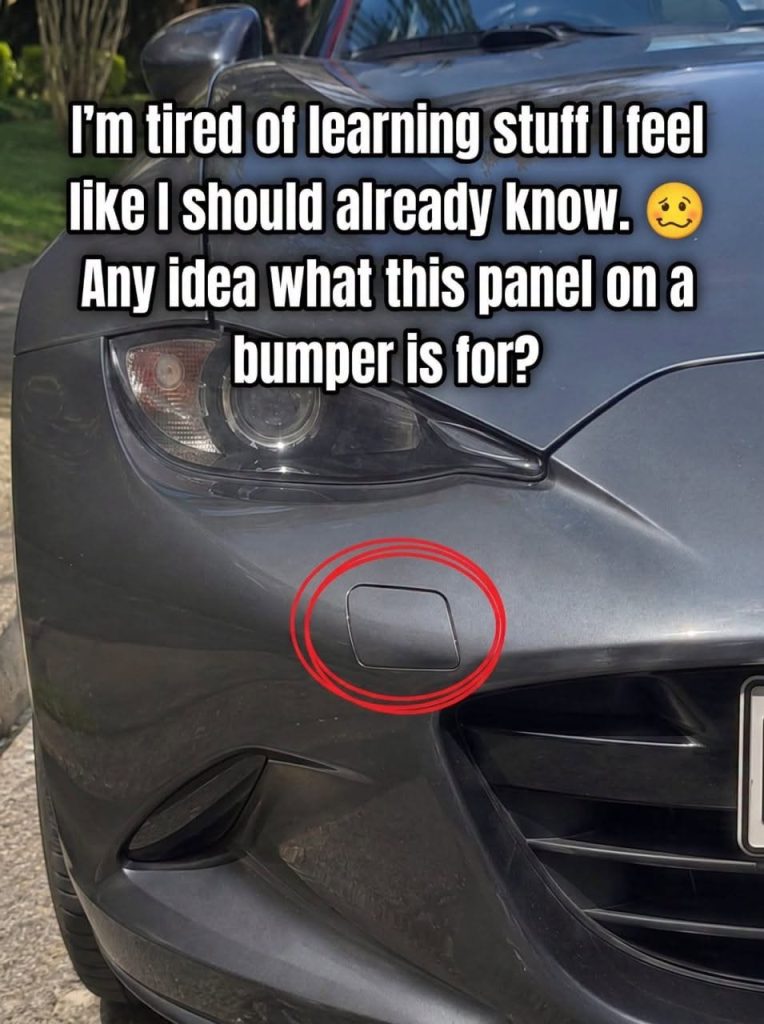
If you have ever looked closely at the front or rear bumper of a modern vehicle, you have likely noticed a small, subtle plastic cap—often square, rectangular, or circular—blending into the bodywork. While many drivers walk past this little cover every day without giving it a second thought, others wonder whether it conceals an advanced parking sensor, an air intake, or a hidden headlight washer nozzle.
In reality, that modest panel conceals a vital safety and vehicle recovery feature that every driver should know about before finding themselves stranded on the side of the road. Known as the tow eye cover or tow hook access panel, this removable pop-out door grants direct access to the structural chassis frame of your car. Understanding how this feature works, when to use it safely, and how it protects your vehicle during roadside emergencies is an essential aspect of responsible automotive ownership. Here is a comprehensive guide to why cars feature this bumper panel, how to use it during breakdowns, key auto insurance protections, and practical roadside safety tips.
Uncovering the Feature: The Secrets Behind the Tow Hook Access Cover
Modern automobile bumper covers are made from lightweight, painted plastic designed to absorb minor low-speed impacts and improve aerodynamics. However, plastic bumpers cannot support the structural weight of a multi-ton vehicle during towing or recovery operations.
Behind that small pop-out panel lies a reinforced, heavy-duty threaded steel socket welded directly to the vehicle’s structural steel frame rails:
-
The Removable Tow Eye Bolt: Inside most modern cars—typically stored in the trunk beneath the cargo floor alongside the spare tire and jack kit—you will find a heavy steel rod featuring a thick ring on one end and male threads on the other.
-
How It Functions: In the event your car breaks down, gets stuck in deep snow, mud, or sand, or needs to be winched onto a flatbed tow truck, tow operators or drivers pop open the bumper cover, screw the heavy steel tow eye clockwise directly into the threaded frame socket, and attach a winch cable to the steel loop.
-
Protecting the Vehicle Frame: Pulling a vehicle directly from the reinforced chassis frame socket prevents costly structural damage to plastic bumpers, fragile steering components, lower radiators, or front suspension assemblies.
Why Modern Cars Use Hidden Tow Points Instead of Fixed Hooks
In older automobiles, visible metal tow hooks or tiedown loops extended permanently below the front or rear bumpers. However, modern automotive engineering shifted away from fixed exterior hooks due to several key design priorities:
1. Aerodynamics and Fuel Efficiency
Exposed exterior metal hooks create unnecessary aerodynamic drag under high-speed highway driving. Integrating flush-mounted, removable tow eye covers helps maintain clean airflow across the vehicle’s nose and underbody, directly improving overall fuel efficiency.
2. Pedestrian Safety and Collision Standards
Global vehicle safety regulations place heavy emphasis on pedestrian protection during low-speed impacts. Hard, sharp, protruding metal tow hooks pose severe injury risks to pedestrians in collisions. Flush plastic bumper panels absorb and distribute impact force far more safely.
3. Aesthetic Vehicle Styling
Automotive designers invest immense effort into creating sleek, cohesive exterior styling. Concealing utility recovery points behind color-matched, body-contoured plastic caps ensures that cars maintain an elegant, modern appearance.
Automotive Insurance, Legal Services, and Financial Protections
Facing a roadside breakdown, accident, or vehicle transport situation highlights the importance of comprehensive automotive coverage, consumer rights, and structured financial planning.
1. Navigating Auto Insurance and Roadside Assistance
Experiencing a mechanical failure or collision on a highway requires rapid, safe towing intervention:
-
Roadside Assistance Coverage: Most comprehensive insurance policies offer optional roadside assistance coverage. This service pays for professional flatbed towing, battery jump-starts, flat tire changes, and winch-out recovery when stuck off-road.
-
Managing Out-of-Pocket Claims: Understanding your collision deductibles and comprehensive coverage limits ensures that towing and body shop repairs are fully reimbursed without causing unexpected financial strain.
2. Legal Services and Accidents
When vehicle towing follows a traffic accident, protecting your rights is crucial:
-
Engaging Professional Legal Services: If an accident involves third-party fault, personal injury, or disputed police reports, consulting with experienced legal services or a qualified personal injury attorney protects your financial liability and covers secondary medical bills or property damage repair costs.
3. Household Finance and Vehicle Investments
Managing automotive ownership expenses intersects directly with overall household finance:
-
Auto Loans and Mortgages: Budgeting for vehicle maintenance, insurance coverage, and auto loan obligations ensures stable credit health, supporting long-term goals like securing a competitive home mortgage.
-
Protecting Long-Term Wealth: Minimizing unneeded vehicle repair fees preserves discretionary income, allowing families to invest consistently into diversified stocks, real estate, or retirement portfolios.
Healthcare and Physical Safety on the Roadside
Being stranded on a busy highway shoulder poses significant safety risks. Prioritizing physical safety during a breakdown protects driver and passenger health:
-
Preventing Secondary Collisions: If your car breaks down, pull completely off the active roadway onto the shoulder, activate your hazard flashers, and remain buckled inside the vehicle or stand far behind safety barriers while awaiting tow services.
-
Health and Medical Coverage: Holding robust health and medical insurance guarantees access to emergency care should unexpected roadside accidents or physical injuries occur.
-
Life Insurance Security: Securing comprehensive life insurance policies ensures family financial protection against unforeseen travel emergencies.
Fascinating Facts About Car Bumpers and Recovery Systems
-
Front vs. Rear Covers: Many modern vehicles feature tow eye access covers on both the front and rear bumpers to allow towing operators to winch the vehicle safely from either direction.
-
Left-Hand vs. Right-Hand Threads: While most European, American, and Asian vehicles utilize standard right-hand (clockwise) threads for tow hooks, some specific manufacturers utilize reverse left-hand threads to prevent the hook from unthreading under heavy rotational load!
-
Shipping Tie-Downs: The threaded sockets behind bumper panels are also utilized at shipping ports to tie vehicles securely down inside cargo ships and transport trucks during international delivery.
-
The Bumper Impactor Standard: Federal bumper standards require passenger cars to withstand front and rear impacts at low speeds without sustaining damage to critical engine components or safety equipment.
Practical Tips for Handling Tow Hooks During an Emergency
Knowing where your vehicle’s recovery tools are located before an emergency happens saves time, stress, and money:
-
Locate Your Tow Eye Tool Today: Open your vehicle’s trunk, lift the cargo floor mat, and locate the steel threaded tow eye rod stored with your tire iron and jack kit.
-
Learn How to Remove the Panel Safely: Bumper covers typically feature a small notch for a flathead screwdriver or require a gentle press on one side to pop open. Never pry aggressively with sharp metal tools to avoid scratching exterior body paint.
-
Hand-Tighten Firmly: When screwing the tow eye into the frame socket, turn it clockwise until it bottoms out completely against the frame to prevent stripping threads during winching.
-
Never Use Bumper Openings for Kinetic Towing: The threaded tow eye is designed for steady winching onto flatbeds or straight-line pulls on paved surfaces. Never perform high-speed snatch-rope vehicle pulls using factory tow eyes, as severe frame damage can result.
-
Keep Roadside Emergency Supplies Ready: Store reflective safety vests, a bright LED flashlight, a tire pressure gauge, and jumper cables in your cargo area at all times.
Final Thoughts
That small square or round panel on your car bumper is far more than a cosmetic design line; it is a vital gateway to your vehicle’s structural frame during emergency recovery situations. By taking a few minutes to familiarize yourself with your car’s tow eye kit, maintaining proper auto insurance coverage, and practicing safe roadside habits, you can navigate unexpected breakdowns with complete confidence and peace of mind.
Frequently Asked Questions (FAQ)
What is the small square panel on my car’s front or rear bumper for?
The panel covers a threaded structural frame socket designed to hold a heavy-duty steel tow eye. Towing operators use this point to pull or winch the vehicle safely without damaging plastic bumper bodywork.
Where do I find the tow hook that screws into the bumper socket?
The removable steel tow eye is typically stored in the trunk or cargo area beneath the floor mat, secured inside the spare tire kit alongside the jack and lug wrench.
How do I open the tow hook cover without scratching my car paint?
Most covers feature a small push-point on one corner or a subtle pry slot. Pressing firmly on one edge will cause the panel to pivot open. If using a flat tool, wrap the tip in a soft cloth or tape to protect the surrounding paint.
Can I tow another car using the bumper tow hook?
Factory tow eyes are intended for light winching onto flatbed tow trucks or short, steady pulls out of minor hazards like mud or snow. They are not engineered for long-distance highway towing or heavy kinetic off-road snatch recoveries.
