
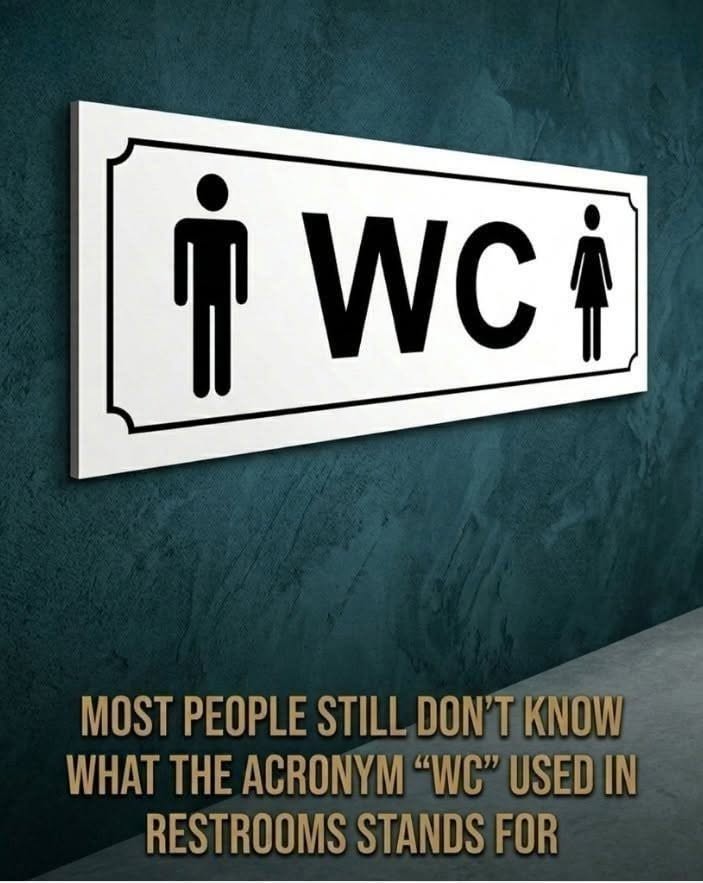
When traveling internationally or visiting older buildings across Europe, Asia, and Latin America, you have likely encountered public restroom signs displaying the prominent letters “WC” flanked by standard male and female pictograms. While almost everyone recognizes the symbol as an indicator for a toilet or washroom, surprisingly few people know what the letters “WC” actually abbreviate.
In modern North America, terms like “restroom,” “bathroom,” or “washroom” are commonplace. However, “WC” remains one of the most widely recognized international abbreviations for sanitation facilities. The term carries a rich historical origin rooted in 19th-century plumbing innovations, social etiquette standards, and the architectural evolution of indoor plumbing.
In this ultimate historical and travel guide, we unpack the exact origin of the abbreviation “WC,” trace the evolution of modern indoor sanitation, explore global restroom etiquette for travelers, and discuss how public infrastructure impacts public health, travel planning, and personal finances.
The Origin Revealed: What “WC” Stands For
The abbreviation “WC” stands for Water Closet.
[ 19th-Century Innovation ] ──> "Water Closet" (Indoor Flushing Toilet) ──> Abbreviated to "WC"
The Historical Context of the “Water Closet”
During the 19th century—specifically throughout the Victorian era in Great Britain—indoor plumbing technology underwent a revolutionary shift. Prior to the widespread adoption of the flush toilet, most homes relied on outdoor privies, earth closets, or indoor chamber pots.
When early indoor flushing toilets were integrated into residential and public architecture:
-
The “Closet” Concept: To accommodate the new plumbing fixtures indoors without major structural overhauls, homebuilders repurposed small storage closets, pantries, or under-stair alcoves.
-
The “Water” Mechanism: Because these converted closets housed a newly invented water-flushed bowl connected to a drainage pipe, they were formally named “Water Closets” to distinguish them from traditional dry “earth closets.”
As British plumbing standards set the benchmark across the globe during the Industrial Revolution, the term “Water Closet” and its practical shorthand “WC” spread rapidly across international transport hubs, hotels, and public buildings.
Why “WC” Became a Global Linguistic Standard
While English-speaking nations gradually adopted softer euphemisms like “restroom,” “bathroom,” or “loo,” non-English speaking countries adopted “WC” as a primary loanword.
1. Politeness and Victorian Euphemisms
Victorian society placed an extraordinary emphasis on delicate social etiquette. Speaking openly about bodily functions or using direct words like “toilet” in polite company was considered crass. Referring to the room discretely as the “Water Closet” allowed individuals to excuse themselves gracefully without breaching social decorum.
2. Standardization for International Travel
As rail networks and transatlantic steamships expanded international tourism in the late 1800s and early 1900s, businesses needed a universal symbol for sanitation facilities. “WC” was adopted across train stations, airports, and hotels throughout Europe and beyond, establishing a recognized standard that persists today.
“Restroom,” “Bathroom,” or “WC”? Regional Terms Demystified
Understanding what to call sanitation facilities in different countries helps travelers navigate public spaces comfortably without awkward misunderstandings.
| Country / Region | Preferred Term | Historical Meaning |
| United States | Restroom / Bathroom | Euphemism referring to resting or bathing spaces |
| United Kingdom | Loo / Toilet / WC |
“Loo” (informal); “WC” on formal public signage |
| Canada | Washroom | Direct reference to washing hands |
| Continental Europe | WC / Toilette |
“WC” is standard on signs across Germany, France, Italy, etc. |
| Japan | O-tesharai / Toire | “O-tesharai” translates directly to “hand-washing place” |
How Public Sanitation Innovations Transformed Health and Economics
The transition from outdoor privies to modern water closets was not merely a matter of convenience—it represents one of the single greatest public health achievements in human history.
Preventing Waterborne Disease
Before indoor water closets and municipal sewage treatment networks became widespread, human waste contaminated urban groundwater supplies routinely. This led to devastating outbreaks of waterborne diseases such as cholera, typhoid fever, and dysentery.
-
Reducing Disease Transmission: Sealed water closet traps and modern sewer infrastructure effectively isolated waste from drinking water systems, saving millions of lives globally.
-
Lowering Healthcare Expenses: Clean sanitation infrastructure drastically reduced preventable illness, lowering out-of-pocket medical costs, doctor visits, and emergency hospitalization demands.
Economic and Financial Benefits
Proper sanitation infrastructure is a critical driver of local finance and economic development:
-
Boosting Tourism Revenue: Modern, accessible public restrooms (clearly marked with international symbols like “WC”) support vibrant commercial districts, urban retail, and hospitality sectors.
-
Protecting Infrastructure Investments: Standardized municipal plumbing codes ensure long-term building durability, protecting commercial property investment values against structural water damage and contamination.
Essential Travel Tips for Navigating International Restrooms
When traveling abroad, encountering different restroom customs and payment structures is common. Keep these practical tips in mind:
-
Carry Small Local Currency / Coins: In many European cities, public WCs require a small entry fee (typically €0.50 to €1.00) to operate automated turnstiles or pay attendant staff who maintain cleanliness.
-
Pay Attention to Pictograms: Always look for the universal male and female icons alongside the letters “WC,” as language translations may differ on door locks or stall doors.
-
Carry Travel Tissues and Sanitizer: While modern WCs in major airports and hotels are fully stocked, smaller regional facilities in some countries may not supply toilet paper or hand soap consistently.
-
Be Mindful of Flushing Policies: In older international cities with historic plumbing pipes, signage near the WC may instruct users to place used paper in a side bin rather than flushing it down the bowl to prevent pipe blockages.
Frequently Asked Questions (FAQ)
Is “WC” still used in modern architectural blueprints?
Yes. On modern architectural floor plans, plumbing schematics, and engineering blueprints, the abbreviation “WC” is still widely used by architects worldwide to designate a half-bathroom or powder room containing only a toilet and a sink without a bathtub or shower.
Why do Americans rarely use the term “Water Closet”?
During the mid-20th century, American culture shifted heavily toward softer hotel and commercial euphemisms like “restroom” (places to rest during travel) and “bathroom” (traditionally rooms containing a bath). Consequently, “water closet” fell out of common spoken American English, even though its abbreviation “WC” remains recognized globally.
What is the difference between a “WC” and a “Powder Room”?
Historically, a powder room referred specifically to a small guest bathroom near an entryway where guests could freshen up or powder their wigs/face makeup. Today, both terms describe a compact half-bath containing a toilet and washbasin without full bathing facilities.
What does “Loo” mean in British slang?
“Loo” is a popular British slang term for toilet. While its precise origin is debated, popular theories suggest it derives from the French phrase “garde à l’eau” (a warning shouted before emptying chamber pots out windows in medieval times) or a corruption of the trade name “Waterloo” printed on early cistern valves.
Final Thoughts
The next time you spot a “WC” sign while traveling through an airport, hotel, or city center, you will know the fascinating story behind those two simple letters.
From its origins as a Victorian euphemism for the revolutionary “Water Closet” to becoming an indispensable international symbol for sanitation, “WC” represents a major leap forward in human hygiene, civil engineering, and public health[cite: 14].
