
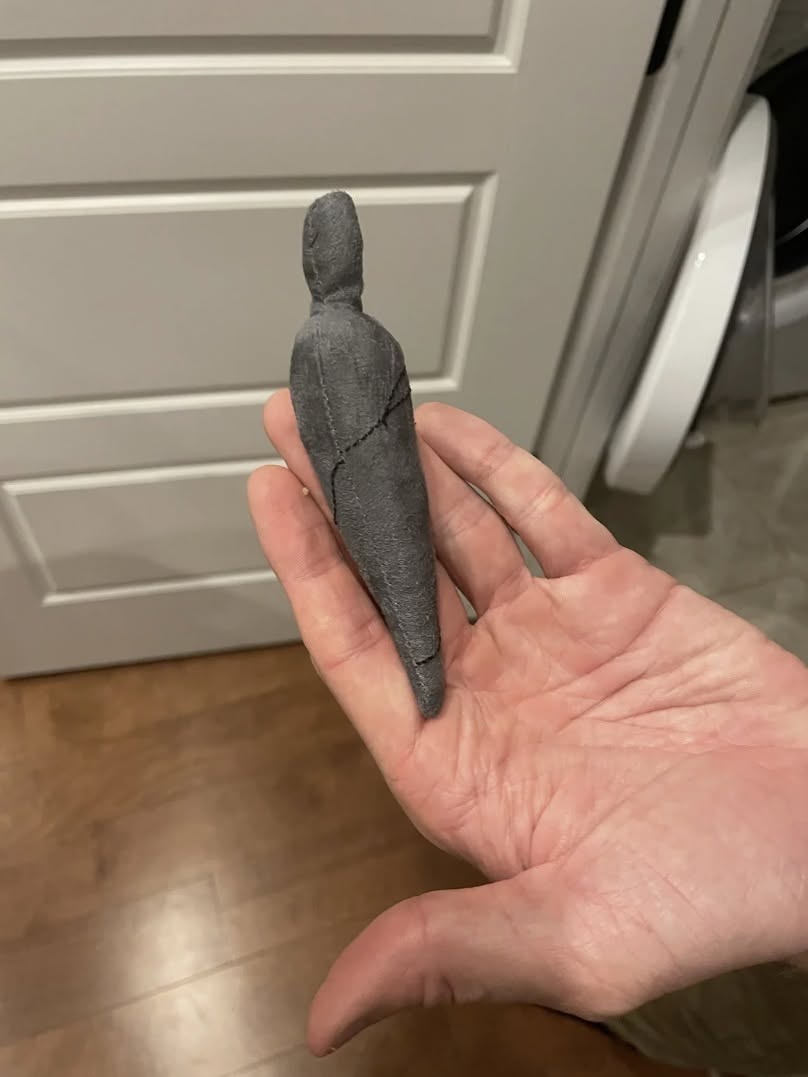
In an era of endless viral trends and mysterious household finds, social media feeds are frequently flooded with images of strange, unrecognizable objects found tucked away in closets, laundry rooms, or old toolkits. From obscure vintage kitchen gadgets to mysterious craft supplies and industrial components, trying to identify an unusual object can quickly spark widespread curiosity online.
Recently, a intriguing photo of a small, grey, fabric-wrapped object shaped like a cocoon or figurine circulated online, leaving thousands of viewers debating its true identity and purpose. Is it a vintage craft project, an acoustic damper, an obscure sewing tool, or something entirely different?
This comprehensive article explores the fascinating story behind viral mystery items, examines how household objects are identified, breaks down common obscure items found around the home, and provides a clear guide on how to identify unexpected items you might stumble across in your own home.
The Anatomy of a Viral Household Mystery
When an ambiguous object appears online, it instantly captures public imagination. Why do mysterious objects generate so much engagement across social media platforms like Facebook, Reddit, and Instagram?
1. Curiosity and Problem-Solving
Humans possess a natural desire to solve puzzles. When presented with an object that lacks obvious functional features—such as buttons, handles, or labels—the brain immediately attempts to map its physical characteristics (shape, material, texture, size) to known everyday objects.
2. The Power of Visual Misleading
Objects removed from their original context or assembly often look completely alien. A single component from a larger machine, a worn-down tool, or a specialized craft accessory can look mysterious when held in isolation in the palm of a hand.
                   VISUAL IDENTIFICATION PROCESS
                                   │
      ┌────────────────────────────┴────────────────────────────┐
      ▼                                                         ▼
PHYSICAL CHARACTERISTICS                                CONTEXTUAL CLUES
• Texture (felt, fabric, metal)                        • Location found (laundry, attic)
• Shape (tapered, cylindrical)                         • Associated machinery or tools
• Markings (stitching, seams)                          • Size relative to human hand
                                   │
                                   ▼
                       IDENTIFICATION & ANALYSIS
Common Categories of Obscure Household Finds
Many strange items discovered during home cleaning or renovations fall into a few distinct categories. Understanding these categories can help narrow down what an unknown object might be.
1. Laundry and Appliance Components
Modern household appliances, particularly washing machines and dryers, contain numerous dampening pads, internal felt seals, lint catchers, and noise-reduction foam pieces. Over time or during repairs, internal fabric sleeves or lint-trap inserts can detach or collect compressed fibers, resulting in dense, unusual felt-like shapes.
2. Sewing, Crafting, and Tailoring Tools
Fabric-covered or felt-wrapped items of various shapes are extremely common in traditional sewing and garment care:
-
Emery Pincushions & Tailor’s Hams: Dense, fabric-wrapped shapes filled with abrasive materials or sawdust used to sharpen pins or press curved seams in clothing.
-
Pattern Weights: Fabric-wrapped metal weights used to hold paper patterns onto cloth during cutting.
-
Doll Forms & Armatures: Internal cloth cores or felt shapes used as bases for handmade fabric dolls, soft sculptures, or wool felting projects.
3. Vintage Tools and Hardware
Older homes often harbor specialized hand tools whose purposes have been rendered obsolete by modern technology. Examples include wool carding tools, vintage rug-hooking needles, leatherworking punches, and specialized furniture polishing pads.
Comparing Common Mystery Objects and Their Real Functions
To help distinguish between various small, fabric, or felt household items, review the comparison table below detailing their appearance and actual primary purpose.
| Object Type | Key Visual Features | Common Location Found | Actual Function |
| Tailor’s Seam Presser / Ham | Dense fabric, curved or tapered shape | Sewing rooms, closets | Pressing curved seams in garments |
| Appliance Felt Seal / Pad | Grey/black felt, stitched or glued seams | Dryer lint traps, laundry room | Sealing drum gaps or reducing vibration |
| Felting Core / Armature | Dense felt wool, figure-like shape | Craft rooms, art studios | Base structure for needle-felting art |
| Draft Stopper / Sachet | Fabric tube or pouch filled with material | Doorways, drawers, closets | Blocking drafts or adding scent |
| Acoustic / Cable Sleeve | Flexible woven fabric tube | Behind media centers, desks | Grouping cables and dampening noise |
How to Identify Unknown Objects: A Step-by-Step Guide
If you discover an unusual item in your home and want to determine what it is without guessing, follow these practical steps.
Step 1: Examine Physical Materials and Construction
Look closely at how the object was made. Is it hand-stitched or machine-sewn? Is it made of synthetic felt, natural wool, plastic, or metal? Hand-stitched seams often point to a DIY craft or custom repair, while uniform machine stitching indicates mass production.
Step 2: Note the Discovery Location
Where the object was found provides major clues:
-
Laundry Room: Likely related to clothing care, dryer mechanisms, or lint accumulation.
-
Garage / Workshop: Probable tool component, polishing pad, or machinery insulation.
-
Attic / Storage Bin: Potential heirloom, vintage craft project, or legacy holiday decoration.
Step 3: Utilize Reverse Image Search Technology
Modern digital tools make object identification faster than ever:
-
Take a clear, well-lit photo of the object against a neutral background.
-
Upload the image to visual search engines such as Google Lens.
-
Compare search results to identify similar shapes, manufacturing patterns, or related consumer products.
Conclusion: The Joy of Uncovering Everyday Mysteries
Uncovering an unknown object in your home is a fun reminder of how vast the world of specialized tools, crafts, and manufacturing really is. Whether an item turns out to be a specialized sewing accessory, a component from a home appliance, or a unique hand-crafted creation, taking the time to investigate turns a simple piece of fabric or metal into a captivating story.
Next time you find a mystery item tucked away in a drawer or behind an appliance, take a closer look—you might just solve a intriguing puzzle!
Frequently Asked Questions (FAQ)
1. What should I do if I find an unknown object near household appliances?
If you find a strange fabric, rubber, or plastic piece near your washing machine, dryer, or HVAC unit, check the user manual or consult an appliance repair technician before running the appliance. It could be an external dampener, belt piece, or internal felt seal that detached during operation.
2. How can I tell if a fabric object is handmade or factory-manufactured?
Examine the stitching and seams. Factory-manufactured items feature highly uniform, machine-sewn lockstitches or serged edges. Handmade objects typically show slight variations in stitch length, hand-knotted threads, or custom fabric cuts.
3. Are old or unknown fabric items safe to keep?
Most fabric or felt items are completely safe. However, if an old item feels damp, has an unusual chemical odor, or appears to be filled with unknown organic material, wear gloves when handling it and store it in a sealed bag until identified.
4. Why are felt and fabric so commonly used in home goods?
Felt and woven fabrics are versatile, inexpensive, and durable. They are widely used for heat insulation, sound dampening, scratch prevention under furniture, structural cores in crafts, and sealing gaps in high-friction machinery like clothes dryers.
5. What is the most effective way to identify a strange object online?
The most effective approach is taking multiple clear photos from different angles against a plain background and using a visual reverse image search, or posting the photos in online identification communities dedicated to solving object mysteries.
