
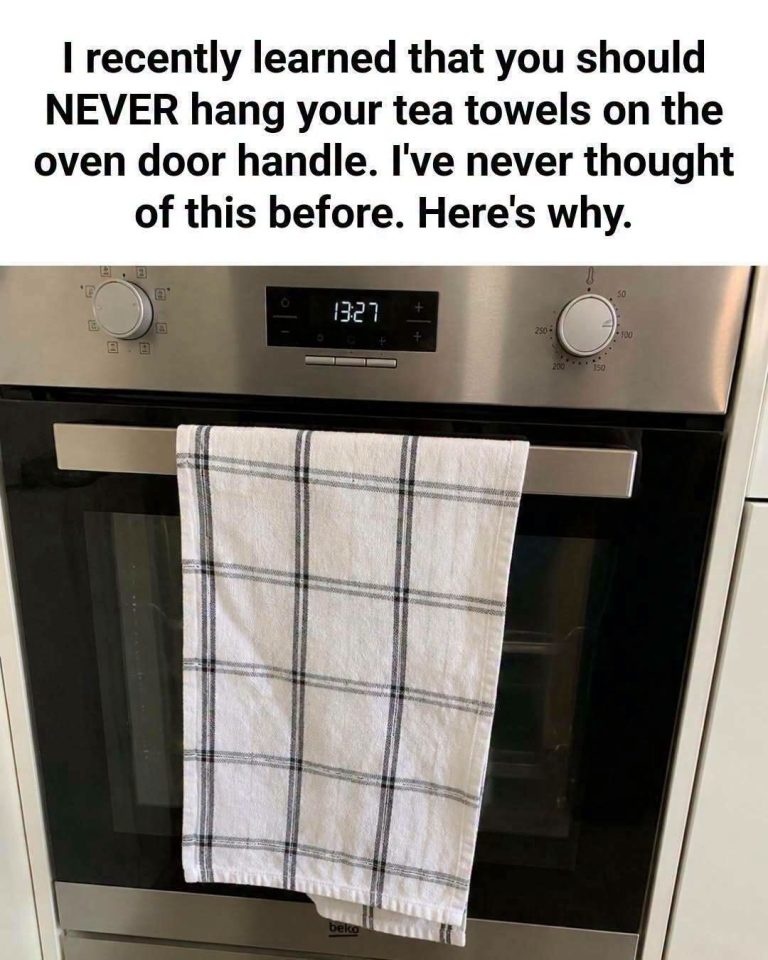
Drape-hanging a kitchen tea towel or dish cloth over the oven door handle is one of the most common habits in households across the globe. It seems completely logical: the oven handle is located centrally in the kitchen, keeps towels within easy arm’s reach while cooking, and provides a wide metal bar for quick drying.
However, food safety experts, home hygiene specialists, and fire safety officials strongly advise against hanging tea towels on oven door handles. This seemingly harmless habit introduces hidden bacterial cross-contamination risks, fire hazards, and appliance wear that can impact family health and home safety. In this comprehensive kitchen organization, hygiene, and home safety guide, we will analyze why you should avoid hanging towels on oven handles, explore hygienic alternative storage solutions, review home insurance coverage, and discuss property protection.
The Hidden Risks of Hanging Towels on the Oven Handle
While hanging a towel on the oven bar offers convenience, it creates several distinct health and safety concerns:
1. High-Risk Bacterial Cross-Contamination
When preparing meals, cooks constantly handle raw meats, unwashed poultry, eggs, and produce. Wiping hands or utensils on a dish towel suspended over the oven handle transfers harmful pathogens—such as Salmonella, E. coli, Campylobacter, and Listeria—directly onto the fabric fibers. Because the oven handle sits directly at waist level and is touched repeatedly by multiple family members throughout the day, the towel becomes a centralized hub for spreading bacteria to clean hands, serving dishes, and kitchen surfaces.
2. Microscopic Heat Trapping and Moisture Retention
Ovens vent heat and internal moisture through specialized vents, often located near the top of the door frame or handle assembly. When a damp tea towel covers these vents, it traps warm, humid air against the towel fabric. Warmth and moisture create the ideal breeding environment for bacteria and mold to multiply exponentially within hours, causing sour odors and microbial growth.
3. Fire Hazard and Appliance Damage
-
Combustion Risk: Leaving a flammable cotton or synthetic towel hanging over an oven door handle—especially near gas cooktops or front-mounted burner knobs—presents a serious fire hazard. Accidental contact with open flames or intense heating elements can ignite the fabric.
-
Latch and Hinge Wear: Constantly pulling downward on a towel draped over the handle places unnecessary mechanical stress on oven door hinges, alignment latches, and handle screws over time, leading to loose handles or improper door sealing.
Hygienic Alternatives for Storing Kitchen Towels
Transitioning away from the oven door handle improves kitchen sanitation without sacrificing convenience:
-
Install Dedicated Wall Hooks or Magnetic Bars: Mount a dedicated towel hook or magnetic rack on the side of a refrigerator, pantry door, or tile backsplash away from food preparation zones and heat sources.
-
Utilize Under-Cabinet Slide-Out Racks: Installing pull-out towel racks inside lower sink cabinets keeps towels neatly tucked away, dry, and hidden from view.
-
Practice the “One-Task” Towel Rule: Keep separate, color-coded towels for drying clean hands, wiping down food contact countertops, and drying washed dishes to prevent cross-contamination.
Food Safety, Homeowners Insurance, and Property Protection
Maintaining kitchen safety standards directly protects family health, appliance longevity, and home investment values.
Preventing Foodborne Illnesses and Medical Costs
Practicing proper kitchen hygiene and towel sanitation prevents severe gastrointestinal infections that lead to medical visits, prescription costs, or missed workdays. Washing kitchen towels daily in hot water ($140^\circ\text{F}$ or $60^\circ\text{C}$) with bleach or antibacterial detergent eliminates lingering pathogens effectively.
Homeowners Insurance and Fire Prevention
Cooking fires remain the leading cause of home fires and home fire injuries in the United States. Maintaining a fire-safe kitchen—including keeping combustible materials like towels, oven mitts, and paper packaging at least three feet away from cooking appliances—helps prevent accidental fires. Reviewing your homeowners insurance or renters insurance policy ensures complete financial protection against unexpected property loss or kitchen fire damage.
Consumer Protection and Appliance Warranties
When repairing damaged oven doors, loose handles, or broken hinges caused by mechanical strain, manufacturer warranties safeguard consumer investments. Consulting legal services specializing in consumer advocacy helps resolve warranty disputes, appliance safety recalls, or property damage claims.
Fascinating Facts About Kitchen Towels and Hygiene
-
Bacterial Colonization Speeds: Micro-biological studies show that standard cotton kitchen towels can harbor active E. coli bacteria colonies within 24 hours of first use if left damp in warm environments.
-
The Sponge vs. Towel Debate: While kitchen sponges carry higher total bacterial densities, kitchen towels cause wider cross-contamination because they are carried across multiple surfaces, hands, and handles.
-
Historic Tea Towels: The term “tea towel” originated in 18th-century England, where linen towels were specifically crafted to dry delicate fine bone china and tea sets without leaving lint residue.
Conclusion
Hanging tea towels on your oven door handle might feel convenient, but it increases the risk of bacterial cross-contamination, traps moisture, and creates unnecessary fire hazards. By relocating your towels to dedicated wall hooks or under-cabinet racks and washing dish cloths frequently, you can keep your kitchen hygienic, protect your appliances, and maintain a safe home environment.
Frequently Asked Questions (FAQ)
1. How often should you change and wash kitchen tea towels?
You should replace hand and dish towels daily in busy households, or immediately after handling raw meat, poultry, or seafood. Always wash kitchen towels in hot water ($140^\circ\text{F}$ or $60^\circ\text{C}$) to kill trapped bacteria effectively.
2. Can hanging a towel on the oven door affect how the oven bakes?
Yes. If the towel obstructs heat vents located along the top or bottom of the oven door, it can disrupt internal airflow, leading to uneven oven temperatures, excessive condensation buildup inside glass panes, or improper baking results.
3. What is the most hygienic material for kitchen towels?
100% waffle-weave cotton or high-grade microfiber towels are ideal choices. They absorb moisture rapidly, dry much faster than plush terrycloth towels, and resist bacterial odor buildup when hung in well-ventilated areas.
