
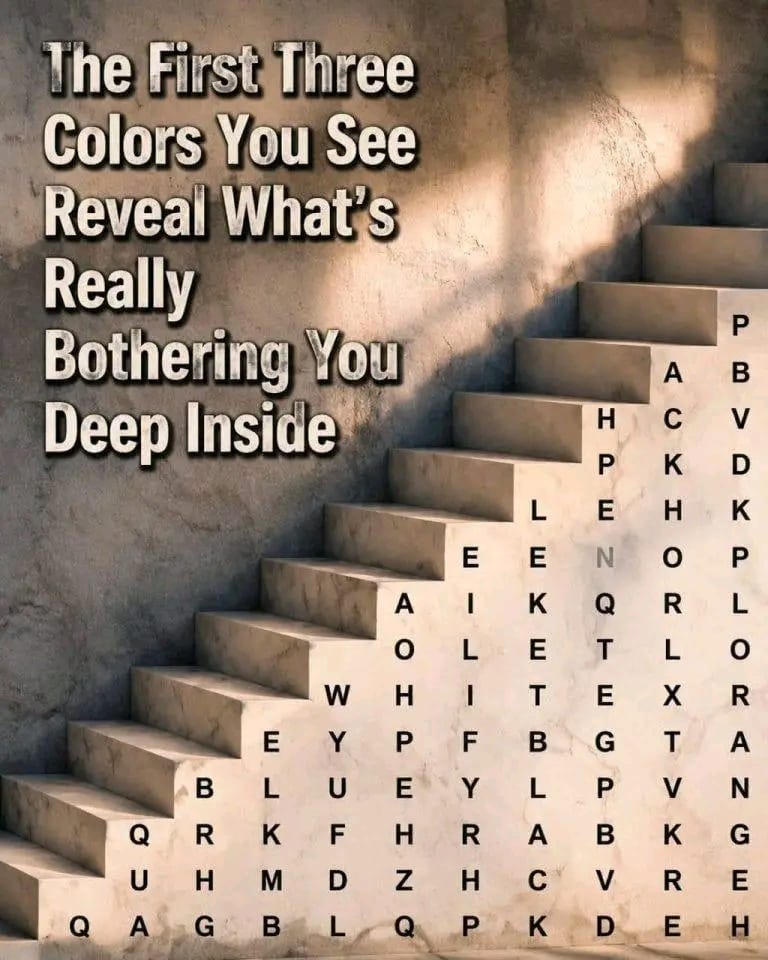
Interactive word searches, optical illusions, and visual personality quizzes frequently sweep across social media platforms. When an image features the prompt “The First Three Colors You See Reveal What’s Really Bothering You Deep Inside” overlaid on a concrete staircase filled with hidden color words (such as WHITE, BLUE, BLACK, and ORANGE), it instantly captures attention, sparks curiosity, and encourages users to share their results in the comments.
While viral quizzes are designed for entertainment rather than clinical diagnosis, exploring how our brains process visual stimuli and seek patterns provides fascinating insights into human psychology. In this comprehensive guide, we explore the mechanics of visual perception, the science of cognitive biases, and practical tips for supporting mental wellness and stress management.
The Psychology of Visual Scanning and Pattern Recognition
Why do hidden-word puzzles and color-finding tests generate such widespread engagement online? Several cognitive factors influence how we interact with these images:
1. Selective Visual Attention
When scanning a complex visual grid containing letters and words, the human brain uses selective attention. Because words like “WHITE” and “BLUE” stand out horizontally across specific steps, certain color words catch the eye faster depending on individual scanning habits and contrast perception.
2. The Barnum Effect in Personality Quizzes
Viral quizzes often rely on the Barnum effect—a psychological phenomenon where individuals believe generic personality descriptions apply specifically to them. Attributing personal stressors to the first three words spotted in a puzzle is a fun, engaging way to externalize daily reflections.
3. The Appeal of Self-Reflection
People naturally enjoy activities that encourage introspection. Whether evaluating daily stress or testing visual acuity, interactive graphics provide a brief, entertaining mental pause during a busy day.
Practical Tips for Stress Management and Mental Well-Being
Navigating daily pressures and supporting long-term emotional wellness involves evidence-based lifestyle habits:
-
Practice Mindful Awareness: Take a few minutes each day to disconnect from social media screens, breathe deeply, and center your thoughts without digital distractions.
-
Maintain Healthy Routines: Prioritize regular physical exercise, balanced nutrition, and consistent sleep schedules to naturally regulate mood and reduce daily stress.
-
Protect Your Health with Proper Insurance: Ensuring you have reliable health insurance coverage guarantees access to professional mental health counselors, stress management specialists, and routine wellness care.
-
Engage in Creative Hobbies: Balance screen time with offline creative outlets, such as reading, art, journaling, or spending time outdoors in nature.
Interesting Facts About Perception and Social Media Trends
-
The Speed of Word Recognition: The human brain can recognize familiar words and colors in milliseconds through parallel processing in the visual cortex.
-
Viral Internet Dynamics: Quizzes that ask users to find hidden words and share their results consistently outperform standard text posts because they create an interactive community experience.
-
The Power of Typography: Bold lettering and contrasting backgrounds are intentionally engineered in viral graphics to draw the viewer’s gaze directly to specific anchor words.
Conclusion
While viral internet puzzles claiming to reveal your deepest worries based on the first three colors you spot are meant purely for entertainment, they offer a delightful way to take a mental break. By balancing lighthearted online games with healthy stress management and proper self-care, you can maintain a relaxed and focused mindset.
Frequently Asked Questions (FAQ)
1. Do the first three colors you see in the puzzle actually reveal your inner thoughts?
No. There is no scientific basis connecting the order in which you spot words on a grid to specific psychological worries; it is an entertaining visual game.
2. Why are word search and hidden color puzzles so popular on social media?
They provide quick, interactive engagement that allows users to test their observation skills and compare results easily with friends in the comment section.
3. What is the best way to reduce daily stress?
Effective stress reduction techniques include mindfulness meditation, regular physical activity, spending time in nature, and maintaining a healthy work-life balance.
