
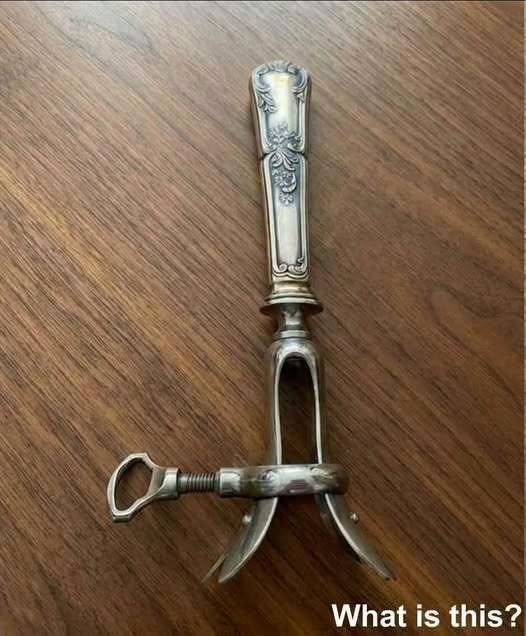
While rummaging through inherited kitchenware, antique shops, or estate sales, people frequently stumble upon intricate metallic implements that leave them completely stumped. With elaborate silver scrollwork, heavy handles, and clamp-like mechanisms, these mysterious tools often look like medieval surgical instruments or Victorian gadgets. One item that regularly sparks intense curiosity online is an ornate silver holder equipped with curved metal jaws and a threaded wing-nut screw.
What appears to be a bizarre medical device or workshop tool is actually a prized piece of historical dining silverware: an antique bone holder (manche à gigot in French). Designed during the height of 19th-century formal dining, this ingenious dining accessory solved a major culinary etiquette dilemma long before modern kitchen conveniences existed. Here is the full story of what this tool is, how it was used, and why antique collectors value it today.
What Is a Bone Holder (Manche à Gigot)?
In the 18th and 19th centuries, formal dining across Europe—particularly in France and Great Britain—was governed by strict rules of etiquette. Hosting an elegant dinner required flawless table presentation, artful food carving, and precise manners.
A centerpiece of elaborate multi-course meals was roasted meat, specifically roasted leg of lamb (gigot d’agneau), ham, or poultry legs. Carving a hot, juicy roast at the head of the table presented a distinct practical problem:
-
Heat and Grease: Holding a freshly roasted bone by hand was far too hot and left fingers covered in grease.
-
Slippery Carving: Trying to steady a curved leg bone using only a serving fork was unstable, making clean, uniform meat slices almost impossible to cut.
Enter the manche à gigot (literally “handle for leg of mutton”). Craftsmen designed a clamp mechanism attached to an ornate, insulated handle made of sterling silver, silver plate, or bone. The server or host clamped the metal jaws tightly around the end of the exposed roast bone using the threaded wing screw. This provided a firm, steady handle to hold the joint securely in place while carving thin, perfect slices with a carving knife.
Mechanical Anatomy: How It Works
The design of an antique bone holder is a triumph of Victorian function blended with aristocratic style.
1. The Clamping Jaws
At the base of the handle sit two curved, contoured metal jaws. These jaws are shaped specifically to fit around the rounded shank end of a lamb, mutton, or pork bone. Small interior ridges or prongs grip the bone surface securely without slipping.
2. The Threaded Vise Screw
Crossing the lower section of the jaws is a threaded screw equipped with a wide key or wing nut. By turning the key clockwise, the host tightened the jaws firmly around the bone, locking the meat in place regardless of its size.
3. Decorative Silver Handle
Because the tool was brought directly to the formal dinner table, it was styled to match fine silverware sets. Handles were heavily embellished with floral engravings, ornate repoussé patterns, or crests, reflecting the wealth and refined taste of the household.
Etiquette and High Society: Why Details Mattered
During the 19th and early 20th centuries, formal dining was an art form. Dining rooms were stages for social standing, and specialized silverware was invented for virtually every imaginable food item. There were distinct utensils for oysters, asparagus, snails, sardines, and bone marrow.
Using a bone holder demonstrated that a host possessed refined manners and attention to detail. It kept the carver’s hands immaculate, preserved table linens from grease stains, and allowed the host to serve guests with effortless grace.
Understanding the history of heirloom artifacts, estate inheritances, and vintage valuations often intersects with broader topics like home property insurance appraisals, estate planning with a legal services attorney, or financial investment tracking for valuable antiques. Objects like sterling silver bone holders are not just kitchen tools—they are tangible pieces of cultural history.
Practical Tips for Identifying and Restoring Antique Bone Holders
If you discover a mysterious silver clamp tool in a collection or antique shop, here is how to identify and care for it:
-
Check for Hallmarks: Look closely near the base of the silver handle or along the inner metal collar for tiny stamped hallmarks. French silver often features a Minerva head stamp, while British pieces bear lion passants, date letters, and maker marks that reveal the exact year and city of manufacture.
-
Inspect the Screw Mechanism: Ensure the threaded screw turns smoothly. Over decades, dried grease or tarnish can jam the threads. Applying a tiny drop of food-grade mineral oil relaxes stiff vintage threads.
-
Clean Gentle with Silver Polish: Use a gentle, non-abrasive silver cream and a microfiber cloth to remove black tarnish (oxidation). Avoid harsh chemical dips that strip away the dark antiquing inside decorative engravings.
-
Display as a Conversation Piece: While modern home cooks rarely use a manche à gigot at the dinner table today, mounting it in a shadowbox or displaying it on a dining sideboard creates an excellent, intriguing conversation starter for dinner guests.
Fascinating Facts About Historical Culinary Tools
-
French Culinary Heritage: The French take the presentation of gigot d’agneau so seriously that silver bone handles remain a classic wedding gift in traditional European families.
-
Multi-Material Handles: While sterling silver was popular among upper-class homes, handles were also crafted from carved mother-of-pearl, ivory, stag horn, and silver-plated brass for everyday households.
-
Evolution of Carving Sets: The bone holder was part of a grander carving suit that included long carving knives, two-prong guard forks, and matching knife rests (porte-couteaux).
Frequently Asked Questions (FAQ)
What is the official name of this vintage tool?
In English, it is referred to as an antique bone holder, ham bone clamp, or roast handle. In French culinary terminology, it is known as a manche à gigot.
Are antique silver bone holders valuable today?
Yes! Depending on the material (sterling silver vs. silver plate), the maker’s hallmark, and condition, antique bone holders generally range in value from $50 to over $300 USD. Rare sterling silver examples from famous silversmiths can command even higher prices among antique silver collectors.
Can you still use a vintage bone holder for cooking today?
Absolutely. If thoroughly cleaned and polished, a vintage bone holder is fully functional for holding modern holiday roasts, leg of lamb, or baked hams steady while carving.
Conclusion: Rediscovering Forgotten Culinary Craftsmanship
The next time you encounter a peculiar silver tool with clamping jaws and a threaded key, you are looking at a masterwork of 19th-century table etiquette. The antique bone holder represents an era when dining was an artful ritual that combined practical utility with timeless elegance. Uncovering the story behind forgotten household items connects us to historic traditions, reminding us that even the simplest daily task—like carving a roast—was once performed with extraordinary style.
Scroll down to explore more related articles.
