
Every single day, millions of people search for the ultimate morning routine to unlock better energy, sharper focus, and long-term physical vitality. While wellness trends come and go—from expensive superfood powders to complex biohacking protocols—one of the simplest and most life-changing health habits costs absolutely nothing. That habit is drinking a clean glass of water on an empty stomach the very second you wake up.
While many know that hydration aids digestion and perks up tired skin, few realize the profound, immediate physiological impact morning hydration has on cardiovascular function. During eight hours of sleep, your body naturally loses water through respiration, sweat, and overnight metabolic processes. Wake up, and your blood is at its thickest state of the entire day. Understanding how immediate hydration protects your heart, thins your blood, and aids arterial circulation is vital for anyone taking a proactive approach to lifelong cardiovascular health.
The Hidden Mechanics of Morning Dehydration and Cardiovascular Stress
To appreciate why morning hydration is so essential, we must examine what happens inside your circulatory system while you sleep. Throughout the night, your body continues to filter waste, regulate body temperature, and repair cellular tissue. Because you are not consuming fluid during these rest hours, mild dehydration is nearly universal upon waking.
When you are mildly dehydrated, the fluid volume of your blood plasma decreases. This causes your blood to become more viscous, or “thicker.”
The Strain on the Heart Muscle
-
Increased Resistance: Pumping thick, viscous fluid through narrow blood vessels requires significantly more physical effort from the heart.
-
Higher Workload: Your resting heart rate and blood pressure increase slightly upon waking as your heart works harder to deliver oxygen to tissues.
-
Morning Cardiac Events: Cardiologists and medical professionals have long noted a statistical spike in cardiovascular events, such as heart attacks and strokes, during the early morning hours. This phenomenon is closely tied to circadian blood pressure surges combined with peak overnight dehydration.
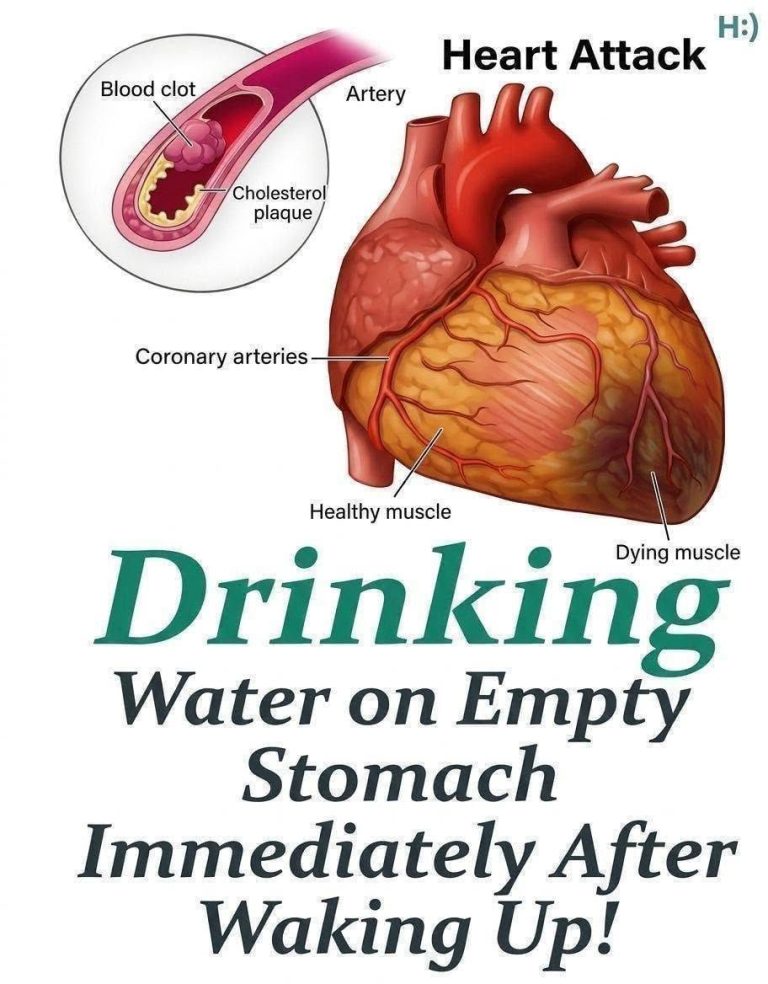
When cholesterol plaque builds up inside coronary arteries over time (atherosclerosis), narrowed passages become vulnerable. If thick blood forms a sudden blood clot in these narrowed spaces, it can block oxygen flow completely, leading to dying heart muscle tissue—the very definition of a heart attack.
How Drinking Water Immediately After Waking Up Transforms Your Vascular System
Gulping down 16 to 24 ounces of water immediately after waking up sets off a rapid, positive cascade throughout your entire cardiovascular and metabolic infrastructure.
1. Rapid Blood Volume Expansion and Viscosity Reduction
When water hits an empty stomach, it passes quickly into the small intestine, where it is absorbed into the bloodstream within 5 to 10 minutes. This influx of fresh water immediately dilutes the blood plasma, reducing blood viscosity. Smooth, thin blood flows effortlessly through arterial walls, reducing mechanical friction and lightening the workload on your heart muscle.
2. Natural Blood Pressure Optimization
Dehydration triggers the release of vasopressin, a hormone that causes blood vessels to constrict and retain water, which elevates blood pressure. By rehydrating immediately upon waking, you suppress excess vasopressin release, allowing arterial walls to relax and widen naturally.
3. Flushing Overnight Metabolic Waste and Supporting Kidney Function
Your kidneys work non-stop to filter metabolic byproducts from your blood. Morning hydration provides the necessary fluid volume for your kidneys to flush out concentrated sodium, urea, and metabolic waste efficiently. Proper fluid balance protects renal tissue, which in turn regulates systemic blood pressure over the long term.
Protecting your vascular system with consistent daily habits is the ultimate preventative health investment, lowering future reliance on complex pharmaceutical regimens, specialized medical interventions, or costly health insurance claims.
The Broader Health Benefits of Empty-Stomach Morning Hydration
While cardiovascular support is the primary benefit, drinking water first thing in the morning creates a ripple effect across your entire physiology.
Gastrointestinal Awakening and Detoxification
Water on an empty stomach stimulates the gastrocolic reflex, a natural nerve signal that prompts movement in the lower digestive tract. It clears out digestive residue from the previous day, prevents chronic constipation, and prepares the stomach lining for nutrient absorption during breakfast.
Metabolism and Weight Management
Clinical studies demonstrate that drinking 500 ml (about 17 ounces) of cool or room-temperature water can temporarily boost your metabolic rate by up to 30%. The energy required by your body to warm the water to body temperature accelerates thermogenesis, supporting healthy weight management throughout the day.
Enhanced Cognitive Clarity and Energy
Even 1% to 2% mild dehydration impairs memory, mental alertness, and mood stability. Hydrating your brain cells immediately upon waking eliminates morning brain fog, providing sustained mental clarity for demanding work in business, higher education, or daily decision-making.
Practical Tips: How to Build the Ultimate Morning Water Habit
To get the absolute maximum health benefit from your morning glass of water, follow these simple, expert-recommended guidelines:
-
Keep Water by Your Bedside: Place a glass or insulated stainless-steel bottle on your nightstand before going to sleep. Making water the very first thing you reach for—before touching your smartphone—ensures the habit sticks effortlessly.
-
Drink Before Coffee or Tea: Coffee and caffeinated teas are mild diuretics. Drinking at least 16 ounces of pure water before your morning caffeine ensures your body is properly hydrated before processing caffeine.
-
Opt for Room-Temperature or Warm Water: Ice-cold water can occasionally cause gastrointestinal cramps when consumed on a completely empty stomach. Room-temperature or slightly warm water is gentler on your digestive tract and absorbs quickly.
-
Add Fresh Lemon for Flavor: If you dislike plain water, squeeze half a fresh lemon into your glass. Lemon adds a burst of Vitamin C, trace potassium, and organic acids that support liver function and fresh breath.
Fascinating Facts About Hydration and the Human Heart
-
Massive Daily Output: The average human heart pumps roughly 2,000 gallons of blood through 60,000 miles of blood vessels every single day.
-
Brain and Water: Your brain is made up of approximately 73% water. Even minor dehydration causes brain tissue to contract slightly away from the skull, causing morning headaches.
-
The “Japanese Water Therapy”: In traditional Japanese medicine, drinking four glasses of warm water on an empty stomach immediately upon waking is an ancient, highly revered practice for longevity and digestive vitality.
Frequently Asked Questions (FAQ)
How much water should I drink immediately after waking up?
Starting with 16 to 24 ounces (about 2 to 3 standard glasses) of room-temperature water is ideal for most adults. If that feels like too much initially, start with 8 ounces and gradually increase your intake over a week.
Does drinking water on an empty stomach reduce the risk of heart attacks?
While water alone cannot eliminate underlying heart disease or severe arterial plaque, maintaining proper hydration dramatically reduces blood viscosity and morning arterial strain. Combined with a healthy diet and regular exercise, it is a powerful preventative measure for cardiovascular health.
Should I brush my teeth before or after drinking morning water?
It is actually best to drink your water before brushing your teeth! Overnight, beneficial oral flora build up in your mouth. Swallowing water before brushing helps transport these natural microbes into the acidic environment of your stomach, while avoiding the ingestion of leftover toothpaste chemicals.
Can drinking too much water at once be harmful?
Extremely excessive water intake (several liters within an hour) can lead to a rare condition called hyponatremia, where blood sodium levels drop dangerously low. Stick to 16 to 24 ounces in the morning for safe, optimal hydration.
Conclusion: A Small Morning Step for Lifelong Heart Health
Achieving long-term health and protecting your heart doesn’t require drastic, overwhelming lifestyle shifts. By drinking a generous glass of clean water on an empty stomach immediately after waking up, you deliver essential hydration to your cardiovascular system right when it needs it most. Thinning your blood, reducing arterial strain, waking up your metabolism, and clearing your mind takes less than 60 seconds every morning. Make this simple, no-cost daily ritual your top health priority and give your heart the support it deserves for years to come.
Scroll down to explore more related articles.
