
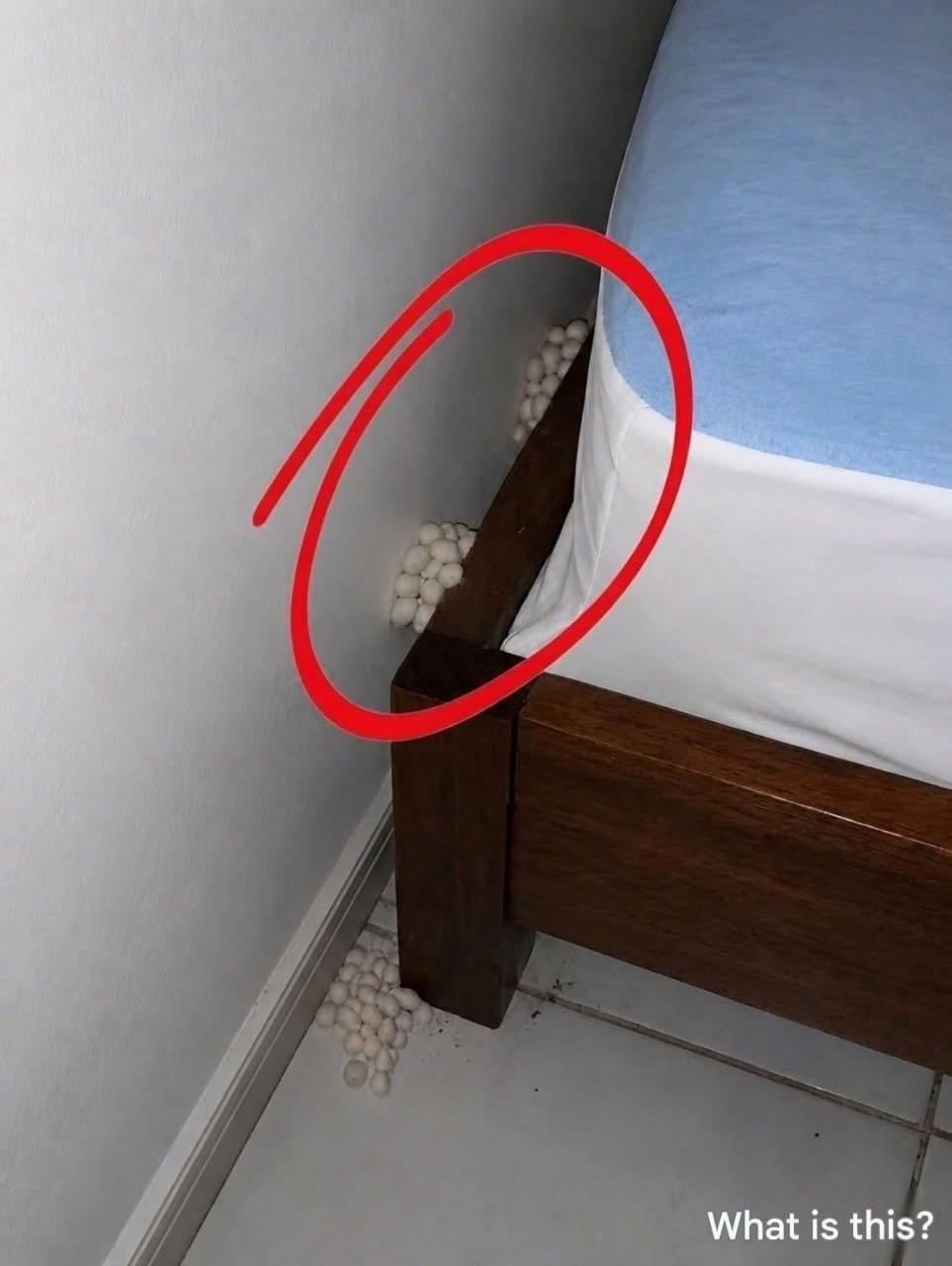
Finding mysterious clusters of small, white, oval-shaped objects behind a bed frame or along baseboards can instantly trigger anxiety for any homeowner or tenant. While many people immediately panic thinking they are dealing with a severe pest infestation, reptilian eggs, or dangerous mold growths, identifying the exact nature of these strange discoveries is the first crucial step toward addressing the situation safely and effectively.
Understanding household pests, domestic reptile behaviors, indoor environmental health, and home maintenance strategies can protect your family’s health, safeguard your personal property, and prevent unnecessary expenditure on pest control services. In this comprehensive guide, we will analyze the most common causes of egg clusters found behind bedroom furniture, examine potential risks, and outline actionable steps for removal and remediation.
What Could Those Mysterious White Clusters Be?
When small, round, or oval white objects accumulate in narrow crevices—such as the gap between a mattress frame and a wall—several common culprits are usually responsible.
1. Reptile Eggs (Geckos, Lizards, and Snakes)
In many warm, temperate, or tropical regions, small house geckos and harmless lizards often enter homes through window screens, door gaps, or utility vents.
-
Gecko and Lizard Eggs: Female geckos frequently seek out dark, quiet, warm, and undisturbed spaces to lay their eggs. The narrow, dark gap behind a bed frame resting against a wall offers an ideal microclimate. Gecko eggs are typically hard-shelled, white or off-white, roughly the size of small marbles or jellybeans, and laid in small or medium-sized clusters.
-
Snake Eggs: Small non-venomous house snakes can also lay leathery, oblong white eggs in hidden indoor corners, though this is far less common in occupied bedrooms.
2. Insect and Pest Infestations
Certain household pests lay white, pale, or translucent egg masses in secluded areas around sleeping quarters:
-
Cockroaches: While cockroaches lay egg cases called oothecae (which are usually reddish-brown or dark brown), certain species or degraded cases can leave pale remnants.
-
Spiders: Female spiders construct white, silken egg sacs. While spider egg sacs are typically webbed or woolly, a large aggregation can appear as a cluster of white spheres.
-
Bed Bugs: Bed bug eggs are tiny (about 1 millimeter), pearly-white, and sticky, usually deposited in mattress seams or bed frame joints. However, they are far smaller than the larger marble-like spheres often pictured in viral home mysteries.
3. Non-Biological Household Items
Occasionally, strange white clusters turn out to be completely non-living household items. Sifting or foam beads from weighted blankets, filling from plush pillows, broken beanbag chair styrofoam pellets, or moisture-absorbing silica gel packs that have burst open can roll into hidden corners and mimic egg clusters.
Health Hazards, Property Insurance, and Pest Management
Discovering unknown biological matter in your bedroom requires a balanced approach to ensure health, safety, and property protection.
Evaluating Health Risks
Most small house geckos and garden lizards are completely harmless to humans and actively consume undesirable insects like mosquitoes, moths, and flies. However, handling wild reptile eggs or animal droppings with bare hands can pose risks of bacterial exposure, such as Salmonella. Always wear protective gloves when cleaning dark corners behind furniture.
Professional Pest Control and Legal Services
If mysterious egg clusters turn out to be a widespread pest infestation (such as invasive insects or rodents), hiring licensed pest control operators is essential.
-
Landlord vs. Tenant Legal Obligations: For renters, discovering major pest infestations raises questions regarding lease agreements and tenant rights. Consulting legal services or local housing authorities can help clarify whether a property owner is legally obligated to cover extermination and remediation costs.
-
Home Insurance Coverage: Standard home insurance policies generally exclude damage caused by routine pest infestations, insect damage, or wild animal nests. Maintaining routine home inspection schedules prevents minor pest invasions from turning into costly out-of-pocket structural repairs.
Step-by-Step Guide: How to Safely Remove and Clean the Area
If you discover unexplained egg clusters or debris behind your bed frame, follow these practical steps to safely clean the area:
-
Put On Protective Gear: Wear disposable rubber gloves and a dust mask before moving heavy furniture or handling unknown organic materials.
-
Inspect and Identify: Use a bright flashlight to carefully inspect the cluster. Note whether the items are hard-shelled, leathery, soft, or synthetic beads.
-
Safe Removal:
-
If they appear to be harmless gecko/lizard eggs, gently scoop them into a plastic container using a piece of cardboard and relocate them outside to a dry, shaded garden spot.
-
If they are insect eggs or unknown debris, scoop them into a sealable plastic bag and discard them immediately in an outdoor trash bin.
-
-
Disinfect the Area: Clean the wall, baseboard, and bed frame thoroughly using hot soapy water followed by a surface disinfectant or diluted bleach solution.
-
Vacuum Thoroughly: Vacuum along baseboards, carpet edges, and behind furniture using a vacuum equipped with a HEPA filter to eliminate dust mites, dander, and microscopic pest eggs.
Preventive Measures to Keep Pests Away from Sleeping Areas
To keep your bedroom free of unwanted nocturnal guests and mysterious egg clusters, implement these proactive home maintenance habits:
-
Seal Entry Points: Use caulk or weatherstripping to seal small gaps around windows, exterior doors, baseboards, and wall outlets.
-
Maintain Space Around Beds: Keep bed frames situated at least 2 to 3 inches away from walls to encourage airflow and reduce warm, dark hiding spots.
-
Control Indoor Humidity: Run a dehumidifier or air conditioner to maintain indoor relative humidity below 50%, making the environment less attractive to reptiles and moisture-seeking insects.
-
Declutter Bedroom Storage: Avoid storing cardboard boxes or loose clothing directly under or behind bed frames.
Fascinating Facts About Gecko and Lizard Eggs
-
Hard Shell Protection: Unlike most reptiles that lay soft, leathery eggs, many gecko species lay calcified, hard-shelled eggs that resist drying out in warmer environments.
-
Communal Nesting Sites: Multiple female geckos will often share a single safe, dark nesting spot, which explains why dozens of eggs can sometimes accumulate in a single cluster behind furniture.
-
Incubation Period: Depending on room temperature, small house gecko eggs typically hatch within 40 to 90 days, releasing tiny, fully independent juvenile lizards.
Conclusion
Discovering mysterious white egg clusters behind a bed can certainly give anyone a sudden start, but in most residential scenarios, they are simply the harmless eggs of house geckos or non-toxic synthetic filling from bedding. By identifying the origin, safely cleaning the area, and sealing minor entry cracks around the room, you can maintain a clean, comfortable, and peaceful home environment.
Frequently Asked Questions (FAQ)
1. Are house gecko eggs dangerous to keep inside?
Gecko eggs themselves are not dangerous, and geckos are beneficial creatures that eat household pests. However, it is best to relocate the eggs outside so the hatchlings do not populate your living space or leave droppings on walls and furniture.
2. How can I tell lizard eggs apart from insect eggs?
Lizard and gecko eggs are typically much larger (ranging from 8mm to 15mm in diameter), hard-shelled or leathery, and laid in distinct groupings. Most common indoor insect eggs (like bed bugs or fleas) are tiny, often less than 1mm to 2mm in size, and require close magnification to see clearly.
3. What natural repellents keep lizards and geckos away from bedrooms?
Placing crushed garlic cloves, eggshells, or spraying a light solution of water and essential oils (like peppermint, eucalyptus, or cayenne pepper) along window sills and baseboards acts as a natural deterrent for geckos without using toxic chemicals.
