
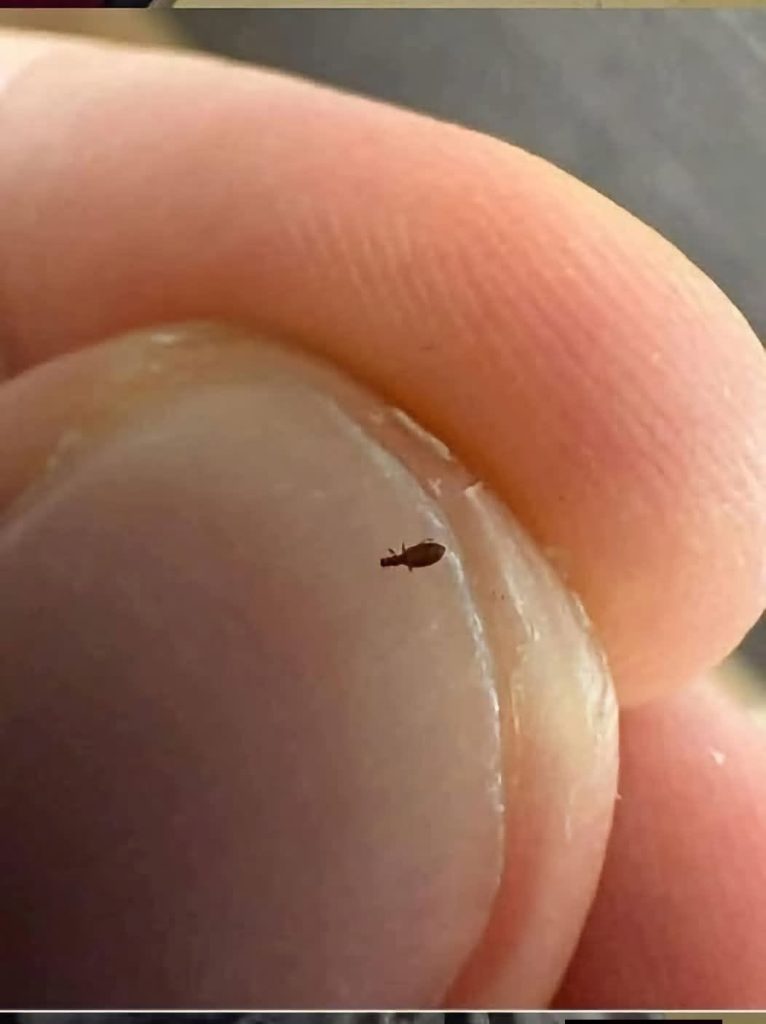
Finding unexpected insects in your living space is always frustrating, but discovering tiny bugs crawling near your food supply brings a unique level of concern for homeowners and apartment dwellers alike. Every year, millions of households encounter pantry pests—tiny beetles, moths, and grain-dwelling insects that quietly infiltrate stored dry goods, flour bags, cereal boxes, and pantry shelves.
A viral image making the rounds across social media shows a close-up macro shot of a person holding an extremely tiny, reddish-brown beetle between their fingertips. Featuring a distinctive elongated snout and compact body, this microscopic visitor is a classic example of a weevil (specifically from the Curculionidae family, such as the rice weevil or granary weevil). Though harmless to human health, these tiny pests can rapidly multiply inside stored food packages if left unchecked.
In this deep dive, we will identify what weevils are, explain how they enter homes, examine effective pest control and pantry cleanup strategies, and discuss how managing home care and financial wellness creates a stress-free living environment.
What Is a Weevil? Identifying the Tiny Grain Pest
Weevils are a specialized type of beetle known for their unique physical structure and specialized feeding habits.
Distinctive Characteristics
-
Elongated Snout (Rostrum): The most recognizable feature of a true weevil is its prolonged head, which forms a slender snout with tiny chewing mouthparts at the tip.
-
Compact Body Size: Most common pantry weevils measure between 2 to 4 millimeters in length—small enough to sit easily on the tip of a finger, nail, or grain of rice.
-
Coloration: They range from dark reddish-brown to dull black, making them easy to spot when crawling against white paper bags, light counter surfaces, or clear plastic bags.
How Weevils Infiltrate Your Kitchen
Unlike pests that crawl into homes through foundation cracks from outdoors, pantry weevils usually enter homes directly inside commercially packaged food products. Female weevils chew microscopic holes into whole grains—such as raw rice, wheat, corn, oats, or birdseed—and deposit eggs inside before sealing the grain with a gelatinous fluid. When conditions are warm, the eggs hatch into larvae, feeding on the interior grain before emerging as fully formed adult beetles.
Comparing Common Kitchen and Household Pests
Distinguishing weevils from other common small household pests ensures you take the right corrective action quickly.
| Pest Type | Primary Food Source | Distinctive Features | Target Habitat |
| Rice / Granary Weevils | Whole grains, raw rice, pasta, cereal, dried beans | Elongated snout, small reddish-brown body | Inside sealed grain bags & pantry shelves |
| Flour Beetles | Milled flour, cake mixes, processed cereal | Flat reddish body, no elongated snout | Flour canisters and processed starch bags |
| Indian Meal Moths | Nuts, dried fruit, cereal, pet food | Flying moths, silken webbing in food containers | Upper pantry corners and unsealed boxes |
| Bed Bugs | Human / animal host blood | Oval flat body, reddish-brown, no snout | Mattress seams, bed frames, upholstered furniture |
Step-by-Step Guide: How to Clear a Weevil Infestation
If you spot a weevil in your kitchen, don’t panic! Resolving a pantry pest issue is straightforward with systematic cleaning and containment.
       +-------------------------------------------------------+
       |             PANTRY DECONTAMINATION PROCESS            |
       +-------------------------------------------------------+
                                   |
                                   v
                      +-------------------------+
                      | INSPECT ALL DRY GOODS   |
                      | (Check rice, pasta,     |
                      |  flour, & pet food)     |
                      +-------------------------+
                                   |
                                   v
                      +-------------------------+
                      | DISCARD INFESTED FOODS  |
                      | (Seal tightly in trash  |
                      |  bags & move outdoors)  |
                      +-------------------------+
                                   |
                                   v
                      +-------------------------+
                      | VACUUM & SCRUB SHELVES  |
                      | (Clean with hot soapy   |
                      |  water or vinegar)      |
                      +-------------------------+
                                   |
                                   v
                      +-------------------------+
                      | SWITCH TO AIRTIGHT      |
                      | GLASS / PLASTIC BINS    |
                      +-------------------------+
1. Conduct a Thorough Pantry Inspection
Examine every cardboard box, paper bag, and plastic pouch stored in your cabinets. Pay close attention to bags of rice, whole wheat grains, dried beans, pasta, cornmeal, popcorn kernels, and pet food. Look for live adult beetles, tiny holes in packaging, or fine powdery residue at the bottom of containers.
2. Discard Infested Packages Immediately
Throw away any food packages that show signs of infestation. Place the items directly into heavy-duty trash bags, tie them securely, and move them to an outdoor waste bin to prevent beetles from crawling back inside your home.
3. Deep Clean Cabinets and Shelves
Remove all remaining food containers and vacuum your pantry shelves thoroughly, making sure to clean cracks, corners, and shelf support brackets. Wipe all surfaces down with warm, soapy water or a 50/50 dilution of white vinegar and water to eliminate stray eggs or food dust.
4. Store Dry Food in Airtight Containers
Switch from paper boxes and flexible plastic bags to thick, rigid glass or BPA-free plastic containers with rubber-sealed airtight lids. Weevils cannot chew through hard glass or thick plastic, keeping your food completely safe from future contamination.
Home Protection, Health Insurance, and Financial Peace of Mind
Maintaining a clean, well-organized home is a core part of personal health and domestic comfort. Combining smart home management with sound financial and healthcare choices ensures long-term security.
Food Safety, Hygiene, and Health
While grain weevils do not bite, sting, or carry infectious diseases harmful to humans or pets, eating heavily infested food can alter the texture and taste of meal ingredients. Maintaining hygienic food storage habits prevents unnecessary food waste and supports nutritional health.
Protecting Your Household and Assets
Keeping your home environment running smoothly requires balancing daily chores with broader management tools:
-
Home and Renters Insurance: Securing proper property insurance guarantees long-term coverage for your living space against unexpected structural damage, water leaks, or pest remediation events.
-
Financial and Debt Management: Managing personal credit cards, keeping mortgage payments organized, balancing personal loans, and reviewing interest rates eliminate unnecessary domestic stress.
-
Legal and Business Services: Updating estate plans, business agreements, and legal documents protects family wealth for future generations.
-
Comprehensive Healthcare: Maintaining quality health insurance ensures regular medical access, routine wellness checkups, and peace of mind for the whole family.
Practical Prevention Tips for a Pest-Free Pantry
To keep weevils and other pantry bugs out of your kitchen permanently, adopt these simple household habits:
-
Freeze New Grain Purchase Packages: When buying bulk raw rice, grain, or dried beans, place the sealed packages in your freezer for 48 hours before storing them in your pantry. Freezing kills any microscopic insect eggs instantly.
-
Keep Bay Leaves on Pantry Shelves: Bay leaves act as a natural, non-toxic deterrent for many grain-dwelling pests. Tuck a few dried bay leaves inside grain containers or on shelf corners.
-
Practice “First In, First Out” (FIFO): Use older food packages before opening new ones, and avoid storing bags of grain for years at a time.
-
Keep Shelves Dry and Well-Ventilated: Pests thrive in warm, humid conditions. Ensure your kitchen cabinets remain cool, dry, and clean.
Fascinating Facts About Weevils
-
Enormous Species Diversity: Weevils represent one of the largest biological families on Earth, with over 97,000 known species globally!
-
Natural Defense Mechanisms: When threatened, many species of weevils pretend to be dead by pulling their legs tightly against their bodies and dropping off plant leaves or surfaces.
-
Incredible Structural Engineering: A female weevil’s snout features tiny, fully functional jaw teeth at the tip that operate like miniature drills to penetrate tough grain hulls.
Conclusion
Discovering a tiny bug like a weevil in your home can be alarming at first, but knowing what it is makes managing it simple. By conducting a quick pantry cleanup, discarding infested packages, and storing grains in airtight glass or plastic containers, you can maintain a clean, pest-free kitchen effortlessly.
By pairing daily home care with healthy nutrition, regular medical checkups, and stable financial planning, you create a comfortable and secure living environment for your family. Share this helpful pest identification guide with friends and family today!
Frequently Asked Questions (FAQ)
Q1: Are weevils harmful to humans or pets?
No. Weevils do not bite, sting, carry diseases, or cause structural damage to homes. They feed exclusively on dry grains and plant materials.
Q2: How do weevils get into sealed bags of rice or flour?
Female weevils lay microscopic eggs inside whole grains before or during commercial packaging. The eggs hatch inside the sealed package when temperature and humidity conditions are warm.
Q3: Can you eat food that had weevils in it?
Accidentally eating a weevil or infested grain is not toxic or dangerous to human health. However, most people prefer to discard infested food due to taste, texture, and hygiene preferences.
Q4: Will freezing flour or rice kill weevil eggs?
Yes! Storing new bags of whole grains, raw rice, or bulk flour in the freezer for 48 hours kills any dormant eggs or larvae, preventing future infestations.
Q5: What is the best container to prevent pantry bugs?
Airtight glass jars or heavy plastic containers with silicone lid seals are the best options. Bugs cannot chew through hard glass or plastic seals.
