
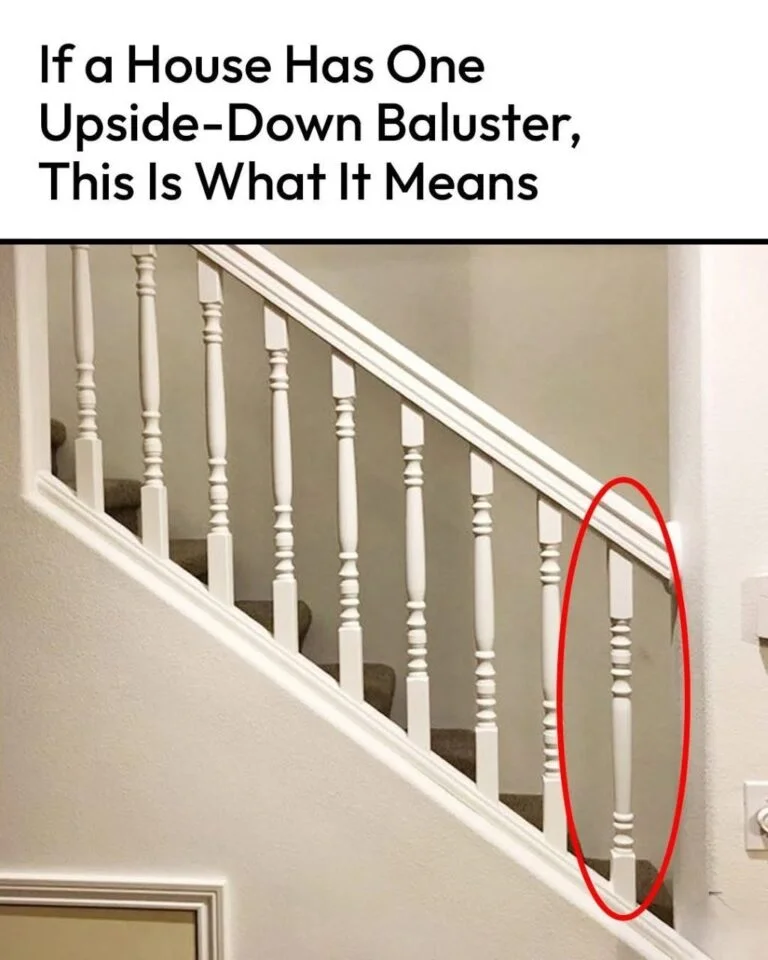
When walking up the stairs of an older home, historical estate, or custom-built house, you might notice something unexpected: a single spindle or baluster on the handrail that has been installed upside down. While most observers assume it is an oversight made by an inexperienced carpenter, this intriguing architectural detail is often intentional.
Known in traditional woodworking lore as a “humility baluster” or an intentional imperfection, the inverted spindle holds a rich history rooted in folklore, architectural traditions, and master craftsmanship. Understanding the hidden meaning behind this unique design choice provides a fascinating look into home construction traditions, property values, and architectural design. Here is everything you need to know about upside-down balusters and what they mean for a home’s heritage.
The Origins of the “Humility Baluster” Tradition
The practice of inserting an upside-down baluster into a staircase railing dates back centuries, across various cultures and craftsmanship guilds.
The Humility Tradition and Folklore
Historically, many European and early American woodworkers believed that only a divine entity could create perfection. To show humility and avoid hubris or bad luck, master builders would deliberately place one baluster upside down or slightly off-center. This deliberate flaw served as a subtle sign of reverence, ensuring that human vanity did not mar the home’s spiritual harmony.
The Master’s Signature
In some woodworking traditions, an inverted spindle was used as a subtle signature by the master carpenter or staircase builder. Because custom stairs required precise hand-turned lathe work and complex geometry, leaving one inverted piece allowed artisans to distinguish their custom work from mass-produced millwork.
Practical Reasons for Inverted Staircase Spindles
Beyond folklore and craftsmanship tradition, there are practical and mechanical reasons why an upside-down baluster might exist in a modern home.
Repairs and Historic Restoration
During home renovations or historic preservation projects, original balusters may become damaged or rotted. If a contractor or homeowner orders a replacement spindle that does not perfectly match the taper, top pin, or bottom square of the existing rail system, turning it upside down is sometimes the only way to make it fit securely into the top handrail plow or bottom tread hole.
Simple Installation Errors
In post-war sub-divisions and rapid housing developments, staircases were assembled quickly by framing crews. Because turned balusters often look symmetrical at first glance, an installer moving rapidly through a job site could easily install one spindle upside down before securing it with finish nails and paint.
How Unique Architectural Details Impact Home Value and Insurance
Architectural quirks and historical elements add undeniable character to a property, but they can also influence real estate appraisals, home inspections, and insurance considerations.
-
Historic Home Valuation: Authentic period features—including custom woodworking, original staircase spindles, and historic moldings—can increase a home’s market value and appeal to buyers interested in historic properties.
-
Building Code Compliance: Regardless of orientation, all staircase balusters must meet modern building safety codes. For instance, the standard code requires that balusters be spaced closely enough so that a 4-inch sphere cannot pass through, preventing falls and injuries for young children.
-
Home Insurance Inspections: During standard home insurance underwriting, inspectors evaluate staircases primarily for structural integrity, handrail stability, and proper spindle spacing rather than cosmetic orientation.
Fascinating Facts About Staircases and Woodworking
-
Baluster vs. Banister: A baluster (or spindle) is the vertical post supporting the handrail. A banister refers to the entire railing system, including the handrail, balusters, and newel posts.
-
Origin of the Word: The word “baluster” comes from the Italian word balaustra, named after the pomegranate flower, which resembles the double-curved shape of classic turned wooden spindles.
-
The Newel Post Tradition: In colonial America, placing a small ivory or brass “peace pin” in the top of a staircase newel post signified that the homeowner’s mortgage was paid off.
Frequently Asked Questions (FAQ)
Does an upside-down baluster weaken the staircase?
No. As long as the baluster is securely fastened with wood glue, screws, or nails at both top and bottom connections, its physical orientation does not weaken the structural integrity of the handrail system.
Should I fix an upside-down baluster in my home?
If the inverted spindle is part of an older or historic staircase, keeping it intact preserves the home’s charm, history, and conversation potential. If it bothers you aesthetically, a carpenter can easily remove and reorient it during a routine railing repair.
How much does it cost to replace damaged staircase balusters?
Replacing individual wooden balusters generally costs between $15 and $50 per spindle for materials, plus minimal labor costs if hired out to a local handyman or finish carpenter.
Whether born out of historic folklore, artisan humility, or a quick installation error, an upside-down baluster remains one of the most interesting conversation starters in home design. Spotting these subtle details reminds us of the human craftsmanship behind the houses we live in every day.
