
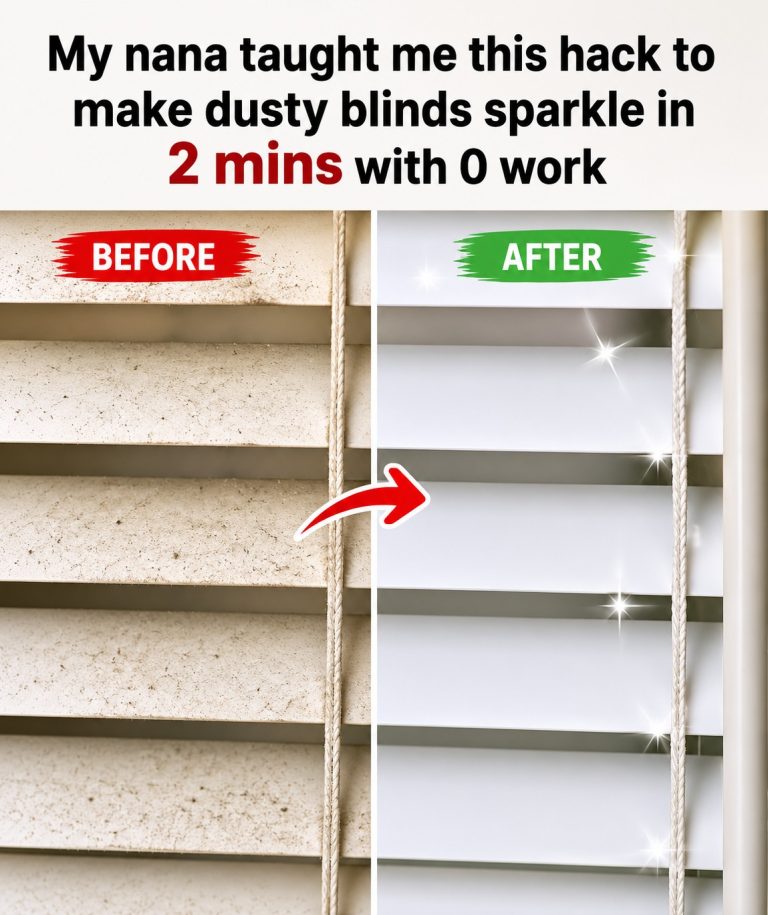
Cleaning window blinds is universally recognized as one of the most tedious household chores. Whether you have classic horizontal faux-wood blinds, lightweight aluminum slats, or durable vinyl window coverings, dust and grime seem to attach themselves to slat surfaces with incredible persistence. Standard dusting methods often feel like an exercise in futility—wiping a single slat usually pushes dust onto the slat below, while damp rags leave behind streaky mud lines that take forever to scrub away manually.
Fortunately, long before expensive commercial cleaning sprays, electronic dusters, and single-use microfiber gadgets flooded store shelves, older generations relied on clever, low-cost home economics tricks. Passed down through families, these time-tested hacks leverage basic household items to clean stubborn dust, grease, and static buildup in a fraction of the time.
In this comprehensive guide, we explore the ultimate 2-minute blind cleaning hack, break down the science of anti-static dust repelling, share material-specific maintenance strategies, and explain how smart home cleaning habits can improve air quality and protect your household finances.
Why Do Window Blinds Attract So Much Dust?
To solve the problem of dirty blinds effectively, it helps to understand why they get so dusty in the first place.
Window blinds act as natural dust collectors due to two main factors: indoor air circulation and electrostatic attraction.
[ Indoor Air Currents ] ──> Air Flow Across Slats ──> Static Charge Builds Up ──> Dust Sticks
-
Air Circulation Patterns: Windows are primary focal points for thermal exchange in your home. As warm air rises and cool air drops near glass panes, continuous microscopic air currents pass through your blind slats, carrying airborne dust particles, pet dander, and pollen.
-
Static Charge Generation: Synthetic materials like vinyl, PVC, and painted aluminum accumulate a mild static electrical charge when air flows across them. This static charge magnetically attracts lightweight dust particles, locking them onto the slat surface.
-
Kitchen Grease and Humidity: In kitchens and living rooms, airborne cooking oils and ambient humidity combine with loose dust, forming a tacky, stubborn layer of grime that standard feather dusters simply cannot remove.
The Nana Hack: The Dryer Sheet & Tongs Method
The secret to cleaning dirty blinds in under two minutes—without taking them down from the window frame—relies on a brilliant combination of two everyday household items: kitchen tongs and used fabric softener dryer sheets (or microfiber cloths soaked in a diluted fabric softener solution).
Supplies Needed:
-
Standard metal or plastic kitchen tongs
-
2 Rubber bands
-
2 Dryer sheets (or 2 small microfiber cloths soaked in a 1:4 mix of fabric softener and water)
-
Warm water (if deep cleaning greasy build-up)
Step-by-Step Instructions:
Step 1: Wrap the Tongs
Wrap one dryer sheet (or damp microfiber cloth) tightly around each arm of your kitchen tongs. Secure the sheets at the top and bottom of each arm using rubber bands.
Step 2: Clamp and Slide
Close the blinds so the slats lie flat in a slightly angled position. Start at the top slat of your window blinds. Clamp the padded tongs firmly over the individual slat so that one arm touches the top surface and the other arm touches the bottom surface simultaneously.
Step 3: Wipe Across in One Motion
Smoothly slide the tongs from one side of the slat to the other. The dual-sided pressure cleans both top and bottom surfaces in a single pass while trapping loose dust completely within the sheet material.
Step 4: Work Top to Bottom
Move down slat by slat. Because you are working from top to bottom, any tiny particles that fall will land on uncleaned slats below, ensuring zero wasted effort.
The Secret Ingredient: Anti-Static Conditioning
What makes this method so revolutionary isn’t just the speed—it is the long-lasting anti-static protective layer left behind.
Fabric softeners and dryer sheets contain cationic surfactants designed to neutralize static electricity in clothing fibers. When applied to window blind slats:
-
The anti-static agents eliminate the surface electrical charge on vinyl, wood, and aluminum.
-
Without static charge, airborne dust can no longer “stick” to the slats electronically.
-
Dust simply slides off or drifts past, keeping your blinds sparkling clean for up to 3 to 6 months longer than traditional dry dusting.
Material-Specific Care Rules for Window Blinds
Different blind materials require tailored cleaning approaches to avoid permanent warping, discoloration, or surface degradation.
| Blind Material | Recommended Cleaning Agent | Method to Avoid | Risk of Improper Care |
| Real Hardwood | Mild wood cleaner / mineral oil | Excess water / steam | Warping, wood rot, swelling |
| Faux Wood (PVC/Composite) | Warm water + dish soap + vinegar | Harsh chemical solvents | Surface scratching |
| Aluminum / Metal | Diluted fabric softener / rubbing alcohol | Abrasive scrub sponges | Bending, paint chipping |
| Vinyl / Plastic | All-purpose degreaser / soap | Boiling water | Heat deformation |
Cleaning Real Wood Blinds
Never saturate genuine wood blinds with heavy liquid sprays or water baths. Moisture seeps into unsealed wood grain, leading to warping, cracking, and mold growth. Instead, use a barely damp microfiber cloth treated with a wood-safe conditioning oil to clean and nourish the finish.
Deep Cleaning Heavy Kitchen Grease
For kitchen blinds caked in stubborn cooking grease, mix 1 quart of warm water, 1 tablespoon of liquid dish soap, and 1/2 cup of white distilled vinegar. Dish soap breaks down grease polymers, while white vinegar dissolves mineral deposits and sticky grime without leaving streaks.
Financial and Health Benefits of Clean Window Coverings
Maintaining clean window blinds is more than an aesthetic preference—it offers direct advantages for your health, indoor environment, and personal financial budget.
1. Extending the Lifespan of Window Treatments
Quality custom window blinds, faux-wood shutters, and cellular shades are significant financial investments. Allowing grime, grease, and moisture to sit on slat surfaces degrades UV coatings and weakens string cords over time. Regular low-effort maintenance protects your home furnishings investment, eliminating the need for premature replacement costs that can run into hundreds of dollars per window.
2. Improving Indoor Air Quality & Medical Wellness
Accumulated dust on window coverings is a primary trigger for seasonal allergies, asthma flare-ups, and upper respiratory irritation. Dusty blinds constantly redistribute allergen particles whenever windows are opened or heating and cooling vents kick on. Maintaining dust-free blinds supports household health and wellness, potentially reducing doctor visits, prescription allergy medications, and out-of-pocket medical expenses.
3. Boosting Natural Lighting & Energy Efficiency
Clean blinds reflect natural sunlight far more efficiently than grime-coated slats. By keeping blinds sparkling clean, you can maximize daylighting during winter months, reducing indoor artificial lighting needs and slightly lowering home electricity and utility costs.
Pro-Tips to Keep Your Blinds Cleaner for Longer
Incorporate these effortless habits into your regular home routine to keep dust build-up under control permanently:
-
Vacuum Slats During Weekly Chores: Attach the soft brush upholstery nozzle to your vacuum cleaner and quickly sweep down closed blinds once a week during routine floor cleaning.
-
Trim Nearby Indoor Plants: Pollen and moisture from overgrown houseplants sitting on window sills can accelerate grime formation on lower blind slats.
-
Replace HVAC Air Filters Regularly: High-efficiency MERV-rated air filters capture airborne dust particles before they can settle on furniture and window coverings.
-
Keep Kitchen Exhaust Fans Running: Always turn on your range hood fan while cooking with oil or frying foods to trap airborne grease droplets before they float onto nearby dining room or kitchen window blinds.
Frequently Asked Questions (FAQ)
Can I submerge my blinds in a bathtub to wash them quickly?
You can submerge 100% vinyl, plastic, or aluminum blinds in a bathtub filled with warm soapy water for deep cleaning. However, you should never submerge real wood blinds, faux wood blinds with hollow cores, or motorized smart blinds. Always dry metal blinds thoroughly after washing to prevent rust formation inside internal tilt mechanisms.
What if I don’t have dryer sheets or fabric softener?
If you do not have dryer sheets, you can create a similar anti-static dusting spray by mixing 1 cup of water, 1/2 teaspoon of olive oil, and 1/4 teaspoon of mild dish soap in a spray bottle. Lightly spritz a microfiber cloth wrapped around tongs and wipe as directed.
How often should I perform this 2-minute cleaning hack?
Thanks to the anti-static barrier created by the fabric softener or dryer sheet, you only need to perform this deep wipe-down once every 2 to 3 months. A quick 10-second dry dusting once a week will maintain the shine effortlessly in between cleanings.
Does this method work on vertical blinds?
Yes! The tongs and dryer sheet method works exceptionally well on vertical fabric, vinyl, and patio door blinds. Start at the top of each vertical slat and slide the tongs straight down to the floor in one smooth motion.
Final Thoughts
Keeping your home clean and welcoming doesn’t require hours of grueling labor or expensive specialized cleaning tools. By borrowing timeless home hacks like the kitchen tongs and dryer sheet technique, you can tackle troublesome chores like dirty blinds in just two minutes with virtually zero physical effort.
This simple anti-static trick not only saves time and frustration, but it also improves indoor air quality, protects your window treatment investments, and keeps your living spaces looking immaculate all year round.
