
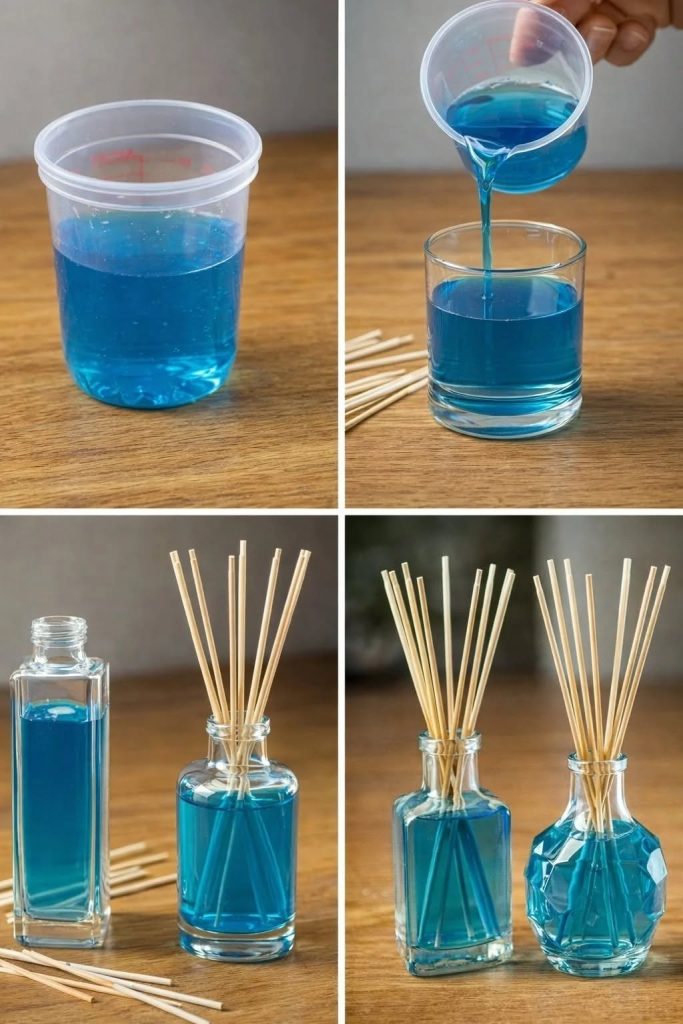
Creating a welcoming, fresh-smelling home environment is a top priority for homeowners and renters alike. Commercial reed diffusers, plug-in air fresheners, and scented candles are popular household decor choices, but purchasing brand-name scent refills repeatedly can quickly become expensive. Furthermore, many commercial aerosol sprays contain harsh synthetic propellants or volatile chemicals that can irritate sensitive sinuses.
Making your own DIY reed diffusers using accessible household ingredients—such as liquid fabric softener, carrier oils, or concentrated essential oils—offers a cost-effective, customizable alternative. In this comprehensive home care, budget organization, and DIY craft guide, we will analyze how to make liquid reed diffusers, explore scent dispersal science, review product safety, and discuss homeowners insurance and property protection.
Simple Ingredients for Making DIY Reed Diffusers
Crafting a custom reed diffuser at home requires just a few basic materials that cost a fraction of retail store prices:
Essential Ingredients and Tools
-
Base Liquid Option 1 (Fabric Softener Method): Mix 1 part liquid fabric softener (such as blue linen or floral scents) with 1 part warm water and a splash of isopropyl alcohol ($70\%\text{ or }90\%$) to help the liquid evaporate and travel up the reeds easily.
-
Base Liquid Option 2 (Essential Oil Method): Combine a light carrier oil (such as sweet almond oil, safflower oil, or mineral oil) with 20 to 30 drops of your favorite essential oils (lavender, eucalyptus, lemon, or peppermint) and 1 tablespoon of rubbing alcohol.
-
Narrow-Neck Glass Bottles: Small glass bottles with narrow openings minimize surface evaporation, ensuring scent diffuses through the reeds rather than evaporating into the air instantly.
-
Rattan or Bamboo Diffuser Reeds: Porous rattan reeds feature internal channels that draw liquid upward through capillary action, releasing a continuous gentle fragrance into the room.
The Science of Capillary Action and Scent Dispersal
Understanding how reed diffusers function ensures maximum fragrance longevity and room coverage:
-
Capillary Action: Rattan reeds contain tiny microscopic tubes that act like straws. As liquid evaporates from the exposed upper tips of the reeds, capillary pressure pulls fresh scented liquid upward from the bottle base continuously.
-
The Role of Alcohol as a Solubilizer: Adding a small amount of isopropyl alcohol or high-proof vodka lowers the viscosity of oils and water mixtures, allowing the scent blend to travel freely up porous wooden reeds without clogging.
-
Flipping Reeds for Scent Restarts: When scent intensity wanes after a few days, gently flipping the reeds upside down saturates the top ends with fresh scented liquid, instantly reviving fragrance delivery.
Essential Safety Precautions for Home Aromatherapy
While DIY reed diffusers are safe and convenient, keeping safety best practices in mind protects your family and pets:
-
Pet Safety and Essential Oil Toxicity: Certain concentrated essential oils—including tea tree, peppermint, eucalyptus, citrus, and cinnamon—can be toxic to cats and dogs if ingested or absorbed through skin. Keep diffusers on elevated shelves out of reach of curious pets.
-
Avoid Fabric Softener Contact with Eyes: When mixing fabric softener solutions, handle liquids carefully to prevent accidental splashes into eyes or skin irritation. Wash hands thoroughly after handling concentrated liquids.
-
Spill Prevention on Wood Surfaces: Diffuser oils and alcohol mixtures can stain or strip finishes from wooden tabletops, polished granite, or delicate furniture. Place glass diffuser bottles on decorative ceramic trays or glass coasters to catch stray drips.
Home Improvement, Consumer Safety, and Insurance Planning
Maintaining a fresh home environment goes hand-in-hand with overall property care and financial management.
Enhancing Home Value and Indoor Air Quality
Using natural essential oil diffusers or light fabric softener blends improves home scent appeal—a key factor in staging homes for real estate open houses or guest visits. Additionally, maintaining clean HVAC air filters alongside natural room diffusers ensures optimal indoor air quality without heavy chemical residue.
Homeowners Insurance and Property Coverage
Accidental spills from essential oil diffusers can cause localized damage to hardwood floors, painted furniture, or carpets. Maintaining proper home contents coverage under standard homeowners insurance or renters insurance protects personal property against unforeseen accidental damage or household losses.
Consumer Protection and Legal Rights
When purchasing commercial essential oils, diffusers, or home scents, consumer protection regulations require accurate product labeling regarding purity and potential allergens. Consulting legal services specializing in consumer advocacy helps address product defect claims, hazardous labeling issues, or warranty disputes effectively.
Fascinating Facts About Fragrance and Olfaction
-
The Proustian Effect: The human olfactory bulb is directly connected to the amygdala and hippocampus—the brain regions responsible for emotion and memory—which is why specific scents instantly evoke vivid childhood memories.
-
Rattan vs. Bamboo: True diffuser reeds are made from natural rattan palm, which contains roughly 20 open internal channels per reed, whereas solid bamboo skewers carry fewer internal channels and diffuse scent less efficiently.
-
Anosmia and Nose Blindness: Experiencing “nose blindness” (olfactory fatigue) occurs when sensory receptors become accustomed to a constant background scent within 15 to 20 minutes, even though guests entering the home smell the fragrance immediately.
Conclusion
Making your own DIY reed diffusers using fabric softener or essential oils is an affordable, fun, and customizable way to keep your home smelling fresh year-round. By understanding capillary action, using narrow-neck glass bottles, keeping diffusers safely out of reach of pets, and flipping reeds regularly, you can enjoy long-lasting, luxurious home fragrance on any budget.
Frequently Asked Questions (FAQ)
1. How long does a homemade DIY reed diffuser last?
A standard 4 to 6-ounce DIY reed diffuser made with carrier oil or fabric softener typically lasts between 1 to 2 months, depending on room humidity, temperature, airflow, and the size of the bottle opening.
2. Can you use regular wooden skewers instead of diffuser reeds?
While regular bamboo kitchen skewers can work in a pinch, natural rattan diffuser reeds work significantly better. Rattan reeds feature hollow internal channels specifically designed to draw liquid upward, whereas bamboo skewers have solid centers that impede liquid flow.
3. Why is my reed diffuser not giving off a strong scent?
If your diffuser scent feels weak, flip the reeds upside down to saturate the top tips, add a few more drops of essential oil or a splash of alcohol to thin the liquid, or place the diffuser in an area with good air circulation, such as near an entryway or hallway.
