
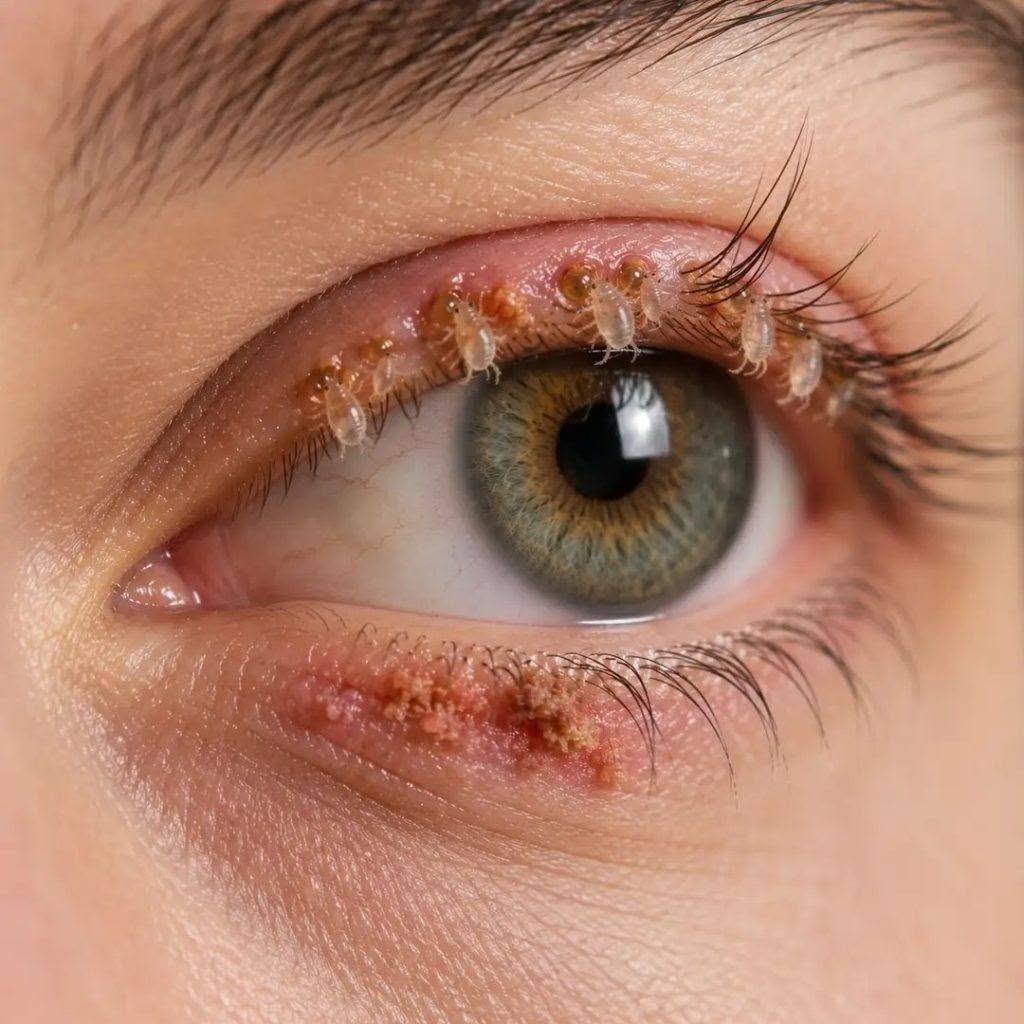
The human skin is home to a vast ecosystem of microscopic organisms, including bacteria, fungi, and microscopic organisms that live in harmony with our tissue. Among these microscopic inhabitants are Demodex mites, tiny, eight-legged parasites that live inside hair follicles and sebaceous oil glands across the face. While these organisms are a normal part of the human skin microbiome, an overpopulation of Demodex mites along the delicate eyelid margins can trigger a common medical condition known as Demodex blepharitis or eyelash mite infestation.
Sensationalized images across social media often depict large, visible insects lined up along eyelids to capture public attention. In reality, Demodex mites are completely invisible to the naked human eye, requiring microscopic magnification by an eye doctor for diagnosis. However, when mite populations surge, they cause persistent irritation, redness, itching, and crusty buildup along the base of eyelashes. Here is a comprehensive, scientifically grounded guide to understanding eyelash mites, recognizing symptoms of Demodex blepharitis, exploring safe treatment options, and maintaining optimal ocular hygiene for long-term eye health.
What Are Eyelash Mites? The Science of Demodex folliculorum and Demodex brevis
Demodex mites are microscopic arachnids that colonize human facial skin, particularly areas rich in oil glands such as the eyelids, eyelashes, nose, forehead, and cheeks. Two primary species inhabit human skin:
-
Demodex folliculorum: These mites reside directly inside the hair and eyelash follicles. They feed on dead skin cells, sebum (skin oil), and cellular debris, measuring approximately 0.3 to 0.4 millimeters in length.
-
Demodex brevis: These slightly smaller mites burrow deep into the meibomian glands (the tiny oil glands located along the eyelid margins) and sebaceous glands, feeding on glandular lipids.
Under normal conditions, small numbers of Demodex mites cause no harm or noticeable symptoms. However, as humans age, or during periods of compromised immunity, poor eyelid hygiene, or underlying skin conditions like rosacea, mite density can increase dramatically. When mites overpopulate, their waste products, digestive enzymes, and physical movement cause mechanical blockage of oil glands, triggering inflammation and tissue irritation along the eyelid border.
Symptoms of Demodex Blepharitis: Recognizing the Warnings
When Demodex mites multiply beyond healthy baseline levels, they produce distinct clinical symptoms along the eyelids and eye surface:
-
Cylindrical Dandruff (Cuffs): The single most definitive clinical sign of Demodex infestation is the presence of waxy, cylindrical collars or “collarettes” wrapped tightly around the base of individual eyelashes. These cuffs are composed of keratin, lipid waste, and digestive enzymes left behind by mites.
-
Itching and Burning along Eyelid Margins: Patients frequently experience persistent itching, burning, or a gritty “foreign body” sensation in the eyes, particularly upon waking in the morning.
-
Eyelid Redness and Swelling: Inflammation caused by bacterial toxins and mite waste leads to chronically red, swollen, or inflamed eyelid margins (blepharitis).
-
Dry Eyes and Meibomian Gland Dysfunction (MGD): Mites clogging the meibomian glands disrupt the production of the outer lipid layer of tears, causing tears to evaporate rapidly and leading to severe dry eye syndrome.
-
Eyelash Misdirection or Loss (Madarosis): Severe, unmanaged infestations can weaken hair follicles, causing eyelashes to become brittle, fall out prematurely, or grow in abnormal directions.
Healthcare, Insurance, and Financial Management for Eye Care
Addressing persistent ocular irritation or chronic dry eye symptoms requires specialized evaluation by an optometrist or ophthalmologist. Coordinating professional eye care works hand-in-hand with sound household financial management and healthcare coverage:
1. Navigating Eye Care Insurance and Medical Coverage
Specialized eye evaluations and prescription eyelid therapies represent essential health investments:
-
Utilizing Health and Vision Insurance Policies: Standard health and primary medical insurance plans cover medical eye exams, slit-lamp microscope evaluations, diagnostic meibomian gland imaging, and specialized treatment protocols for chronic blepharitis and ocular surface disease.
-
Managing Out-of-Pocket Expenses: Utilizing Flexible Spending Accounts (FSAs) or Health Savings Accounts (HSAs) allows patients to purchase specialized tea tree oil lid scrubs, warm compress masks, and OTC eyelid cleansers using pre-tax dollars.
2. Safeguarding Family Wealth and Life Insurance
Maintaining physical health and vision supports long-term financial stability:
-
Life Insurance Protections: Demonstrating consistent preventative health care, managing chronic inflammatory conditions, and maintaining regular medical appointments support overall longevity, securing favorable life insurance tiers.
-
Managing Household Expenses: Minimizing avoidable chronic eye complications preserves financial resources within your personal finance budget, protecting ongoing home mortgage commitments, children’s education funds, and long-term investment growth intended for retirement.
3. Legal Protections and Product Safety
When using commercial eye drops, eyelid cleansers, or makeup products, consumer protection standards apply:
-
Legal Services and Consumer Protection: Regulatory agencies enforce strict safety guidelines for products applied near the eyes. If contaminated cosmetic products or defective medical devices cause eye damage, consulting qualified legal services or an experienced attorney protects patient rights.
Effective Treatment Strategies and Eyelid Hygiene Practices
Treating Demodex blepharitis requires reducing mite population density, unclogging blocked oil glands, and eliminating inflammatory debris from eyelid margins. Standard over-the-counter face washes and ordinary soap are ineffective against Demodex mites, requiring targeted therapeutic interventions:
1. Tea Tree Oil (TTO) Formulations
Tea tree oil (specifically its active component, terpinen-4-ol) is one of the most effective natural compounds for neutralizing Demodex mites.
-
Specialized Eyelid Scrubs and Wipes: Formulated eyelid cleansers containing regulated concentrations of tea tree oil or terpinen-4-ol safely clean the base of eyelashes without irritating sensitive ocular tissue.
-
Never Use Undiluted Pure Tea Tree Oil: Pure, undiluted tea tree oil is highly toxic to the delicate cornea and conjunctiva and should never be applied directly to the eyes. Always use commercially prepared eyelid formulations.
2. Hypochlorous Acid (HOCl) Sprays
Hypochlorous acid is a natural antimicrobial compound produced by human white blood cells. Formulated HOCl eye sprays reduce bacterial overgrowth along the eyelids, neutralize toxins, and relieve inflammation associated with mite activity.
3. Prescription In-Office and At-Home Therapies
-
FDA-Approved Targeted Eye Drops: Recent pharmaceutical advancements have introduced specialized prescription eye drops designed to target and eliminate Demodex mites directly at the follicle level.
-
In-Office Microblepharoexfoliation: Eye doctors perform specialized mechanical lid debridement using rotating micro-sponge tools to remove stubborn cylindrical crusts and biofilm from eyelash bases.
Fascinating Facts About Eyelash Mites and Human Skin
-
Nearly Universal with Age: Studies show that while Demodex mites are rare in young children, they colonize nearly 100% of adults over the age of 70.
-
Nocturnal Behavior: Demodex mites are photophobic (averse to light). They emerge from hair follicles onto the skin surface primarily at night while you sleep to mate and move across tissue.
-
Microscopic Size: An individual Demodex mite measures between 100 to 400 micrometers in length—meaning dozens of mites can inhabit a single hair follicle without being visible to the human eye.
-
Lifespan Cycle: The average lifespan of a Demodex mite is roughly two to three weeks, during which females lay eggs inside hair follicles and sebaceous glands.
Practical Daily Tips for Preventing Eyelash Mite Overgrowth
Maintaining clean eyelid margins and practicing proper hygiene prevents Demodex mites from multiplying into an uncomfortable infestation:
-
Remove All Eye Makeup Before Sleeping: Thoroughly remove mascara, eyeliner, and eyeshadow every night using gentle, oil-free micellar water or dedicated eyelid cleansers to prevent oil gland blockages.
-
Replace Eye Makeup Regularly: Replace mascara tubes every 3 months and avoid sharing eye makeup, brushes, or applicators with others to prevent cross-contamination.
-
Clean Eyelids Daily: Incorporate daily eyelid scrubbing into your facial hygiene routine using gentle eyelid wipes or hypochlorous acid sprays, especially if you suffer from rosacea or oily skin.
-
Apply Warm Compresses: Use a clean, warm heating mask over closed eyes for 5 to 10 minutes daily to melt hardened oils inside meibomian glands, promoting healthy tear flow.
-
Wash Bedding and Towels in Hot Water: Wash pillowcases, bed sheets, and face towels weekly in hot water (at least 130°F or 54°C) and dry them on high heat to eliminate microscopic mites.
Final Thoughts
While sensationalized internet images exaggerate the appearance of eyelash mites, Demodex overgrowth is a real, highly manageable medical condition. By recognizing early symptoms like itchy eyelids, red margins, and cylindrical crusting, you can seek timely care from an eye doctor. Combining targeted eyelid hygiene with proper makeup safety and regular eye exams ensures your eyes remain clear, comfortable, and healthy for a lifetime.
Frequently Asked Questions (FAQ)
Can you see eyelash mites with the naked eye?
No. Demodex mites are microscopic arachnids measuring less than 0.4 millimeters in length. They can only be seen under high-power magnification during an eye exam by an optometrist or ophthalmologist using a slit-lamp microscope.
What causes eyelash mites to multiply out of control?
Mite populations surge due to changes in skin oil production, poor eyelid hygiene, sleeping in makeup, underlying skin conditions like rosacea or seborrheic dermatitis, or weakened immune system responses.
How do eye doctors treat Demodex blepharitis?
Eye doctors treat Demodex blepharitis using specialized tea tree oil eyelid scrubs, prescription anti-parasitic eye drops, hypochlorous acid sprays, and in-office mechanical eyelid cleaning (microblepharoexfoliation).
Are eyelash mites contagious between family members?
Demodex mites can be transferred between individuals through close facial contact or by sharing infected face towels, pillowcases, makeup brushes, or eye cosmetics. Practicing good personal hygiene prevents sharing mites within households.
