
In European politics, few figures stand as prominently or provoke as fierce a political reaction as Emma Bonino. A towering personality in Italian political history, Bonino has spent over half a century at the absolute epicenter of public debate, civil rights advocacy, and international diplomacy. From her early days as a firebrand radical fighting for reproductive rights and individual liberties to her high-ranking roles as a European Commissioner and Italian Minister of Foreign Affairs, her political trajectory has been marked by fierce determination, striking visual symbolism, and an unwavering refusal to back down from controversy.
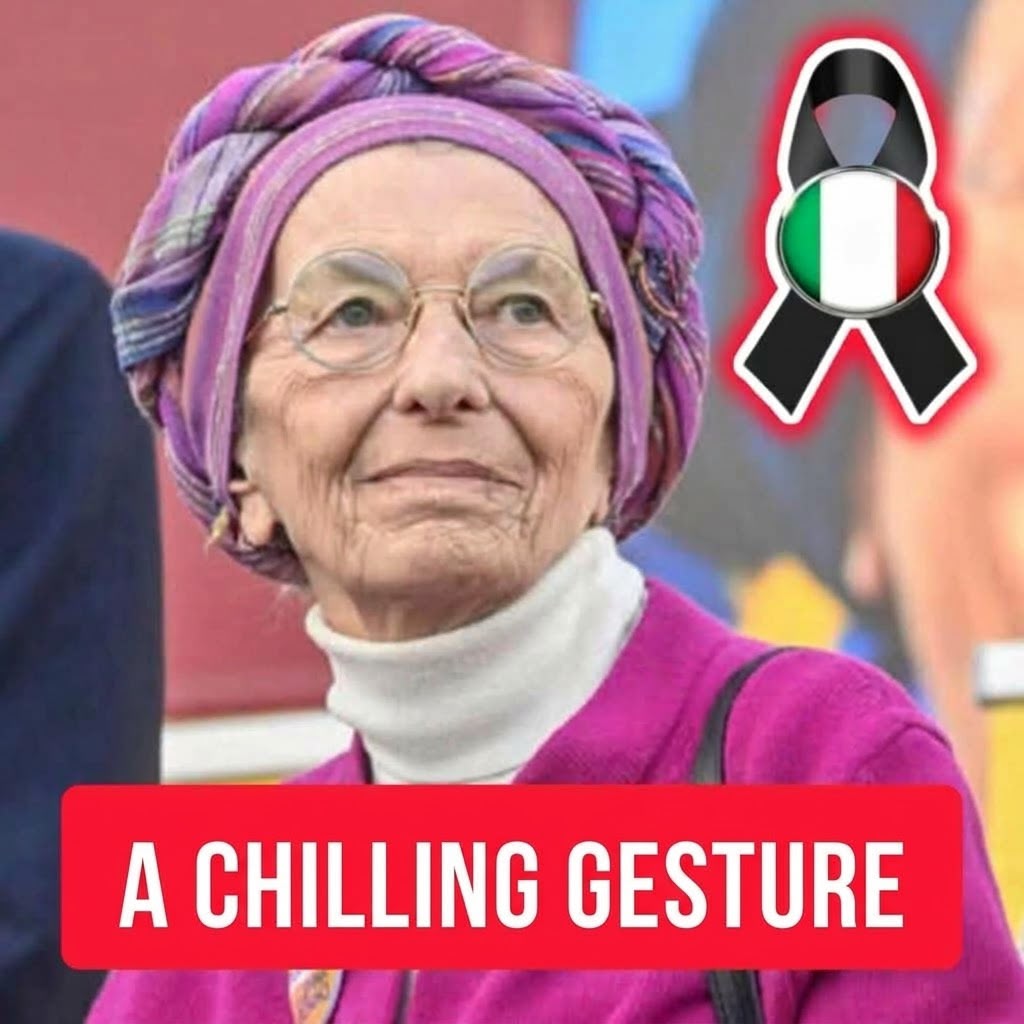
Images featuring Emma Bonino—often paired with solemn symbols like black ribbons displaying the Italian tri-color flag—frequently circulate across digital media platforms, social networks, and political news outlets. These viral posts routinely reignite intense national conversations surrounding her political legacy, her provocative public statements, and her lifetime of unconventional political actions. To understand why a simple photograph or gesture from Bonino commands such widespread public attention, one must look deep into the turbulent history of modern Italian politics and the civil rights struggles that shaped a nation.
In this comprehensive, deep-dive biographical and political analysis, we will examine the life, political evolution, and enduring global legacy of Emma Bonino, explore her most influential legislative fights, analyze the cultural impact of her public gestures, and look at how high-profile public figures navigate long-term legacy planning, healthcare, and economic policy.
The Formative Years: The Rise of a Radical Pioneer
To understand Emma Bonino’s place in modern history, one must return to the social upheaval of 1970s Italy. Born in Bra, Piedmont, in 1948, Bonino came of age during a transformative era of social redefinition across Europe.
The Italian Radical Party and Marco Pannella
Early in her youth, Bonino aligned herself with the Radical Party (Partito Radicale), co-founded by the legendary political activist Marco Pannella. Unlike traditional post-war Italian political parties tied heavily to religious dogma or rigid ideological doctrines, the Radicals focused intensely on individual bodily autonomy, civil liberties, secularism, and human rights.
The Historic Battle for Reproductive Rights
Bonino’s entry into national public life was defined by extreme personal commitment and risk. In the mid-1970s, she joined the Information Centre on Sterilization and Abortion (CISA), participating directly in civil disobedience campaigns to highlight the dangers of illicit back-alley procedures. Her willing arrest and public trial brought national visibility to the cause, ultimately contributing to the passage of Law 194 in 1978, which legalised abortion under national healthcare in Italy. This watershed moment cemented her reputation as a fearless champion for civil rights and bodily autonomy.
From Street Activism to High Diplomacy: A European Stateswoman
While many political activists remain on the margins of power, Emma Bonino successfully transitioned into traditional governance, proving herself to be an exceptionally capable administrator on both national and international stages.
European Commissioner for Consumer Policy and Humanitarian Aid
In 1995, Bonino was appointed European Commissioner for Consumer Policy, Fisheries, and Consumer Health Protection, as well as European Community Humanitarian Office (ECHO). During her tenure, she tackled major continental challenges:
-
The “Mad Cow” Crisis (BSE): She introduced rigorous, science-based consumer protection frameworks across the European Union to restore public trust in food safety systems.
-
Humanitarian Advocacy in Conflict Zones: Bonino gained international acclaim for traveling personally to high-risk war zones, including Bosnia, Rwanda, and Taliban-controlled Afghanistan, to expose human rights abuses and deliver direct emergency humanitarian aid.
Minister of Foreign Affairs and International Recognition
In 2013, Bonino reached another major career pinnacle when she was appointed Minister of Foreign Affairs in the Italian government under Prime Minister Enrico Letta. As Italy’s chief diplomat, she advocated for multilateral cooperation, European integration, international legal services standards, and the universal abolition of the death penalty.
Symbolic Gestures and Public Reaction: Why Her Actions Spark Debate
Throughout her career, Bonino has understood the power of public symbolism. Whether wearing traditional head coverings during diplomatic missions to highlight women’s rights in strict regimes or taking part in publicized hunger strikes alongside Marco Pannella, her gestures are carefully calibrated to provoke public thought and force political action.
| Key Career Era | Primary Political Focus | Major Legacy Outcome |
| 1970s Civil Rights Movement | Bodily autonomy & reproductive healthcare | Passage of Law 194 & national healthcare reform |
| 1990s EU Commission Service | Consumer protection & emergency humanitarian aid | Standardized EU food safety & global aid expansion |
| 2000s International Advocacy | Abolition of the death penalty & international law | Formation of the International Criminal Court (ICC) |
| 2010s Senior Cabinet Leadership | Italian foreign policy & European unity | Strengthening diplomatic ties & international human rights |
When viral digital content highlights her image alongside solemn national symbols, it taps into deep-seated public emotions surrounding national identity, political reform, and the historical debates she helped champion.
Human Rights, Healthcare Systems, and Policy Management
Emma Bonino’s extensive legislative career focused heavily on reforming healthcare access, social safety nets, and public institution frameworks.
The Role of Public Healthcare and Insurance Systems
Throughout her political work, Bonino emphasized the fundamental right of citizens to access comprehensive medical care without financial hardship. Modern public healthcare frameworks rely heavily on structured health insurance policies, public funding, and medical oversight to ensure equal protection across demographic groups.
Protecting Personal Autonomy and Legal Safeguards
Navigating complex social and healthcare decisions requires clear legal services frameworks and protective laws. From advance directives to patient advocacy, ensuring individuals maintain legal control over their healthcare decisions is a core tenet of modern civil rights jurisprudence—a principle Bonino championed for over five decades.
Public Leadership, Financial Legacy, and Economic Policy
As senior political figures oversee national policy, their work directly intersects with national economic health, public taxation, and long-term financial stability.
Economic Governance and Public Investment
During her tenure in Italian and European governance, Bonino actively participated in high-level discussions regarding budgetary management, economic development, and international trade agreements. Sound fiscal management supports public investment programs, infrastructure stability, and public education initiatives.
Life Planning, Insurance, and Retirement Policy
Developing sustainable economic policies for aging populations requires balancing public retirement pensions, private investment options, and comprehensive life insurance structures. Ensuring long-term financial security for citizens is essential for supporting social stability and economic resilience. Strong governance frameworks help secure economic stability for future generations, protecting family finance goals and supporting small business innovation.
Fascinating Facts About Emma Bonino
-
International Criminal Court Pioneer: Bonino was one of the driving forces behind the establishment of the International Criminal Court (ICC) in The Hague, leading diplomatic campaigns that resulted in the Rome Statute.
-
Profound Resilience: Bonino has publicly documented her courageous long-term battle against lung cancer, openly discussing her medical treatment while continuing her active political and public service work.
-
Global Human Rights Accolades: She has received numerous international awards, including the prestigious North-South Prize of the Council of Europe and the Indira Gandhi Peace Prize, recognizing her lifetime of advocacy.
-
Polyglot Diplomat: Bonino is fluent in multiple languages, including Italian, English, French, and Spanish, allowing her to negotiate directly on international diplomatic stages without interpreters.
Conclusion: The Enduring Impact of a Political Maverick
Emma Bonino remains one of the most compelling and transformative figures in modern European political history. From her early days as an uncompromising activist to her distinguished service as an international diplomat and foreign minister, her career has been defined by courage, conviction, and an relentless commitment to individual liberty.
Her ability to spark intense public conversation through her words, actions, and public presence is a testament to her profound cultural and political impact. As society continues to debate issues of human rights, healthcare access, European integration, and personal freedom, Emma Bonino’s voice and legacy continue to resonate powerfully across generations.
Frequently Asked Questions
Who is Emma Bonino?
Emma Bonino is a prominent Italian politician, human rights activist, and leading figure in the Italian Radical Party. She has served as a Member of the Italian Parliament, a Member of the European Parliament, European Commissioner for Consumer Policy and Humanitarian Aid, and Italian Minister of Foreign Affairs.
What is Emma Bonino most famous for?
She is best known for her pioneering activism in the 1970s championed bodily autonomy and civil rights, her international leadership in establishing the International Criminal Court (ICC), and her senior diplomatic roles within the European Union and the Italian government.
What political party is associated with Emma Bonino?
Bonino historically made her name with the Italian Radical Party (Partito Radicale) alongside Marco Pannella. In later years, she co-founded and led the pro-European political party +Europa (+Europe).
What major international humanitarian causes did she champion?
As European Commissioner for Humanitarian Aid, she led major aid efforts during conflict zones in Bosnia, Rwanda, and Afghanistan. She has also been a global leader in campaigns against Female Genital Mutilation (FGM) and for the global abolition of the death penalty.
Why do images of Emma Bonino spark significant engagement online?
Because she is a deeply influential, historic figure who tackled highly emotional, high-stakes political and social issues throughout her career. Visual posts highlighting her career, public statements, or political gestures frequently trigger passionate national debate regarding history, civil rights, and political legacy.
