
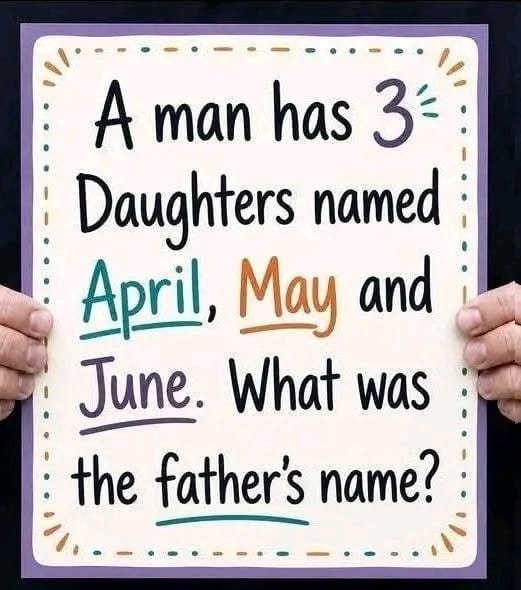
Riddles, word games, and classic brain teasers frequently circulate across social media platforms, sparking friendly debate and quick engagement. When an image presents a classic riddle such as “A man has 3 daughters named April, May and June. What was the father’s name?”, it instantly catches viewers off guard, inviting them to guess month-related names before realizing the trick.
While solving quick riddles serves as lighthearted digital entertainment, exploring how the brain processes trick questions provides fascinating insights into human linguistic interpretation and cognitive patterns. In this comprehensive guide, we explore the mechanics of riddle design, the psychology of misdirection, and practical tips for supporting cognitive sharpness and mental wellness.
The Psychology of Misdirection in Word Riddles
Why do classic word puzzles like the “three daughters” riddle trick so many people on the first try? Several cognitive factors influence how we interpret such questions:
1. Semantic Priming and Association
When the brain reads consecutive words like “April, May, and June,” it automatically activates a semantic cluster related to calendar months. This priming effect misdirects our attention, causing us to search for another month (such as January or March) as the father’s name.
2. The Trap of the Literal Setup
The riddle begins with the phrase “A man has 3 daughters…”. The answer is hidden right at the very beginning of the sentence—the father’s name is literally “What” (as established by the opening words “A man…”). Misdirection relies on making the listener focus on the list of names rather than the structure of the sentence itself.
3. The Joy of the “Aha!” Moment
Riddles that rely on playful misdirection trigger a rush of amusement and satisfaction when the solution is revealed, making them ideal content for social media shares and comment sections.
Practical Tips for Cognitive Agility and Problem Solving
Keeping your mind agile and improving lateral thinking involves simple, enjoyable daily habits:
-
Challenge Your Mind Regularly: Practice solving lateral thinking puzzles, riddles, and logic games to train your brain to look past surface-level assumptions.
-
Break Down Complex Problems: When faced with tricky situations in daily life, step back and analyze the exact wording or parameters of the problem rather than rushing to intuitive conclusions.
-
Protect Your Health with Proper Insurance: Ensuring you have reliable health insurance coverage guarantees access to preventative medical checkups, wellness care, and peace of mind.
-
Take Refreshing Mental Breaks: Use short puzzles and brain teasers as a fun mental breather to reduce daily stress and refresh your focus.
Interesting Facts About Riddles and Language
-
Ancient Origins: Riddles are among the oldest forms of human literature, appearing in ancient Mesopotamian texts, Greek mythology, and folklore worldwide.
-
The Brain’s Shortcut Systems: The human brain relies on heuristics (mental shortcuts) to process language quickly, which is precisely why wordplay and trick questions catch us off guard.
-
Viral Internet Engagement: Classic riddles consistently achieve massive reach on social media because they encourage users to comment their answers before reading the solution.
Conclusion
While viral internet riddles about family names are designed to playfully trick your brain, they provide a delightful reminder of how language and perception interact. By embracing lateral thinking, keeping your mind sharp with puzzles, and prioritizing your health, you can enjoy a balanced and engaged lifestyle.
Frequently Asked Questions (FAQ)
1. What is the answer to the “A man has 3 daughters” riddle?
The father’s name is “What” (as stated at the very beginning of the riddle: “A man…”).
2. Why do people usually guess a month name?
Because the daughters are named April, May, and June, the brain becomes primed to think in terms of calendar months, missing the literal wordplay of the question.
3. Do riddles help improve cognitive function?
Yes. Regularly solving lateral thinking puzzles and word riddles stimulates neural pathways, enhances problem-solving skills, and supports mental flexibility.
