
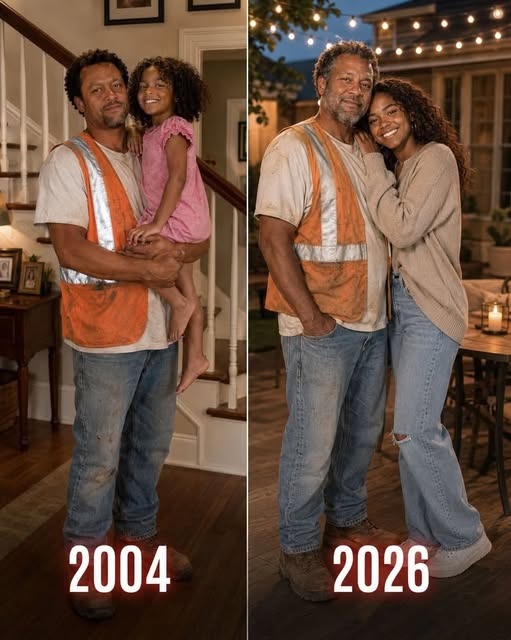
Side-by-side comparison photos showing parents with their young children alongside modern recreations decades later have become a wildly popular media trend across social platforms. These heart-warming “then and now” images capture the passage of time, showcasing how family bonds endure while children grow into adults.
However, as generative artificial intelligence tools advance, many viral “recreation” photos circulating online are actually synthetic images generated by AI rather than real historical photographs.
In this article, we analyze the visual anomalies in this 2004 vs. 2026 side-by-side image, explain common AI rendering patterns, and offer practical tips for evaluating synthetic media.
Key Visual Clues and AI Artifacts in the Image
At first glance, the image tells a touching story of a hard-working father in safety gear holding his young daughter in 2004, standing next to a modern 2026 recreation. Upon closer inspection, several visual details highlight classic generative AI features:
1. Clothes and Dirt Stains Rendered identically
In authentic photo recreations, recreating identical wear-and-tear on clothing across 22 years is nearly impossible.
-
Matching Dirt Smudges: The orange safety vest and blue jeans in the 2026 panel display the exact same paint and dirt stains in identical locations as the 2004 panel. AI models often copy textured prompt details directly between generated panels rather than aging or altering garments naturally.
-
Safety Vest Reflective Strips: The folds, reflective tape placement, and frayed seams on the safety vest remain digitally identical in pattern across both time periods.
2. Anatomical and Facial Consistency
-
Age Progression Effects: While the father displays gray hair and additional wrinkles in the 2026 frame, the facial features follow hyper-consistent AI aging filter patterns rather than natural, organic aging.
-
Hand Positioning and Textures: Where the daughter rests her head on her father’s shoulder, the contact points, fingers, and hair texture display smooth, painterly blending characteristic of AI render engines.
3. Background Lighting and Depth
-
Staged Lighting Environments: The 2004 indoor hallway background features sharp, studio-style soft lighting, while the 2026 outdoor patio background features perfectly warm string lights (bokeh effects) commonly used in popular AI photo prompts.
Why “Then and Now” AI Images Go Viral
AI-generated emotional storytelling performs exceptionally well on social media algorithms:
-
Nostalgia and Emotional Resonance: Images featuring hard work, family love, and time passing evoke strong empathetic responses from viewers.
-
High Engagement Rates: Comparisons naturally invite users to comment, share personal stories, and debate whether the photo is real or generated.
How to Check If a Photo Recreation Is Real
When evaluating viral “then and now” photo trends online, look for these telltale signs:
-
Examine Garment Wear: Real clothing worn 20 years apart will have different washing wear, fading, or minor fit differences rather than identical stain patterns.
-
Check Background Authenticity: Authentic older photos (like those from 2004) often exhibit period-accurate camera noise, flash glare, or lower digital resolutions compared to crisp 4K AI outputs.
-
Inspect Small Details: Look at hands, ears, jewelry, and background architectural lines for logical alignment.
Conclusion
Generative AI continues to transform digital content creation, making it easy to create heartwarming scenarios that capture our imagination. Understanding visual clues allows viewers to appreciate creative digital art while staying media-literate!
Frequently Asked Questions (FAQ)
Is the 2004 vs. 2026 father-daughter photo real?
No, the image is an artificially generated digital image created using AI image generation tools, as indicated by identical clothing stain patterns and digital lighting effects.
Why do AI tools duplicate dirt stains on clothes in photo recreations?
Generative AI models often apply prompt instructions evenly across multi-panel images, resulting in identical textures, stains, and creases being rendered on both versions of the character.
How can you tell an old digital photo from an AI image?
Real photos from the early 2000s usually show slight lens distortion, direct camera flash shadows, or lower digital sensor resolution, whereas AI-generated “2004” photos look uniformly polished with modern studio lighting.
