
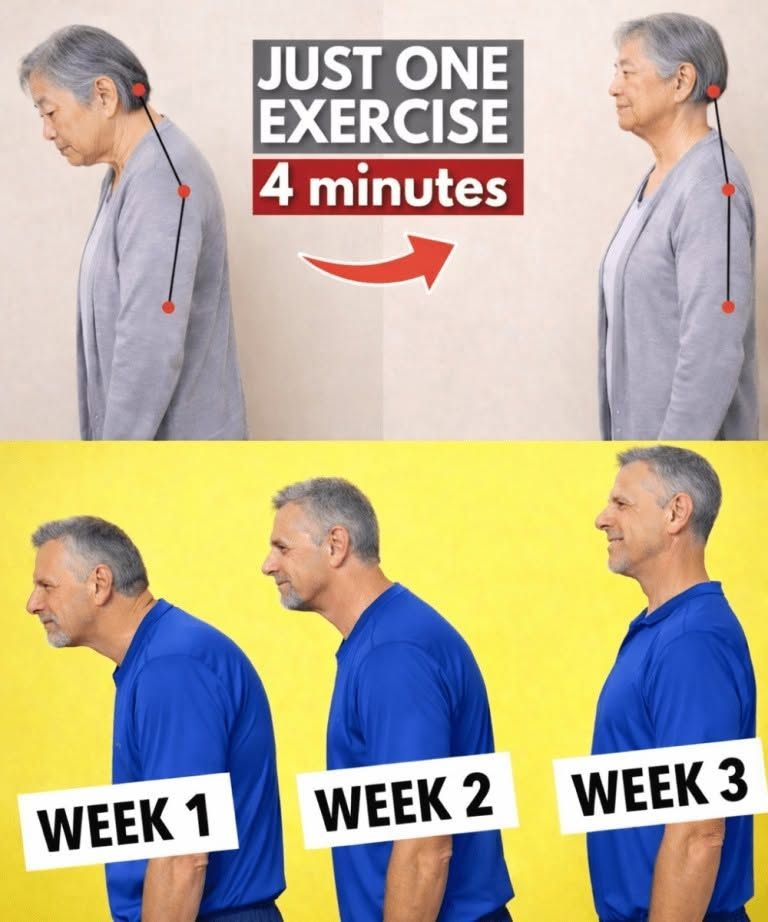
Modern lifestyles dominated by prolonged desk work, smartphone scrolling, and driving frequently result in a postural imbalance known as forward head posture (often called “tech neck”). Over time, the head shifts forward from its natural vertical alignment over the shoulders, placing significant strain on the cervical spine, upper back muscles, and shoulder girdle.
While correcting years of slouching requires consistency, performing simple daily posture correction exercises for just a few minutes can help restore proper spinal alignment, relieve neck tension, and boost mobility.
The Impact of Posture Correction Over Time
Consistently engaging key upper back and deep neck muscles leads to gradual, noticeable improvements in alignment over several weeks.
+-------------------------------------------------------------------------------+
|                       POSTURE REALIGNMENT PROGRESSION MATRIX                  |
+--------------------------+----------------------------------------------------+
| TIMELINE                 | PHYSIOLOGICAL PROGRESSION & ALIGNMENT CHANGES      |
+--------------------------+----------------------------------------------------+
| 1. Week 1 (Baseline)     | Pronounced forward head position, rounded shoulders|
|                          | tight chest muscles, and cervical spinal strain.  |
| 2. Week 2 (Adaptation)   | Improved spatial awareness, reduced neck tension,  |
|                          | and initial strengthening of deep neck flexors.   |
| 3. Week 3 (Realignment)  | Ears align over shoulders, chest opens up naturally|
|                          | and upright posture feels comfortable and automatic|
+--------------------------+----------------------------------------------------+
1. Week 1: Recognizing Imbalances and Starting Correction

During the initial stage of posture correction, muscle memory still pulls the head forward and rounds the shoulders. Early efforts focus on stretching tight anterior muscles (chest and front neck) while gently activating dormant postural muscles between the shoulder blades.
2. Week 2: Muscle Activation and Strain Relief
By the second week of daily movements, deep cervical flexors begin building strength. Tension at the base of the skull (suboccipital area) diminishes, making upright posture feel less straining throughout the workday.
3. Week 3: Visible Realignment and Lasting Habit
With consistent daily practice, proper alignment begins to become second nature. The ears sit naturally directly above the shoulder joint line, relieving unnecessary gravitational pull on the neck muscles.
2 Essential Daily Posture Exercises (4-Minute Routine)
You can perform this quick postural routine daily right at home or in the office without any specialized equipment.
1. Chin Tucks (2 Minutes)
-
How to Do It: Sit or stand up straight. Look directly ahead, then pull your chin straight back toward your neck as if making a “double chin” without tilting your head downward.
-
Duration: Hold for 5 seconds, relax, and repeat 15–20 times.
-
Benefit: Strengthens the deep cervical flexor muscles in the front of the neck while stretching tight muscles at the base of the skull.
2. Wall Angels / Scapular Retractions (2 Minutes)
-
How to Do It: Stand with your back, head, and shoulders against a flat wall. Raise your arms into a “W” shape with elbows bent. Gently slide your arms up into a “Y” position while keeping contact with the wall, squeezing your shoulder blades together.
-
Duration: Repeat slowly for 10–12 controlled reps.
-
Benefit: Opens up tight pectoral muscles and activates upper back extensors to counteract rounded shoulders.
Health Benefits of Fixing Forward Head Posture
-
Reduced Cervical Spine Strain: For every inch your head shifts forward, an extra 10 pounds of force is exerted on your neck muscles and upper spinal vertebrae. Correcting alignment reduces this mechanical burden drastically.
-
Alleviation of Tension Headaches: Posture realignment releases pressure on suboccipital nerves, reducing the frequency of stress and tension headaches.
-
Improved Breathing Capacity: Standing upright opens the chest cavity, allowing the diaphragm to expand fully and increasing oxygen intake.
Practical Actionable Tips for Maintaining Proper Posture
-
Adjust Screen Heights: Position your computer monitor or phone at eye level to prevent tilting your head downward for extended periods.
-
Take Micro-Breaks: Stand up, stretch, and roll your shoulders back for 30 seconds every 30 to 45 minutes of desk work.
-
Set Posture Prompts: Use visual reminders or phone notifications to check whether your shoulders are relaxed and your chin is tucked properly.
Fascinating Facts About Human Posture
-
The 42-Pound Rule: When tilting your head forward at a 45-degree angle to look at a smartphone, your neck experiences approximately 49 pounds of pressure—equivalent to carrying an eight-year-old child on your neck!
-
Proprioception Training: Regular posture exercises retrain your brain’s internal map of your body (proprioception), helping you automatically maintain good posture without conscious effort.
Conclusion
Correcting forward head posture does not require complex routines or expensive equipment. Spending just four minutes a day on targeted chin tucks and shoulder retractions can help realign your spine, relieve chronic neck tension, and restore confident, upright posture.
Frequently Asked Questions (FAQ)
How long does it take to correct forward head posture?
With consistent daily exercises and ergonomic adjustments, noticeable improvements in posture and neck comfort typically appear within 2 to 4 weeks.
Can forward head posture cause neck pain and headaches?
Yes. Forward head placement places excessive strain on the neck muscles and compresses nerves at the base of the skull, which commonly leads to tension headaches and stiffness.
How often should I perform posture realignment exercises?
Doing a brief 4-minute routine once or twice daily provides optimal results for retraining postural muscles.
Are posture correctors or braces helpful?
While posture braces can provide temporary visual feedback, relying on them continuously can weaken back muscles. Targeted strengthening exercises are far more effective for long-term realignment.
