
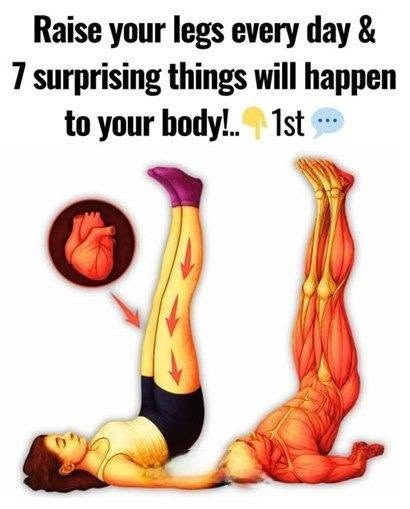
In our fast-paced modern world, spending long hours sitting at a desk or standing on your feet can take a silent toll on physical health. Poor circulation, lower back tension, leg swelling, and elevated stress levels are common daily complaints. Fortunately, you do not need expensive specialized equipment or intense workouts to find relief. One of the most effective restorative practices in restorative yoga and physical therapy is simply elevating your legs—a pose known in yoga traditions as Viparita Karani (Legs-Up-the-Wall pose).
Spending just 10 to 15 minutes a day resting flat on your back with your legs elevated vertically against a wall or cushion triggers immediate physiological benefits across your entire body.
7 Physiological Changes That Happen When You Raise Your Legs Daily
Elevating your legs higher than your heart uses gravity to boost venous return, calm your nervous system, and relieve tension.
+-------------------------------------------------------------------------------+
|                       LEGS-UP-THE-WALL BENEFIT MATRIX                         |
+--------------------------+----------------------------------------------------+
| HEALTH BENEFIT           | PRIMARY PHYSIOLOGICAL MECHANISM                    |
+--------------------------+----------------------------------------------------+
| 1. Boosted Circulation   | Gravity assists venous blood return to the heart.  |
| 2. Reduced Leg Swelling  | Drains accumulated fluid (edema) in ankles/feet.   |
| 3. Lower Back Relief     | Decompresses the lumbar spine and hamstring tension.|
| 4. Nervous System Calm   | Activates parasympathetic "rest and digest" mode.  |
| 5. Enhanced Digestion    | Redirects blood flow to internal digestive organs. |
| 6. Improved Sleep Quality| Reduces cortisol levels and lowers resting heart rate.|
| 7. Eased Foot Fatigue    | Restores tired muscles after long standing/walking.|
+--------------------------+----------------------------------------------------+
1. Improves Venous Blood Circulation
Standing or sitting for hours forces your circulatory system to work harder against gravity to pump blood from your lower extremities back up to your heart. Elevating your legs allows gravity to assist your veins, promoting smoother venous return and reducing strain on the cardiovascular system.
2. Reduces Swelling and Fluid Retention (Edema)
Gravity causes interstitial fluids to pool in the lower legs, ankles, and feet throughout the day, leading to heavy, swollen limbs. Raising your legs encourages lymphatic drainage, helping your body reabsorb excess fluid naturally and reducing swelling.
3. Decompresses the Lumbar Spine and Relieves Back Pain
Lying flat on your back with your legs elevated flattens the lumbar curve against the floor, taking physical pressure off your lower back vertebrae. This gentle passive stretch releases tightness in the lower back, glutes, and hamstrings.
4. Calms the Nervous System and Reduces Stress
Combining leg elevation with deep, rhythmic breathing activates your parasympathetic nervous system (the body’s “rest and digest” mode). This physiological shift lowers systemic cortisol (stress hormone) levels and slows your heart rate, helping quiet an overactive mind.
5. Enhances Digestive Efficiency
When your body shifts out of a fight-or-flight state into parasympathetic relaxation, blood flow is directed inward toward internal abdominal organs. This increased circulation supports digestive motility, helping relieve mild bloating and abdominal discomfort.
6. Promotes Restful and Deeper Sleep
Practicing leg elevation for 10 to 15 minutes before bedtime signals to your brain that it is time to unwind. By easing muscle tension and lowering your resting heart rate, this exercise helps you fall asleep faster and enjoy deeper sleep cycles.
7. Relieves Sore, Overworked Foot Muscles
Whether you wear rigid dress shoes, high heels, or spend long shifts walking on hard concrete floors, leg elevation drains lactic acid build-up and relieves muscle tension across the soles of your feet and calves.
Financial, Wellness, and Long-Term Health Benefits
Incorporating passive physical therapy practices into daily routines offers preventative health benefits that translate into lower long-term healthcare expenses.
Preventing Vascular and Venous Complications
Chronic venous insufficiency and severe varicose veins often stem from prolonged fluid stagnation in the lower legs. Regularly practicing leg elevation supports vascular valve function, potentially reducing the need for specialized compression garments, medical procedures, or podiatry care later in life.
Affordable Stress Management Without Subscriptions
While boutique wellness classes, massage therapies, and high-end relaxation tools are popular, leg elevation provides comparable physical tension relief completely free of charge. Establishing self-care habits at home saves money while delivering consistent daily health results.
How to Perform the Legs-Up-the-Wall Pose Correctly
-
Find a Clear Space: Clear a comfortable area on the floor next to a blank wall or door. Place a soft yoga mat or folded blanket underneath your hips for cushioning.
-
Position Your Hips: Sit sideways against the wall, then gently swing your legs up onto the wall as you lie back flat onto your elbows and spine.
-
Adjust for Comfort: Slide your tailbone close to the wall (or keep it a few inches away if your hamstrings feel tight). Rest your arms comfortably by your sides with palms facing up.
-
Focus on Deep Breathing: Close your eyes and breathe deeply through your nose for 10 to 15 minutes, allowing your shoulders and jaw to completely relax.
Fascinating Facts About Inversion and Circulation
-
Ancient Roots: The practice of elevating the lower body has been utilized for thousands of years in Hatha Yoga practices under the name Viparita Karani, which translates to “inverted action.”
-
Astronaut Health: Space agencies use head-down and leg-elevated tilt tests to simulate microgravity environments, studying how fluid shifts affect cardiovascular performance.
-
Gravitational Pressure: The venous pressure in your feet while standing quietly can reach 90 mm Hg, but drops close to zero when your legs are elevated above heart level.
Conclusion
Elevating your legs every day is a simple, highly effective self-care practice that delivers immediate physical and mental rewards. By spending just 15 minutes resting with your legs raised, you can boost circulation, soothe lower back discomfort, reduce swelling, and calm your mind after a long day.
Frequently Asked Questions (FAQ)
How long should I raise my legs each day?
Practicing leg elevation for 10 to 15 minutes per session is ideal for most adults. You can perform the exercise once daily, preferably in the evening or right before sleep.
Can I raise my legs on pillows instead of a wall?
Yes. Propping your legs up on a stack of pillows, a couch cushion, or a wedge pillow while lying on the floor or in bed provides similar circulatory and back relief benefits.
Are there any risks or contraindications?
While leg elevation is safe for most people, individuals with severe uncontrolled high blood pressure, congestive heart failure, eye conditions like glaucoma, or unmanaged spinal injuries should consult a doctor before practicing inverted poses.
Is it normal to feel a tingling sensation in my feet?
Mild tingling can occur if your legs are elevated for a prolonged period due to temporary changes in blood flow. If your feet feel numb, bend your knees into your chest, roll onto your side, and rest for a minute before standing up.
