
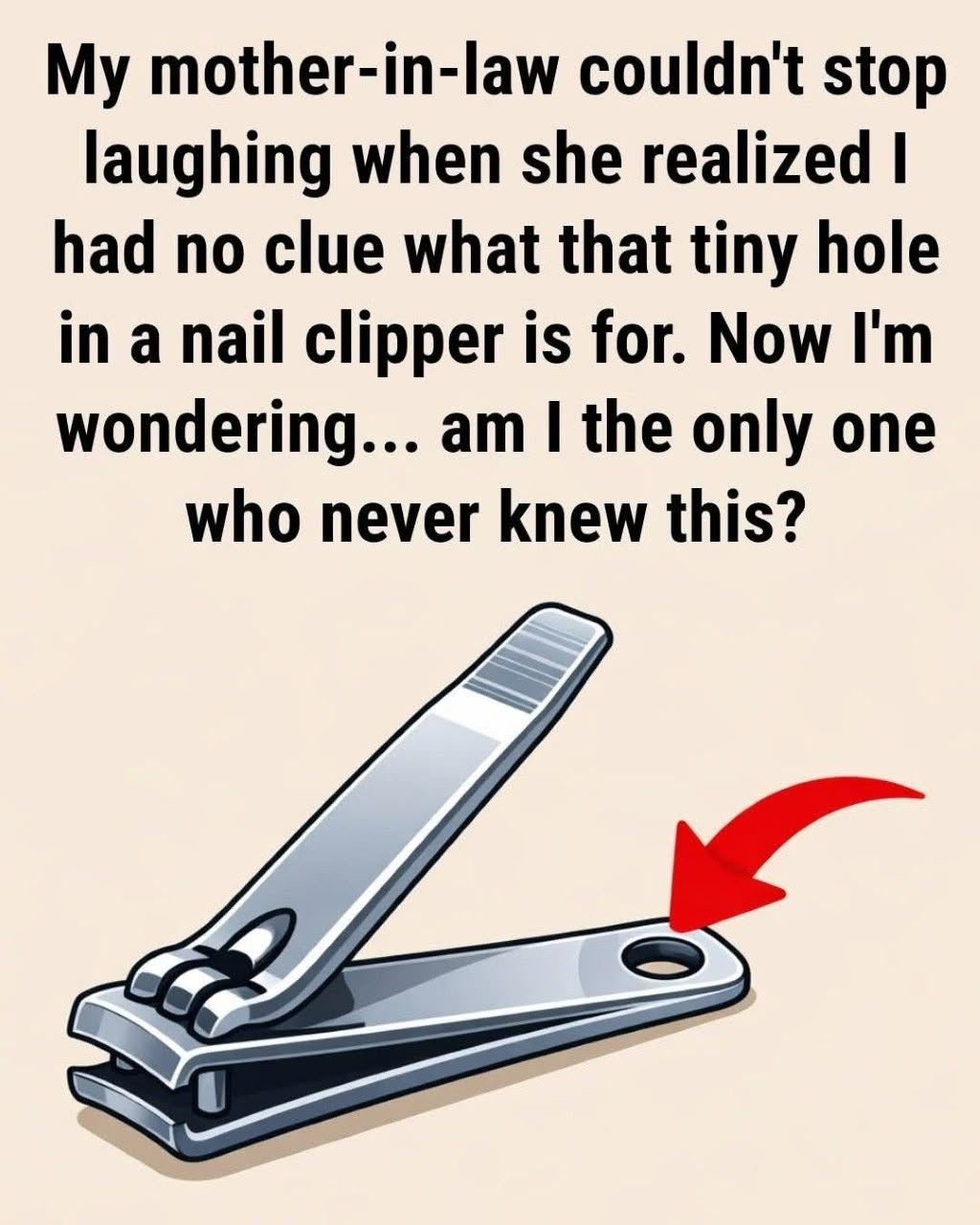
Every day, millions of people around the world reach into their bathroom drawers or toiletry kits for a basic, everyday tool: the standard nail clipper. Sleek, mechanical, and surprisingly durable, this compact grooming implement has remained virtually unchanged in design for over a century. Yet, despite its widespread daily use, one specific feature on almost every pair of nail clippers leaves users scratching their heads: the small, round hole punched into the metal base opposite the cutting blades.
While many assume it is merely a byproduct of the manufacturing process or an decorative detail, that tiny hole was engineered with very practical functions in mind. Unlocking the intended uses of your nail clipper’s design features can make personal grooming easier, improve hygiene, and even protect your wallet from lost items.
Why Is There a Tiny Hole in a Nail Clipper?
The small hole stamped into the rear base of a standard lever-type nail clipper serves two primary purposes, blending everyday convenience with smart product design.
+-------------------------------------------------------------------------------+
|                      NAIL CLIPPER ANATOMY & FUNCTION GUIDE                    |
+--------------------------+----------------------------------------------------+
| FEATURE                  | PRIMARY FUNCTION & BENEFIT                         |
+--------------------------+----------------------------------------------------+
| Rear Base Hole           | Keyring / Lanyard attachment & display hanging.    |
| Textured Swivel Lever    | Provides leverage and non-slip thumb grip.         |
| Curved Cutting Blades    | Matches natural nail curvature for clean cuts.     |
| Embedded Swing-Out File  | Shapes sharp edges & cleans under-nail debris.    |
+--------------------------+----------------------------------------------------+
1. Keyring and Lanyard Attachment
The primary reason manufacturers include a hole at the end of a nail clipper is to allow users to attach it to a keyring, bead chain, or travel lanyard.
-
Travel and Accessibility: For frequent travelers, campers, or outdoor enthusiasts, attaching a compact nail clipper to a keychain or grooming kit loop keeps it readily accessible without having to dig through large bags.
-
Preventing Loss: Small grooming tools are notoriously easy to misplace inside drawers or luggage. Securing the clipper to a ring ensures it stays right where you need it.
2. Retail Display and Manufacturing Efficiency
From a manufacturing and retail distribution perspective, the hole offers an efficient hanging point. During production, assembly, and packaging, factory machines and retail display racks utilize the hole to hang the clippers on metal pegs for blister-pack packaging or bulk display hooks on store shelves.
Other Hidden Features in Everyday Household Tools
Nail clippers are not the only everyday items carrying clever, hidden design elements. Many ubiquitous consumer products feature subtle engineering touches that most people overlook.
The Hole in the Handle of Pots and Pans
While many assume the hole at the end of a frying pan handle is only for hanging cookware on a wall rack, it serves another clever purpose: it acts as a built-in spoon holder. You can slide the handle of a wooden stirring spoon through the hole so food drips directly back into the pan.
The Hole in a Spaghetti Spoon
The large oval hole in the center of a plastic or wooden pasta server is not just for draining boiling water. It is designed as a precise measuring tool: the amount of dry spaghetti that fits tightly inside the hole equals one standard single-person serving.
The Ridge Pattern on the Swivel Lever
The tiny crisscross ridges or grooves stamped on top of your nail clipper’s folding lever are designed to give your thumb a high-friction, non-slip grip. This prevents your hand from slipping during precise trimming, reducing the risk of accidental nicks or uneven cuts.
Proper Nail Maintenance and Personal Hygiene Tips
Understanding how to use your grooming tools effectively goes beyond knowing their design features—it plays a direct role in maintaining personal health and hygiene.
-
Trim After a Warm Shower: Hard fingernails and tough toenails are far easier to trim when softened by warm water, which reduces microscopic splitting and jagged edges.
-
Cut Straight Across on Toenails: To prevent painful ingrown toenails, always trim toenails straight across rather than rounding off the corners deeply into the nail bed.
-
Sanitize Tools Regularly: Nail clippers collect microscopic skin particles and moisture, which can harbor bacteria or fungal spores. Wipe down cutting blades with rubbing alcohol before and after each use.
-
Keep Your Own Dedicated Clipper: Avoid sharing nail clippers with family members or friends to eliminate the risk of spreading nail infections or common skin conditions.
Consumer Health, Safety, and Financial Implications
Maintaining proper personal care tools carries broader health and financial advantages, protecting against unnecessary medical expenses and keeping insurance costs low.
Preventing High-Cost Podiatry and Medical Interventions
Improper nail trimming habits—such as tearing nails, cutting cuticles improperly, or trimming toenails too short—frequently lead to painful bacterial infections (like paronychia) or severe ingrown toenails. Severe cases often require minor surgical intervention from a podiatrist or primary care physician. Simple, proper tool maintenance eliminates avoidable out-of-pocket medical bills and doctor copays.
Business Travel and Professional Hygiene Standards
In professional business environments, clean and well-groomed hands contribute significantly to non-verbal first impressions during executive meetings, sales presentations, and interviews. Keeping a compact nail clipper attached to a travel kit via its built-in hole ensures you maintain a polished professional appearance wherever business takes you.
Fascinating Facts About Nail Clippers
-
Invented in the 19th Century: The modern lever-type nail clipper mechanism was first patented in the United States by Chapel S. Carter in 1875, refining earlier scissor-based trimmers.
-
How Fast Do Nails Grow? Human fingernails grow an average of 3.5 millimeters per month, whereas toenails grow at roughly half that rate (about 1.6 millimeters per month).
-
Dominant Hand Growth: Nails on your dominant hand generally grow slightly faster than those on your non-dominant hand due to increased localized blood circulation from daily physical activity.
Conclusion
The small hole at the base of your nail clipper is a prime example of thoughtful, multi-purpose product design. Whether used to secure your clipper to a keychain for easy travel or to hang it neatly in a retail package, this tiny feature adds real convenience to a tool we rely on every week. Taking a moment to understand the design details of everyday objects helps us take better care of our tools, our health, and our daily routines.
Frequently Asked Questions (FAQ)
What is the tiny hole in a nail clipper used for?
The tiny hole at the end of a nail clipper is primarily designed for attaching a keyring, bead chain, or lanyard for travel convenience, as well as providing a hanging point for retail display pegs during packaging.
Can nail clippers spread fungal infections?
Yes. Sharing unsterilized nail clippers between individuals can easily transfer fungal spores, bacteria, and viral infections (such as warts). Always sanitize clippers with rubbing alcohol and avoid sharing personal grooming tools.
Why do some nail clippers have a small swing-out file attached?
The swing-out file allows users to smooth down sharp or jagged nail edges immediately after cutting. The pointed tip of the file is also designed to clean dirt and debris safely from underneath the free edge of the nail.
How often should you replace your nail clipper?
A high-quality stainless steel nail clipper can last for many years. However, if the cutting edges become dull, start crushing rather than cleanly slicing the nail, or develop rust, it is time to replace it to prevent nail damage.
