
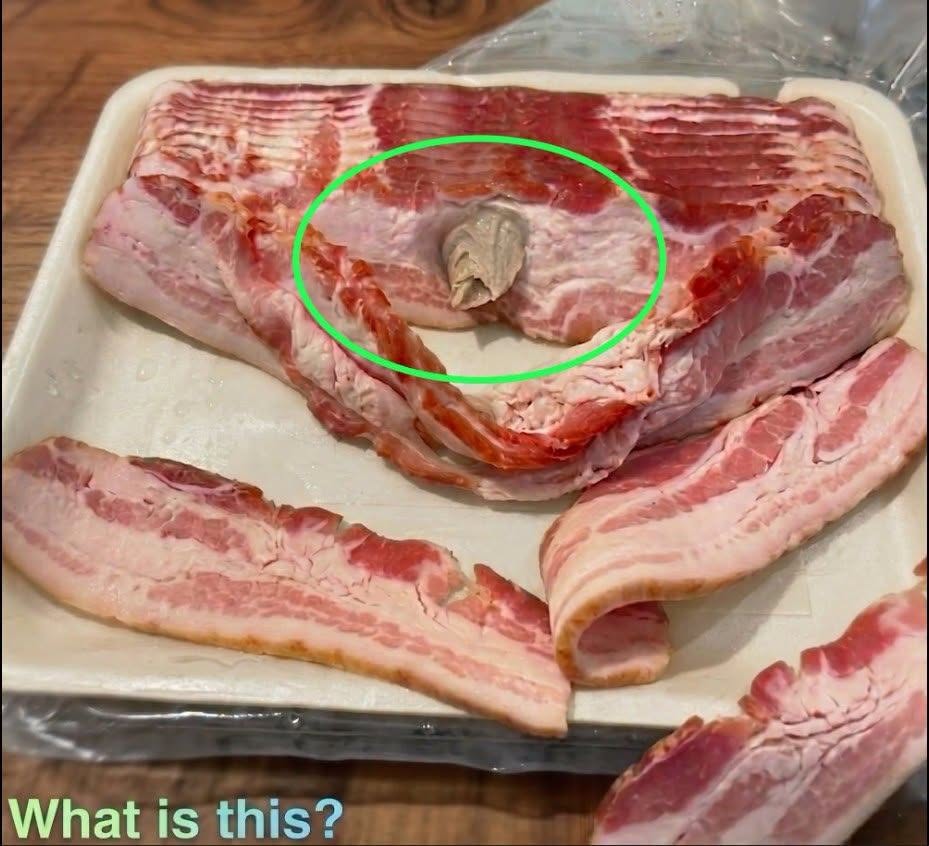
Bacon is one of the most popular breakfast foods in the world, loved for its crispy texture and rich, smoky flavor. However, opening a package of raw bacon only to find an unusual grayish nodule, cyst, or odd spot embedded in the meat can immediately ruin your appetite. Photos of strange growths inside sliced pork belly frequently circulate on social media, leaving consumers wondering what these abnormalities are and whether the meat poses a health risk.
In this comprehensive guide, we examine what causes these strange spots in raw bacon, how to identify common meat defects, food safety guidelines, and consumer rights regarding compromised grocery products.
Understanding What Causes Abnormalities in Pork Meat
Raw bacon is produced from pork belly, a layer of muscle and fat harvested from the underside of a pig. Like all animal tissue, pork belly can occasionally contain natural anatomical structures or localized tissue reactions that look unappetizing when sliced.
Common Causes of Growth-Like Spots in Bacon
-
Encapsulated Injections or Abscesses: During livestock farming, pigs receive standard vaccinations or routine medical treatments. Occasionally, an injection site develops a localized, encapsulated sterile abscess or fibrous scar tissue under the skin.
-
Nipple Tissue or Mammary Glands: Because bacon comes from the pork belly, slices taken near the teat line can include cross-sections of nipple tissue or underlying mammary gland structures. These present as soft, greyish, or brownish spots inside the fat layers.
-
Lymph Nodes: Pork belly contains natural lymph nodes embedded deep within the fatty tissue layers. When sliced, a lymph node appears as a firm, greyish-tan oval capsule.
-
Fat Necrosis or Cysts: Trauma or minor injuries to the animal’s belly fat during growth can cause localized fat necrosis, resulting in hardened, discolored lumps inside the tissue.
Is Bacon with Strange Growth Spots Safe to Eat?
When encountering an abnormal spot in raw meat, safety is every consumer’s primary concern.
Food Safety Risks
Food safety inspectors from agricultural authorities (such as the USDA or FDA) work to screen meat at processing facilities. However, internal tissue abnormalities hidden deep inside a belly slab can pass through high-speed automated slicing machines unnoticed.
If a spot is caused by an abscess or cyst, it may harbor localized bacteria. Even if the defect is merely a harmless lymph node or nipple cross-section, consuming affected slices is strongly discouraged due to potential taste, texture, and hygiene concerns.
What You Should Do If You Find One
-
Do Not Consume the Affected Slice: Immediately discard the affected strip of bacon.
-
Inspect the Remaining Package: Check adjacent slices carefully for signs of contamination, unusual odor, or discoloration.
-
When in Doubt, Discard: If the spot appears purulent, discolored, or emits an off-putting odor, throw away the entire package to prevent foodborne illness risks.
Quality Comparison: Meat Defects vs. Normal Bacon
+---------------------+---------------------------------------------------------+
| Feature             | Description & Safety Action                             |
+---------------------+---------------------------------------------------------+
| Normal Bacon Slice  | Alternating pinkish-red muscle and clear white fat       |
| Lymph Node/Gland    | Firm greyish/brown oval spot; trim away before cooking   |
| Abscess or Cyst     | Soft, discolored nodule; discard package entirely       |
| Discolored Meat     | Dull grey or greenish tinge; sign of spoilage, discard  |
+---------------------+---------------------------------------------------------+
Consumer Rights, Grocery Refunds, and Legal Options
Purchasing spoiled or defective food is frustrating, but consumers have clear options for recourse.
Getting a Store Refund or Replacement
Most major supermarket chains maintain strict customer satisfaction policies. If you purchase defective, contaminated, or visually abnormal bacon, keep your purchase receipt along with a photograph of the defective product. Stores will readily offer a full refund or product exchange.
Reporting Food Safety Violations
If a brand or store repeatedly sells contaminated meat products, consumers can report the issue to local public health departments or government agricultural agencies. In extreme cases where contaminated food causes severe illness or hospitalization, victims may consult personal injury attorneys or legal services to pursue compensation for medical expenses and lost wages.
Practical Tips for Buying and Storing Fresh Bacon
-
Check the clear viewing window on the back of the bacon package to inspect the fat-to-lean ratio and verify normal meat color before buying.
-
Keep raw bacon refrigerated at or below 40°F (4°C) and cook it within 7 days of opening.
-
Freeze unopened packages of bacon for up to 4 months to maintain peak freshness and flavor.
-
Always cook bacon thoroughly to an internal temperature of 145°F (63°C) or until completely crisp to kill harmful bacteria.
Fascinating Facts About Bacon Production
-
Standard bacon is cured using a mixture of salt, sugar, and nitrites, which preserves the meat, enhances flavor, and gives cooked bacon its signature pinkish color.
-
An average pig yields approximately 20 pounds of pork belly, which is processed into roughly 30 to 40 individual packages of sliced bacon.
-
Commercial bacon slicing machines process up to 1,500 slices of bacon per minute, making visual inspection of every individual slice difficult for plant workers.
-
Bacon fat has a high smoke point (roughly 375°F / 190°C), making strained leftover bacon grease a popular traditional cooking fat for savory dishes.
Conclusion
Finding a strange spot or nodule inside a fresh package of raw bacon is an unappealing discovery caused by natural anatomical structures like lymph nodes, teat tissue, or localized injection reactions. While not all defects are dangerous, trimming away abnormal sections or returning defective packages to the store guarantees a safe and enjoyable dining experience.
Frequently Asked Questions (FAQ)
Can I just cut around the spot and cook the rest of the bacon?
If the spot is a firm, clean lymph node or mammary gland, cutting around it and discarding the slice is generally fine. However, if the spot looks like an abscess or emits an odor, throw out the whole pack.
Why are there grey spots on my bacon fat?
Grey spots inside the fat layers are typically cross-sections of lymph nodes, blood vessels, or teat structures that were sliced during commercial processing.
How can I tell if raw bacon has gone bad?
Spoiled bacon turns dull grey, brown, or greenish, feels slimy or sticky to the touch, and emits a sour, unpleasant odor.
Should I report a defective pack of meat to the manufacturer?
Yes. Contacting the manufacturer’s customer care line with the package lot number helps quality control teams track batch issues and often results in coupons or refunds.
