
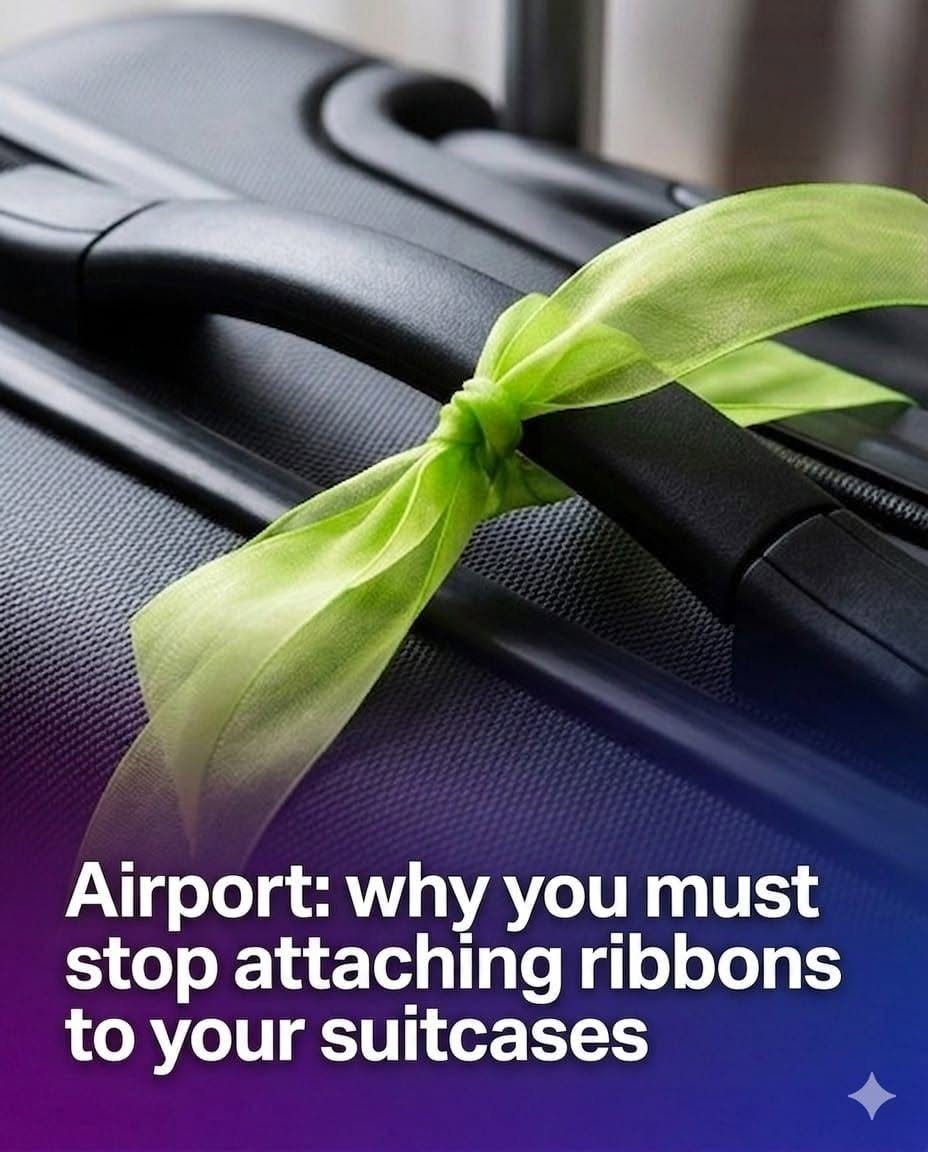
For decades, tying a brightly colored ribbon, yarn, or fabric strip to a suitcase handle has been a favorite travel hack. It seems like the perfect way to spot a generic black or navy bag quickly on the airport carousel. However, airport baggage handlers and travel security experts are now strongly urging passengers to stop this common practice immediately.
While tying a ribbon to your luggage feels like a smart convenience, it can actually cause serious baggage delays, mechanical jams in airport sorting systems, and even lead to lost luggage. In this guide, we explore why this popular travel trick backfires, how modern airport luggage handling systems work, and safer, smarter ways to identify your bags when traveling.
The Problem with Ribbons on Luggage Handles
Modern airports rely on high-speed, automated baggage handling systems (BHS) featuring miles of conveyor belts, robotic sorters, and optical barcode scanners. What works as a visual identifier for a human can create significant technical problems for automated machinery.
Conveyor Belt Jams and Mechanical Damage
Airport conveyor systems move thousands of bags per hour across intricate machinery, rollers, and sorting gates. Loose items like dangling ribbon tails, string, yarn, or decorative straps can easily snag in the cracks of moving conveyor belts or wrap around motorized rollers.
When a ribbon gets caught:
-
The machine can rip the handle off the suitcase.
-
The entire conveyor belt system may grind to a halt, causing system-wide luggage delays for hundreds of passengers.
-
The bag may be pulled off course or shredded by mechanical gears.
Scanner Interferences and Sorting Delays
Automated baggage sorters use high-tech optical scanners to read the barcode on your airline luggage tag. Loose ribbons swinging around handles can physically cover the printed barcode as the bag travels past high-speed cameras. When scanners fail to read a tag, the system routes the suitcase to a manual inspection area for human intervention. This extra step drastically increases the likelihood that your luggage will miss your flight.
Understanding the Journey of Your Baggage
To appreciate why small accessories cause big problems, it helps to understand what happens to your suitcase after check-in.
+---------------------+---------------------------------------------------------+
| Baggage Phase       | Potential Hazard of Attached Ribbons                   |
+---------------------+---------------------------------------------------------+
| Check-In & Tagging  | Ribbons obscure barcode placement                       |
| Automated Sorting   | Fabric ends snag in high-speed belt rollers             |
| Optical Scanning    | Dangling ribbon covers barcode during camera pass       |
| Loading & Transfer  | Loose ribbons catch on baggage carts and chutes         |
+---------------------+---------------------------------------------------------+
When a bag enters the subterranean network of airport conveyor belts, it moves through sorting chutes and automated diverters at high speeds. Anything dangling from the bag increases friction or provides a anchor point for machinery to catch.
Safer Alternatives to Identify Your Suitcase
You do not have to settle for playing a guessing game at the baggage claim carousel. There are many safe, effective, and airline-approved ways to make your luggage stand out without risking flight delays or mechanical damage.
1. Unique Luggage Covers
Using a bright, stretchable luggage cover is one of the best ways to protect your suitcase from scratches while making it instantly recognizable. Protective covers fit snugly around the bag without any dangling cords or fabric.
2. Distinctive Colors and Patterns
Instead of buying a standard black or navy suitcase, opt for unconventional colors such as olive green, mustard yellow, teal, or patterned luggage. Unique suitcase designs cut down identification time at baggage claim and lower the chances of someone else accidentally grabbing your bag.
3. Luggage Straps
A heavy-duty, brightly colored luggage strap fastened tightly around the body of the suitcase adds security and visual distinction. Make sure the strap is pulled flush against the suitcase so it cannot snag on machinery.
4. Smart Tracking Devices
Inserting a Bluetooth or GPS tracking tag (such as an Apple AirTag or Tile) inside your suitcase gives you real-time location updates directly on your smartphone. This offers peace of mind without creating external hazards for baggage handlers.
5. Durable, Flush Luggage Tags
Use standard leather or silicone ID tags with covered contact details. Ensure the attachment loop is short, sturdy, and pulled tight against the handle.
Financial and Travel Security Considerations
Losing a bag or suffering damage during travel can lead to unexpected financial burdens. Knowing your rights and preparing ahead can protect your finances and travel plans.
Navigating Airline Compensation and Insurance
When airlines delay or lose your luggage, passenger rights regulations often require the airline to reimburse you for essential purchases like clothing and toiletries. Having travel insurance or paying for your flight with a premium credit card that offers baggage loss coverage can provide additional protection. However, insurance claims often require proof of value, so keeping digital receipts for expensive items is essential.
Smart Budgeting for Travel Protection
Investing in proper travel gear—such as high-quality luggage, TSA-approved locks, and dedicated smart trackers—is a modest investment that protects your valuable belongings. For frequent travelers, small investments in durable equipment help avoid expensive delays and replacement costs down the road.
Practical Tips for Stress-Free Airport Baggage Handling
-
Remove all old airline barcodes and tracking stickers from previous trips to avoid scanning confusion.
-
Tuck in all loose straps, backpacks strings, and expandable zippers before dropping off your bag.
-
Take a photo of the exterior of your suitcase and its airline tag before checking it in.
-
Place a sheet of paper with your name, phone number, and destination address inside the top layer of your bag.
Fascinating Facts About Airport Baggage Systems
-
London Heathrow Airport’s Terminal 5 baggage system features over 30 miles of conveyor belts designed to process up to 12,000 bags per hour.
-
Misdirected luggage rates have dropped significantly over the past decade thanks to RFID (Radio Frequency Identification) tags integrated into baggage stickers by major airlines.
-
The average checked bag travels through nearly a mile of underground conveyor systems before reaching the aircraft cargo hold.
-
Standard airport scanners read barcodes from multiple angles simultaneously, but even a thin piece of ribbon can block the laser long enough to cause a misread.
Conclusion
Tying a ribbon to your suitcase may seem like a helpful travel tip, but it poses genuine risks to airport sorting machinery and increases the odds of your bag getting delayed or damaged. By switching to safer identification methods—such as vibrant luggage straps, distinct suitcase colors, or smart trackers—you can ensure your belongings arrive safely and promptly at your destination.
Frequently Asked Questions (FAQ)
Why do baggage handlers dislike ribbons on suitcases?
Ribbons can catch on automated conveyor belts, cause mechanical jams, tear off handles, and block barcode scanners, leading to manual sorting delays or lost luggage.
Are luggage straps safe to use on checked bags?
Yes, as long as the luggage strap is wrapped tightly around the body of the bag with no loose ends hanging down to snag on machinery.
What should I do if my luggage gets lost at the airport?
Report the missing bag immediately at your airline’s baggage service desk before leaving the airport. Ensure you receive a file reference number (PIR) to track your claim.
Does travel insurance cover lost or delayed baggage?
Most travel insurance policies and premium credit card travel protections offer reimbursement for delayed or lost luggage, covering essential purchases and item replacements.
