
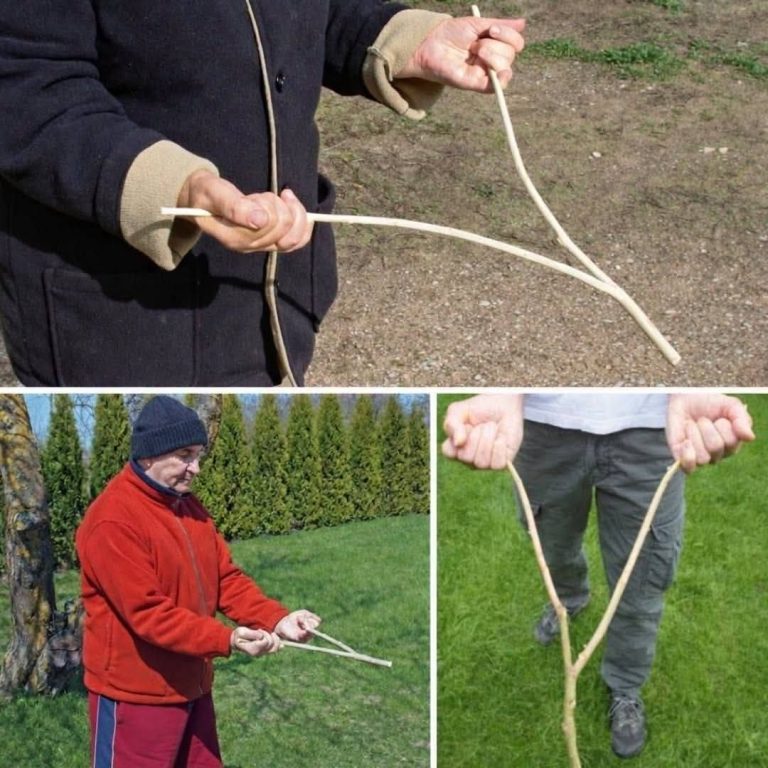
For centuries, farmers, homesteaders, and rural well-drillers relied on a fascinating folk practice known as water dowsing (also called water witching, divining, or doodlebugging) to locate underground water sources before drilling.
By holding a Y-shaped wooden stick or metal rods in a specific grip, dowsers walk across land waiting for the stick to dip or twitch, signaling the presence of hidden groundwater.
In this article, we explore the origins of water dowsing, explain the psychological science behind the phenomenon, and look at modern well-drilling methods.
What Is Water Dowsing and How Is It Performed?
Water dowsing is a form of divination used historically to search for underground water, minerals, or petroleum.
1. Traditional Dowsing Tools
The classic dowsing tool is a Y-shaped branch cut from trees known for flexibility, such as willow, witch-hazel, peach, or apple trees. Modern dowsers sometimes use L-shaped copper rods or pendulums instead of wood.
2. The Dowsing Technique
The practitioner holds the two ends of the Y-stick under tension, palms facing upward. As the dowsing practitioner walks across the terrain, tension on the bent branch creates a delicate mechanical balance. When the stick dips unexpectedly toward the ground, the dowser marks the spot as a prospective location for digging a well.
The History of Water Witching Across Cultures
Dowsing dates back hundreds of years, with early historical records and woodcut illustrations appearing in Renaissance Europe:
-
16th-Century Mining: In Germany, miners used dowsing rods to locate mineral veins beneath the earth.
-
European Folk Traditions: Settlers brought dowsing practices to North America, where “water witches” became essential figures in rural agricultural development.
-
Modern Rural Use: Even today, some property owners and agricultural communities keep the tradition alive as a cultural art form prior to excavating land.
The Science Behind Dowsing: The Ideomotor Effect
While practitioners strongly feel the stick pull downward independently, scientific studies attribute the movement of dowsing rods to the ideomotor effect.
-
Subconscious Muscle Movement: The ideomotor effect occurs when subtle, involuntary muscle twitches are triggered unconsciously by human expectations or subtle environmental cues (such as green vegetation or terrain shifts).
-
High Tension Hold: Because the Y-shaped stick is held under deliberate physical tension, even the slightest involuntary hand rotation causes the tip of the stick to snap downward dramatically.
Modern Well-Siting and Groundwater Hydrology
Today, professional groundwater detection relies on scientific hydrology and geophysics rather than intuition:
-
Hydrogeologic Mapping: Geologists analyze topographies, existing regional well logs, and rock formations to map subterranean aquifers.
-
Geophysical Surveys: Electrical resistivity and seismic reflection equipment measure variations in soil density and water saturation beneath the surface.
-
Scientific Well-Siting: Combining satellite imagery with hydrogeological testing ensures high success rates when drilling residential or agricultural water wells.
Conclusion
Water dowsing remains one of history’s most enduring folk traditions. Whether viewed as a fascinating psychological phenomenon or a cherished rural craft, the story of water witching offers a unique look into human history and our connection to the earth!
Frequently Asked Questions (FAQ)
Does water dowsing actually work?
Scientific trials consistently show that dowsing performs no better than random chance under controlled blind conditions. However, in regions with rich water tables, digging almost anywhere yields water, contributing to the historical belief in dowsing’s success.
What kind of wood is best for a dowsing rod?
Historically, flexible green branches from willow, witch-hazel, peach, and hazel trees were preferred due to their ability to hold tension without snapping.
What is the ideomotor response?
The ideomotor response is a psychological phenomenon where a person makes subtle, unconscious physical movements in response to expectations, beliefs, or subconscious thoughts.
