
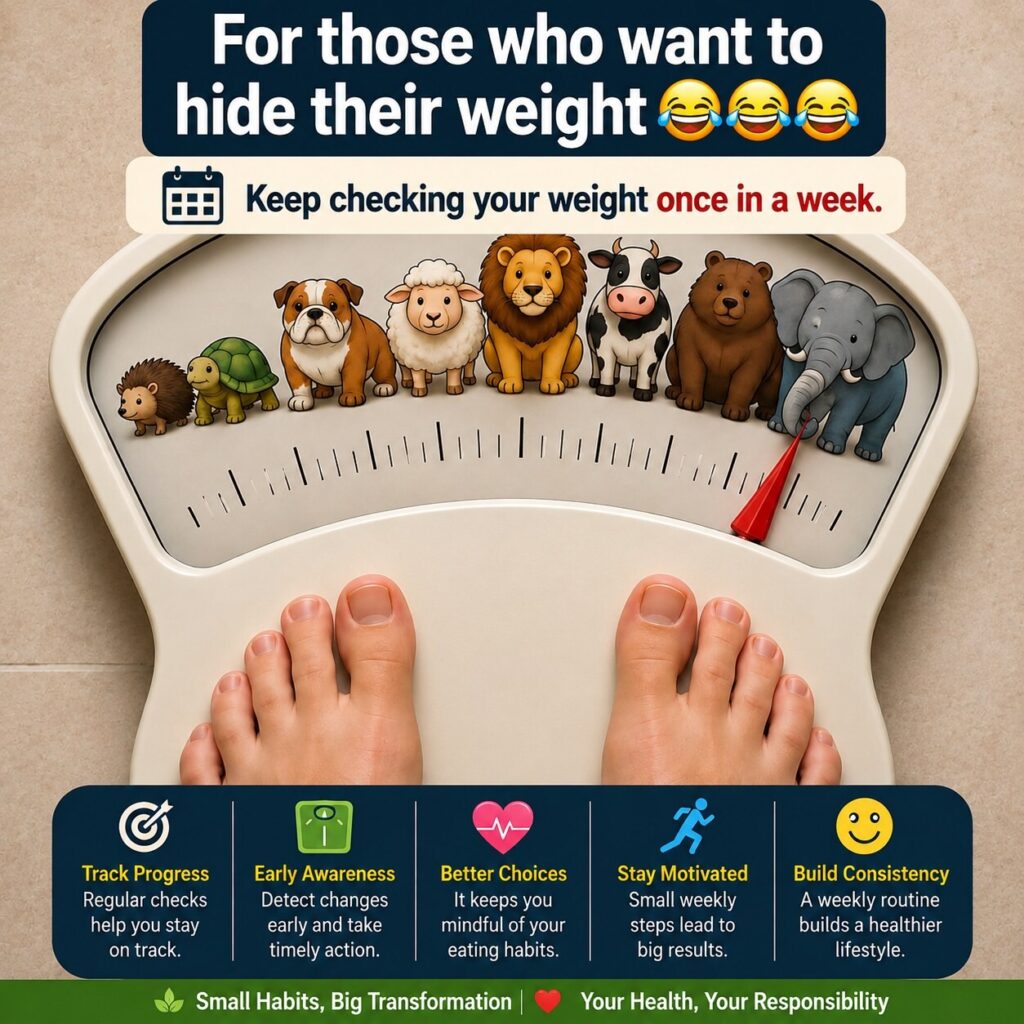
Maintaining a healthy lifestyle involves finding a balanced, sustainable approach to tracking personal fitness goals. For many individuals, stepping on a scale can feel intimidating or stressful. However, reframing weight tracking into a lighthearted, consistent habit removes anxiety and turns health management into a positive daily routine.
A viral image circulating online shows a whimsical bathroom scale featuring cute cartoon animals—ranging from a tiny hedgehog to an elephant—along the dial, accompanied by the humorous caption: “For those who want to hide their weight 😂😂😂 Keep checking your weight once a week.” Beneath the creative visual, the graphic highlights core reasons why weekly check-ins foster a healthy mindset: tracking progress, building early awareness, making better daily choices, staying motivated, and building long-term consistency.
In this deep dive, we will explore the psychology of weekly weigh-ins, compare tracking frequencies, discuss holistic health strategies, and highlight how smart personal management supports long-term peace of mind.
Why Weekly Weigh-Ins Work: The Psychology of Consistency
Monitoring your body weight once a week strikes an ideal balance between staying accountable and avoiding over-fixation on natural daily fluctuations.
       +-------------------------------------------------------+
       |             THE WEEKLY TRACKING ADVANTAGE             |
       +-------------------------------------------------------+
                                   |
              +--------------------+--------------------+
              |                                         |
              v                                         v
   +-----------------------+               +-----------------------+
   |   DAILY WEIGH-INS     |               |   WEEKLY WEIGH-INS    |
   +-----------------------+               +-----------------------+
   | * High fluid swings   |               | * Smooths out daily   |
   | * Sodium/water spikes |               |   water weight noise  |
   | * Can cause daily     |               | * Highlights clear,   |
   |   emotional stress    |               |   true trendlines     |
   +-----------------------+               +-----------------------+
              |                                         |
              +--------------------+--------------------+
                                   |
                                   v
                      +-------------------------+
                      | BALANCED HEALTH MINDSET |
                      | Consistent action with  |
                      | zero daily stress       |
                      +-------------------------+
1. Smoothing Out Natural Fluid Fluctuations
Human body weight fluctuates naturally by two to five pounds in a single day due to water retention, sodium intake, carbohydrate consumption, and digestive cycles. Weighing in once a week gives a far more accurate representation of actual fat loss or muscle gain trends over time.
2. Preventing Scale Obsession
Checking the scale every single morning can create unnecessary anxiety, leading people to abandon healthy routines prematurely out of frustration. A weekly routine encourages patience and focuses attention on sustainable habits rather than micro-changes.
Key Benefits of Regular Progress Checks
As highlighted in the viral graphic, establishing a consistent weekly tracking routine offers several key advantages for personal health.
Track Progress Accurately
Regular weekly data points allow you to objectively evaluate whether your current nutrition plan and workout routine are producing desired results, allowing for minor adjustments without drastic overhauls.
Early Awareness and Timely Action
Detecting gradual weight trends early prevents surprising weight gains over several months. Catching small changes allows you to take gentle, proactive steps before habits become hard to break.
Better Daily Choices and Motivation
Knowing you have a scheduled weekly check-in keeps your health goals top-of-mind when making daily meal and exercise choices, reinforcing mindfulness without feeling restrictive.
Comparing Progress Tracking Methods
Scale weight is only one of many metrics used to measure physical fitness and overall wellness.
| Tracking Method | Primary Focus | Best Used For | Key Advantage |
| Weekly Weigh-In | Total body mass | Broad weight management trends | Quick, objective, and easy to perform |
| Body Measurements | Waist, hip, and chest circumference | Fat loss vs. muscle gain assessment | Shows changes when scale weight stays flat |
| Progress Photos | Visual body composition | Long-term physical transformation | High emotional motivation and visual clarity |
| Energy & Sleep Logs | Daily vitality & sleep quality | General wellness and recovery | Focuses on internal health and mental clarity |
Supporting Fitness, Healthcare, and Financial Peace of Mind
Building a healthier lifestyle is a core pillar of long-term vitality. Combining active wellness habits with stable personal planning ensures a safe, balanced future.
Prioritizing Preventative Medical Healthcare
While tracking weight at home is a great personal habit, routine checkups with a healthcare provider offer deeper insights into internal wellness. Combining home tracking with clinical blood work, cholesterol tests, and annual physicals guarantees complete medical care. Maintaining quality health insurance ensures that routine health screenings and medical guidance remain fully accessible.
Managing Household Security and Peace of Mind
Maintaining a low-stress lifestyle supports metabolic balance and mental well-being. Keeping personal responsibilities organized creates a solid safety net:
-
Financial Planning: Managing mortgage options, keeping personal loans organized, reducing high-interest debt, and maintaining savings reduce unnecessary stress.
-
Home Insurance Protection: Securing proper home and property insurance safeguards your residence and family assets against unforeseen events.
-
Legal and Estate Management: Keeping estate plans, legal documents, and business agreements updated ensures long-term protection for your family.
Practical Tips for Accurate Weekly Weigh-Ins
To get the most accurate, stress-free results from your weekly tracking routine, follow these simple guidelines:
-
Pick a Fixed Day and Time: Weigh yourself on the same day every week (e.g., every Wednesday morning) right after waking up and using the bathroom, before eating or drinking.
-
Use the Same Scale on a Hard Surface: Place your bathroom scale on a flat, hard tile or hardwood floor rather than plush carpet to ensure precise calibration.
-
Focus on Monthly Averages: Do not worry if one week shows a minor spike. Look at the general trend line across four to six weeks to measure real progress.
-
Celebrate Non-Scale Victories: Reward yourself for non-scale wins, such as having more daily energy, sleeping better, lifting heavier weights, or fitting into smaller clothing sizes!
Fascinating Facts About Weight and Body Composition
-
Water Weight Factor: Every gram of stored glycogen (carbohydrates) in your muscles holds onto roughly 3 to 4 grams of water, which explains why low-carb diets cause rapid initial water weight drops!
-
Circadian Rhythm Impact: Your body weight is typically at its lowest point in the morning after overnight respiration and fluid loss during sleep.
-
Muscle Density: Muscle tissue is denser than body fat, meaning you can lose inches around your waist while the scale number remains completely identical as you build muscle.
Conclusion
Tracking your weight once a week is a simple, effective, and stress-free strategy to maintain early awareness and build lasting consistency. By viewing the scale as a neutral data tool rather than a judgment, you can celebrate progress while making mindful choices for your health.
By combining consistent daily habits with regular medical checkups, reliable health insurance, and sound financial management, you create a balanced foundation for lifelong wellness. Start your lighthearted weekly routine today and take small steps toward big results!
Frequently Asked Questions (FAQ)
Q1: What is the best day of the week to weigh yourself?
Mid-week days like Tuesday, Wednesday, or Thursday morning are ideal because they avoid the typical weekend diet variations and water weight fluctuations.
Q2: Is daily weighing bad for weight loss?
Not necessarily, but daily weighing can cause unnecessary emotional stress due to normal daily fluid swings. For most people, weekly weigh-ins provide a clearer, less stressful picture of progress.
Q3: Why did my weight go up overnight after a hard workout?
Intense exercise causes temporary microscopic muscle inflammation and fluid retention needed for tissue repair, which can temporarily bump up scale weight for 24 to 48 hours.
Q4: Should I weigh myself with or without clothes?
Weighing yourself unclothed or in light morning clothing ensures consistent results from week to week.
Q5: How long does it take to see real progress on the scale?
Safe, sustainable weight management typically shows meaningful trends over 3 to 4 weeks of consistent nutrition and activity.
