
Word puzzles, crosswords, and television game show moments have a unique way of capturing the internet’s imagination. From viral viral fails to brilliant, unexpected solves, game show word boards frequently go viral across social media platforms, sparking lively debates, memes, and fan discussions. One of the most famous categories on television puzzle shows involves compound words, common phrases, and everyday objects that leave both contestants and home viewers scratching their heads.
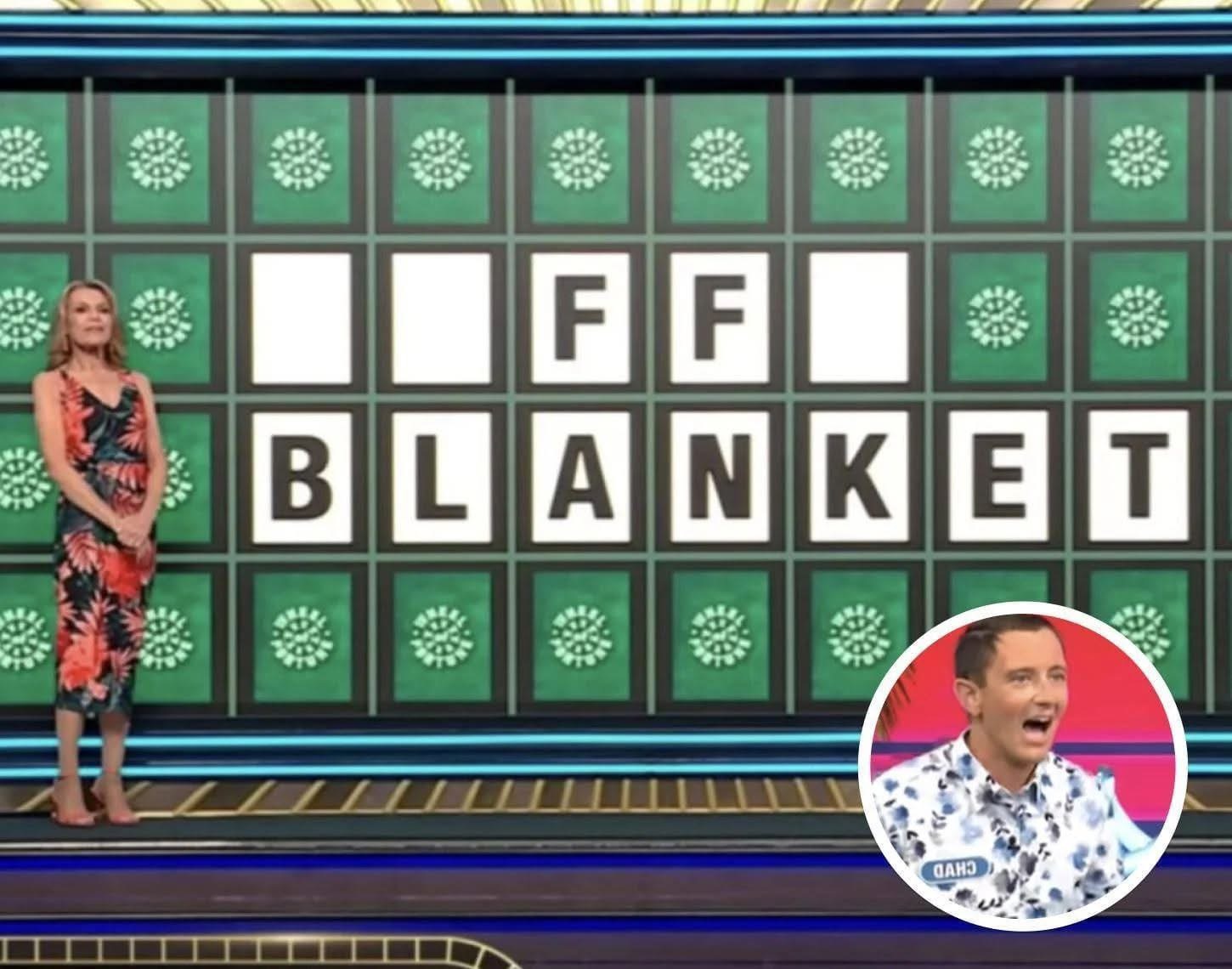
In a now-iconic television game show screenshot, a contestant stands before a partially revealed two-word puzzle board. The bottom word, BLANKET, is fully revealed, while the top word shows only two letters: _ _ F F _ _. The contestant’s priceless expression and the intriguing letter layout created a viral moment that fans of word games still discuss today.
In this deep dive, we will reveal the complete solution to this viral puzzle, explore the cognitive science of word completion and anagram solving, detail practical strategies to master word games, and discuss how mental exercises support long-term cognitive health.
The Complete Solution: What Was the Missing Word?
Looking at the puzzle board, we have a seven-letter word on top followed by the word BLANKET on the bottom:
[ _ ] [ _ ] [ F ] [ F ] [ _ ] [ _ ] [ _ ]
[ B ] [ L ] [ A ] [ N ] [ K ] [ E ] [ T ]
When solving game show puzzles, context, letter positioning, and common two-word phrases are crucial clues. The correct complete phrase is FLUFFY BLANKET.
Breaking Down the Top Word: “FLUFFY”
-
First Letter: F
-
Second Letter: L
-
Third Letter: U
-
Fourth Letter: F
-
Fifth Letter: F
-
Sixth Letter: Y
The double “F” in the middle of the seven-letter word acts as the primary anchor. Combined with the descriptive context of “BLANKET,” words like “FLUFFY” instantly come to mind for seasoned word puzzle solvers.
The Psychology of Word Completion and Visual Cryptograms
Why do word puzzles like this hold such a powerful grip on our attention? Human brains are naturally hardwired to seek patterns, complete partial information, and resolve ambiguity.
       +-------------------------------------------------------+
       |             WORD RECOGNITION PROCESSING               |
       +-------------------------------------------------------+
                                   |
                                   v
                      +-------------------------+
                      | VISUAL LETTER SENSING   |
                      | (Identifies Double 'FF')|
                      +-------------------------+
                                   |
                                   v
                      +-------------------------+
                      | LEXICAL MEMORY RETRIEVAL|
                      | (Searches Mental Vocab) |
                      +-------------------------+
                                   |
                                   v
               +-----------------------------------------+
               |                                         |
               v                                         v
    +--------------------+                     +--------------------+
    | CONTEXTUAL MATCHING|                     | PATTERN DISRUPTION |
    | (Pairs with word   |                     | (Funny incorrect   |
    |   "BLANKET")       |                     |  guesses/mind-blocks|
    +--------------------+                     +--------------------+
               |                                         |
               +--------------------+--------------------+
                                    |
                                    v
                       +------------------------+
                       | SOLVED PUZZLE REVEAL   |
                       +------------------------+
The Gestalt Principle of Closure
The human brain relies on the Gestalt principle of closure—a psychological tendency to perceive incomplete shapes or words as complete wholes. When presented with _ _ F F _ _ _, your mental lexicon immediately begins scanning tens of thousands of stored words, testing candidate letters against the double-F constraint until a logical match is found.
The “Tip-of-the-Tongue” Phenomenon
Sometimes, even simple words feel impossible to recall during live game shows or under pressure. This temporary inability to retrieve a known word from memory is called the tip-of-the-tongue phenomenon. High stress, bright studio lights, and time limits restrict cognitive bandwidth, leading to funny misguesses that often go viral online.
Cognitive Benefits of Playing Daily Word Games
Engaging with word games, crosswords, anagrams, and vocabulary puzzles provides significant benefits for brain health and mental agility throughout life.
1. Expanding Vocabulary and Lexical Memory
Regularly playing word games introduces new terminology, reinforces language patterns, and sharpens verbal fluency. Maintaining a robust vocabulary enhances communication skills and supports quick recall in professional and social settings.
2. Strengthening Working Memory and Focus
Solving complex word puzzles requires holding multiple variables in mind simultaneously—such as eliminated letters, word lengths, and grammatical context. This exercise strengthens working memory and trains sustained attention.
3. Promoting Neuroplasticity and Brain Health
Neuroplasticity is the brain’s ability to adapt, form new neural connections, and reorganize itself throughout life. Stimulating mental activities challenge the brain, building cognitive reserve that protects against age-related cognitive decline.
Comparing Popular Word Game Formats
Word games come in various styles, each challenging different cognitive pathways and problem-solving skills.
| Puzzle Type | Core Challenge | Primary Cognitive Skill | Ideal For |
| Wheel-Style Board Puzzles | Fill in missing letters using category clues | Contextual association & letter frequency | Fan of TV game shows & phrase building |
| Grid Crosswords | Solve intersecting clues across rows and columns | General knowledge & vocabulary retrieval | Daily relaxed mental workouts |
| Anagram Challenges | Unscramble random letter clusters into words | Spatial reasoning & visual manipulation | Fast-paced cognitive training |
| Word Search Grids | Locate hidden words in letter matrices | Visual scanning & pattern recognition | Stress relief and casual fun |
Smart Lifestyle Choices, Healthcare, and Financial Peace
While solving daily word puzzles keeps your mind sharp, true personal vitality relies on a well-rounded lifestyle that covers physical health, stress management, and long-term security.
Physical Health, Nutrition, and Healthcare Coverage
Brain function depends directly on physical cardiovascular health. Regular physical activity, proper hydration, and a diet rich in omega-3 fatty acids, leafy greens, and antioxidants nourish brain cells. Additionally, maintaining comprehensive health insurance ensures access to regular medical checkups, routine health screenings, and specialist care without unexpected financial stress.
Reducing Stress Through Sound Financial Planning
Mental wellness is closely tied to financial security. Managing real-world responsibilities effectively frees up mental energy, allowing you to enjoy leisure activities like word games:
-
Financial Management: Securing low-interest personal loans, keeping up with mortgage plans, managing credit responsibly, and consulting financial advisors build a stable foundation.
-
Legal and Business Preparedness: Maintaining updated legal services, estate plans, home insurance, and business operations protects family wealth.
-
Investment for the Future: Building long-term retirement and education funds ensures peace of mind for decades to come.
Proven Strategies to Master Word Puzzles
Want to improve your word puzzle solving speed and accuracy? Use these expert tips:
-
Focus on Letter Frequencies: Vowels (A, E, I, O, U) and common consonants (T, N, S, R, L) appear far more frequently in English words than rare letters like Z, Q, or X.
-
Identify Common Prefixes and Suffixes: Look for standard word beginnings (UN-, RE-, PRE-, FL-) and endings (-ING, -ED, -Y, -TION) to narrow down possibilities quickly.
-
Work Backward from the Context: Use associated words (like “BLANKET”) to brainstorm logical adjectives, verbs, or compound nouns that commonly pair with them.
-
Say Words Out Loud: Auditory stimulation can trigger lexical retrieval in your brain when visual scanning alone stalls.
Fascinating Facts About Word Games and Game Shows
-
The World’s First Crossword: The first modern crossword puzzle was published on December 21, 1913, in the New York World newspaper, created by journalist Arthur Wynne.
-
Longest Running Word Game Shows: Television word-based game shows have aired globally for over 50 years, producing tens of thousands of episodes and iconic pop-culture moments.
-
The Power of Double Letters: Words with double letters (like “FLUFFY”, “BOOKKEEPER”, or “BALLOON”) are among the hardest for the human brain to decode quickly in partial puzzle formats.
Conclusion
Viral television puzzle moments remind us how entertaining and challenging language can be. Whether you guessed “FLUFFY BLANKET” instantly or enjoyed testing your vocabulary skills, taking time to solve daily word teasers gives your mind a fun, satisfying workout.
As you navigate life’s daily challenges, pair mental exercises with physical health care, balanced stress management, and reliable financial planning. Challenge your friends with this viral puzzle today and see who solves it first!
Frequently Asked Questions (FAQ)
Q1: What is the correct answer to the “____ BLANKET” puzzle?
The full solution to the seven-letter top word paired with “BLANKET” is FLUFFY BLANKET.
Q2: Why are word puzzles so effective for brain health?
Word puzzles stimulate working memory, pattern recognition, and lexical recall, encouraging neuroplasticity and keeping cognitive pathways active.
Q3: What are the most common letters in English word puzzles?
The most common letters in the English language are E, T, A, O, I, N, S, H, R, D, L, and U.
Q4: How can I improve my speed at solving missing-letter puzzles?
Practice identifying common prefixes and suffixes, memorize frequent letter combinations, and use contextual cues provided by surrounding words.
Q5: Are double-letter words harder to solve in puzzles?
Yes. Double letters often break typical visual word expectations, making pattern recognition slightly more complex for the human visual system under time pressure.
