
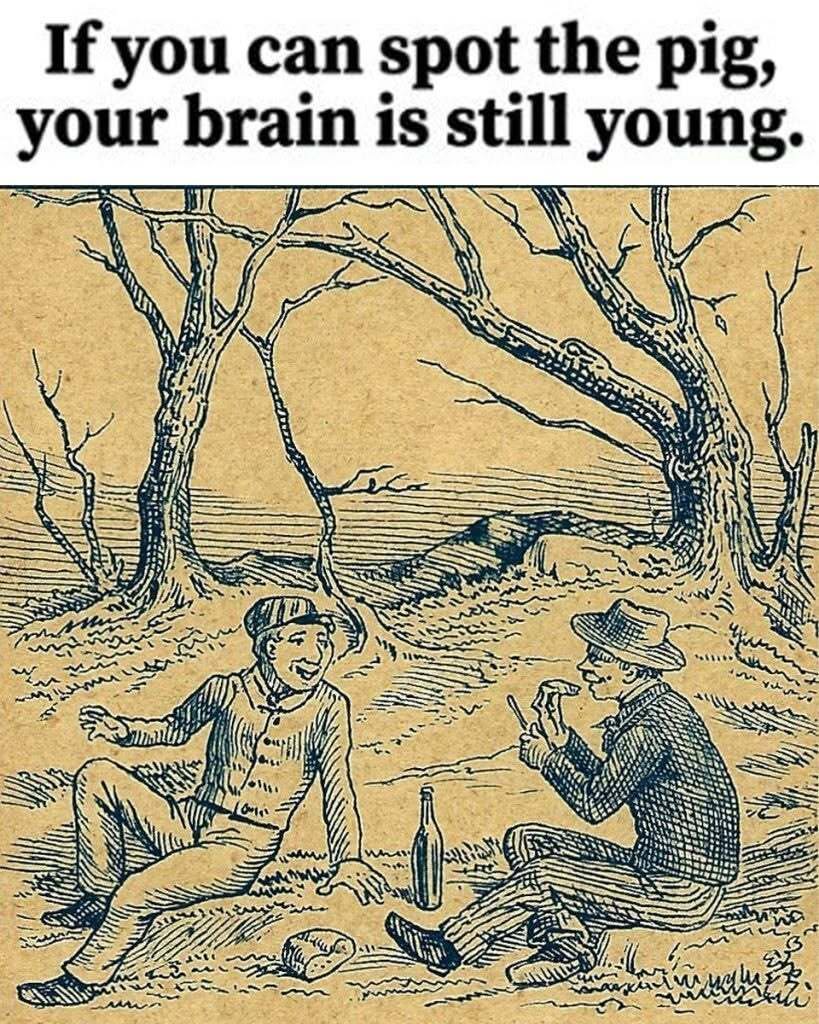
Vintage optical illusions and hidden-picture puzzles have fascinated people for generations. Designed using negative space, clever line work, and natural contours, these classic illustrations challenge how our brains perceive visual information.
While viral social media posts playfully claim that solving these riddles proves “your brain is still young,” optical illusions actually measure pattern recognition, visual focus, and spatial awareness.
This article breaks down how optical illusions work, reveals the solution to this classic visual puzzle, and explores the cognitive benefits of brain teasers.
How Visual Perception and Optical Illusions Work
Our brains constantly process visual signals, organizing shapes and lines into recognizable objects based on familiar patterns.
                    HOW THE BRAIN PROCESSES ILLUSIONS
                                    │
      ┌─────────────────────────────┼─────────────────────────────┐
      ▼                             ▼                             ▼
PATTERN RECOGNITION            FIGURE-GROUND SEGREGATION     GESTALT REASONING
• The brain matches contours   • Distinguishes foreground     • Fills in perceptual gaps
  to familiar shapes             objects from background        to form a complete image
1. Figure-Ground Perception
Visual perception relies on distinguishing an object (the figure) from its surroundings (the background). In optical illusions, artists intentionally blend contours—such as tree branches or terrain lines—so the brain hesitates before separating hidden figures from the scene.
2. Pareidolia and Negative Space
The human brain is naturally wired to identify familiar shapes, faces, and animal forms within random visual patterns. Puzzles utilize negative space (empty areas between objects) to cleverly conceal hidden figures right in plain sight.
How to Spot the Hidden Pig in the Image
If you’re having trouble locating the hidden animal, follow these simple visual steps:
| Step / Focus Area | What to Look For | Visual Clue |
| 1. Look at the Trees | Focus on the large tree trunk on the far right | The bark contours form organic shapes |
| 2. Trace the Contours | Follow the main fork where branches extend left | The outline forms a pig’s snout and head |
| 3. Turn / Tilt the Image | Rotate or view the image from an angle | The negative space clearly outlines the entire body of a pig |
3 Cognitive Benefits of Solving Visual Puzzles
Engaging in daily mental exercises and visual riddles offers several cognitive advantages:
-
Sharpens Visual Attention: Searching for subtle hidden details trains the brain to improve focus and visual scanning efficiency.
-
Encourages Neuroplasticity: Challenging your mind with novel visual puzzles stimulates neural connections and keeps cognitive processing active.
-
Provides a Quick Mental Reset: Taking a short break to solve a riddle offers an engaging, stress-relieving distraction during a busy day.
Conclusion: A Fun Test of Visual Observation
Hidden-figure puzzles are a timeless form of mental entertainment that showcase the fascinating ways our minds interpret visual detail. Whether you spotted the hidden pig instantly or needed a hint, engaging with brainteasers is a fun habit to keep your observational skills sharp.
Frequently Asked Questions (FAQ)
1. Where exactly is the hidden pig in this image?
The outline of the pig is formed by the negative space and line work within the branches and trunk of the large tree on the right side of the illustration.
2. Do optical illusions actually indicate brain age?
No. While optical illusions are fun tests of visual perception and pattern recognition, ability to solve them does not measure physical or neurological brain age.
3. What cognitive skills do visual puzzles test?
Visual puzzles primarily engage pattern recognition, spatial awareness, figure-ground discrimination, and selective visual attention.
