
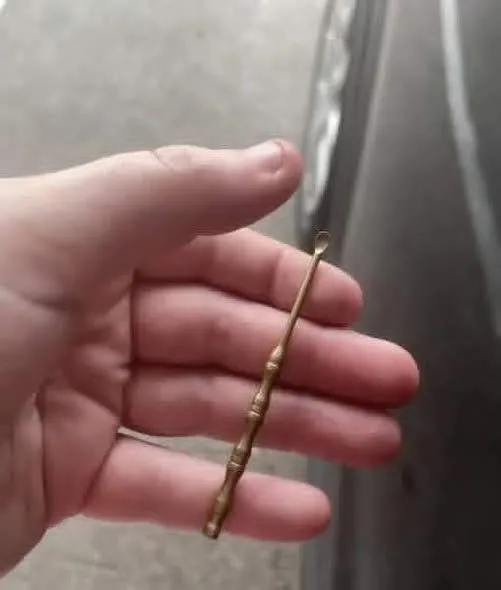
Every so often, photos of curious antique objects resurface online, baffling internet users trying to identify their historical purpose. Small metallic scoops featuring decorative ridged handles—like the brass tool shown above—frequently spark viral debates on social media.
While some assume it is a miniature spice spoon, a snuff scoop, or an artisan craft tool, it is actually a traditional ear pick (also known as an ear spoon or mimikaki).
This guide explores the fascinating history of ear scoops, their cultural significance across different regions, and modern medical guidance surrounding ear hygiene.
The History and Cultural Origins of the Ear Pick
Ear scoops have been utilized across various civilizations for thousands of years as standard personal grooming tools.
                    HISTORICAL USAGE OF EAR PICKS
                                  │
      ┌───────────────────────────┼───────────────────────────┐
      ▼                           ▼                           ▼
EAST ASIAN TRADITION       MEDIEVAL EUROPE             MODERN VINTAGE REPLICS
• Known as "Mimikaki"     • Common in bronze/silver   • Brass/copper decorative tools
  in Japan & China          grooming sets               sold in novelty kits
1. East Asian Heritage (Mimikaki)
In countries like Japan, China, and Korea, ear picking has a long-standing cultural tradition. Known as mimikaki in Japan, these small scoop-shaped tools are traditionally crafted from bamboo, brass, or silver. In many East Asian households, ear cleaning is considered a relaxing ritual of personal care and affection.
2. Genetic Differences in Earwax
The widespread use of ear picks in East Asia is linked to genetics. Most people of East Asian descent have dry earwax (flaky and pale), which is easily scraped and scooped out using a small spoon. In contrast, people of European or African descent typically produce wet earwax (sticky and honey-colored), which behaves differently.
3. European Antiquity and Medieval Sets
Ear picks were also widely used throughout ancient Rome, Viking settlements, and Medieval Europe. Archaeological digs frequently uncover elaborate bronze or silver chatelaine sets containing ear scoops alongside toothpicks and tweezers.
Comparing Historical Ear Tools vs. Modern Alternatives
Review how historical grooming tools compare to modern medical advice for ear hygiene:
| Tool / Method | Primary Material | Historical / Intended Purpose | Modern Medical Safety Verdict |
| Traditional Metal Scoop | Brass, Bronze, Silver | Scooping out dry wax & debris | ⚠️ High risk of canal scratching or puncture |
| Cotton Swabs (Q-Tips) | Cotton & paper/plastic stem | Outer ear cleaning | ⚠️ Pushes wax deeper; not for inside the canal |
| Bamboo Mimikaki | Natural polished bamboo | Cultural ear grooming ritual | ⚠️ Requires expert gentle use; caution advised |
| Over-the-Counter Drops | Carbamide peroxide / oils | Softening hardened cerumen | ✅ Safe, medically recommended non-invasive method |
| Professional Irrigation | Warm water / specialized tools | Medical earwax removal | ✅ Safe when performed by healthcare providers |
Medical Perspectives on Ear Cleaning Safety
While vintage metal ear picks are fascinating cultural artifacts, modern otolaryngologists (ENT doctors) advise caution when using manual tools inside the ear canal:
-
Self-Cleaning Mechanism: The ear canal naturally migrates old wax and debris outward through jaw movements like chewing and talking.
-
Risk of Perforation: Inserting rigid metal objects near the eardrum carries a risk of accidental punctures, skin abrasions, or introducing bacterial infections.
-
Safer Alternatives: Medical professionals recommend using mineral oil or ear-softening drops, followed by gently cleaning only the outer ear with a soft cloth.
Conclusion: A Small Tool with a Rich History
What looks like a strange, mysterious relic is actually a functional piece of global personal care history. Whether crafted from ornamental brass or simple bamboo, the humble ear pick offers a fascinating glimpse into historical grooming habits and cultural traditions around the world.
Frequently Asked Questions (FAQ)
1. What is the official name of this tool?
It is most commonly referred to as an ear pick, ear spoon, ear scoop, or mimikaki (in Japanese culture).
2. Is it safe to clean your ears with a metal ear pick?
Medical professionals generally advise against inserting metal objects into the ear canal due to the risk of scratching the canal lining or damaging the eardrum.
3. Why are ear picks so popular in Asian cultures?
Genetics play a major role. A majority of East Asian populations possess the ABCC11 gene variant that causes dry, flaky earwax, which is easily removed using a small spoon-shaped tool.
