
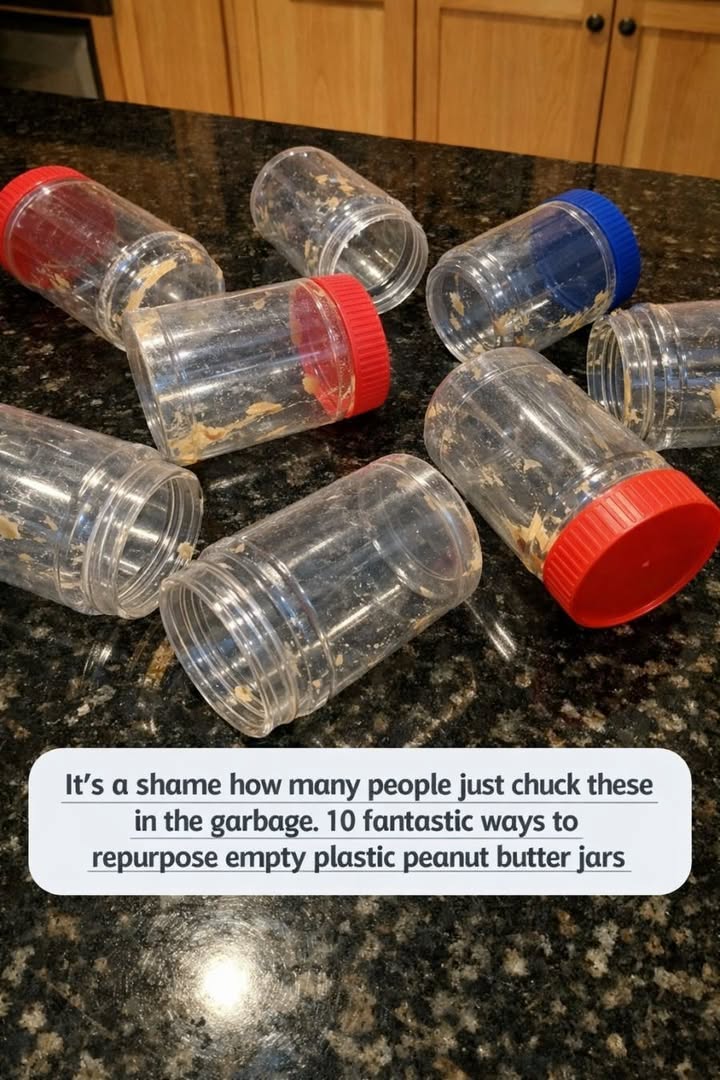
Every household goes through them: plastic peanut butter jars. Once the last spoonful of creamy or crunchy goodness is scraped out, these durable plastic containers usually head straight into the trash or recycling bin.
However, plastic peanut butter jars are exceptionally sturdy, clear, lightweight, and come equipped with wide mouths and screw-on lids. With a quick wash, they can instantly transform into organized storage containers, functional garden tools, and household organizers. Upcycling these versatile containers not only saves money on buying expensive storage solutions but also keeps plastic out of landfills.
This comprehensive guide breaks down how to clean and prep empty peanut butter jars, details 10 clever ways to repurpose them throughout your home, and offers key safety tips for upcycling food containers.
How to Easily Clean and Remove Odors from Peanut Butter Jars
The trickiest part of reusing peanut butter jars is removing residual oils and the persistent peanut scent. Follow this simple process to get your jars spotless and odor-free:
                  PEANUT BUTTER JAR CLEANING PROCESS
                                   │
      ┌────────────────────────────┴────────────────────────────┐
      ▼                                                         ▼
HOT WATER & SOAP SOAK                                   ODOR NEUTRALIZATION
• Fill jar with warm water & dish soap                 • Add 1 tbsp baking soda or vinegar
• Let soak for 15-30 minutes                            • Shake thoroughly and rinse
• Wipe clean with a sponge                              • Air dry fully in sunlight
-
Scrape Excess: Use a silicone spatula to remove remaining residue.
-
Hot Water & Soap Soak: Fill the jar halfway with warm water, add a few drops of dish soap, cap the lid tightly, and shake vigorously for 30 seconds.
-
Deodorize: If a peanut scent remains, fill the jar with warm water, add one tablespoon of baking soda or white vinegar, and let it sit overnight before rinsing.
10 Creative Ways to Repurpose Empty Peanut Butter Jars
Here are ten practical, budget-friendly ways to give your empty peanut butter jars a second life.
1. Garage & Workshop Hardware Storage
Nuts, bolts, screws, nails, and washers constantly accumulate in messy garage drawers. Clear plastic peanut butter jars allow you to see exact hardware sizes at a glance. You can even screw the lids directly under a wooden shelf and twist the jars into place for space-saving overhead storage.
2. Pantry Dry Goods Container
Once cleaned, these food-grade containers are ideal for storing bulk kitchen staples such as dried beans, rice, popcorn kernels, oats, or small pasta. The screw-on lid protects ingredients from moisture and household pests.
3. DIY Craft & Sewing Supply Organizer
Craft rooms quickly become cluttered with buttons, ribbons, beads, spools of thread, and paintbrushes. Grouping small craft supplies by color or item type in transparent jars makes finding materials effort-free.
4. Outdoor Bird Feeder
Transform a plastic jar into an easy wild bird feeder:
-
Drill a few small holes near the bottom rim of the jar.
-
Glue a plastic saucer or plate to the bottom cap.
-
Fill the jar with birdseed, cap it, invert it, and hang it from a tree branch with twine.
5. Household Coin & Change Bank
Cut a small slot into the center of the plastic lid using a utility knife. Place the jar on your dresser or entryway table to collect loose pocket change, bills, or savings for a specific goal.
6. Portable Dog Treat Holder
When taking your pet to the park or on road trips, sturdy peanut butter jars serve as lightweight, crush-proof, and smell-proof containers for dog kibble and training treats.
7. Garden Seed Starter or Miniature Greenhouse
Plastic peanut butter jars make ideal miniature greenhouses for sprouting plant seeds. Cut off the top third of the jar, poke drainage holes in the bottom, fill with potting soil, plant your seeds, and set the top back on to trap humidity.
8. Paint Touch-Up Jar
Leftover wall paint stored in large 1-gallon cans often dries out over time. Pour small quantities of leftover paint into airtight plastic peanut butter jars for quick, easy wall touch-ups around the house.
9. Office Desk Supply Caddy
Keep paperclips, rubber bands, binder clips, push pins, and eraser tops organized on your desk without buying expensive acrylic organizers.
10. Travel Wash Bucket for Paintbrushes or Makeup Sponges
Fill a jar with soapy water to create a portable cleaning container for art paintbrushes, cosmetic sponges, or small cleaning tools without worrying about broken glass.
Comparing Repurposing Uses Across Your Home
Review the table below to see how upcycled peanut butter jars fit into various rooms and functions.
| Location | Storage Purpose | Key Advantage | Recommended Prep |
| Garage / Shed | Hardware, nails, screws | Durable, shatterproof | Label with permanent marker |
| Pantry / Kitchen | Beans, rice, snacks | Keeps items airtight & fresh | Full odor neutralization |
| Craft Room | Beads, buttons, yarn | Transparent for easy visibility | Stackable storage |
| Garden | Seed starting, plant tags | Moisture retention | Add bottom drainage holes |
| Travel / Car | Dog treats, first-aid items | Leak-proof & lightweight | Wash thoroughly |
Safety Guidelines for Upcycling Plastic Containers
While plastic peanut butter jars are highly durable, keep these important safety guidelines in mind:
-
Avoid High Heat: Most commercial peanut butter jars are made from PET (Polyethylene Terephthalate) plastic. Do not wash them in the dishwasher on high-heat cycles or use them in the microwave, as high heat can warp the plastic and leach chemicals.
-
Non-Food Use After Chemicals: If you use a jar to store non-food items like paint, motor oil, or hardware, do not reuse it for food storage later.
-
Recycle When Worn: When a plastic jar becomes deeply scratched, cloudy, or cracked, recycle it properly according to your local municipal guidelines.
Conclusion: Small Steps Toward a Zero-Waste Home
Upcycling everyday household items like plastic peanut butter jars is a practical, rewarding way to reduce household waste and organize your living space on a budget. Before tossing empty containers into the trash, consider how a quick rinse can turn everyday waste into a useful storage solution.
Frequently Asked Questions (FAQ)
1. Are plastic peanut butter jars safe to reuse for food?
Yes, as long as they were originally designed for food and are washed thoroughly with warm, soapy water. However, avoid putting hot liquids or hot food into them, as PET plastic is not rated for high temperatures.
2. How do you get the peanut butter smell out of a plastic jar?
The most effective method is filling the jar with warm water, adding one tablespoon of baking soda or white vinegar, capping it tightly, shaking it, and letting it sit overnight before washing.
3. Can plastic peanut butter jars go in the dishwasher?
It is best to hand-wash plastic peanut butter jars. The high heat of dishwashers can warp or melt the plastic and ruin the tight seal on the lid.
4. How can I remove sticky label residue from the outside of the jar?
Apply a small amount of cooking oil, rubbing alcohol, or a mixture of baking soda and coconut oil to the adhesive. Let it sit for 5 minutes, then scrub it off with a damp cloth.
5. What plastic resin code are peanut butter jars usually made from?
Most plastic peanut butter jars are made from PET or PETE (Resin Code #1), which is widely recyclable and safe for cold or room-temperature food storage.
