
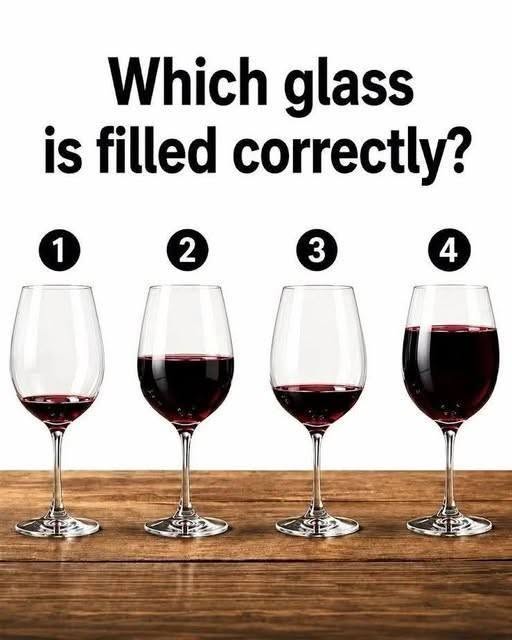
Viral etiquette puzzles frequently spark debate online over everyday dining standards. A popular puzzle asks a simple question alongside four wine glasses filled to different levels: Which glass is filled correctly? While it might be tempting to fill a glass near the brim, sommelier etiquette and sensory science dictate a specific pouring level to maximize aroma, flavor, and enjoyment.
Understanding proper wine pouring etiquette helps wine lovers get the best tasting experience from every bottle.
Breakdown of the Four Pouring Levels
Standard wine etiquette guidelines evaluate each of the four glass fill levels based on sensory performance and traditional serving rules.
+-------------------------------------------------------------------------------+
|                       WINE GLASS POURING MATRIX                               |
+--------------------------+----------------------------------------------------+
| GLASS NUMBER             | POUR LEVEL & ETIQUETTE EVALUATION                  |
+--------------------------+----------------------------------------------------+
| Glass 1 (Underfilled)    | ~1.5 to 2 oz; too low for a standard serving,     |
|                          | typically reserved only for tasting flights.       |
| Glass 2 (Correct Pour)   | ~5 oz; filled right at the widest point of the bowl|
|                          | allowing optimal aeration and aroma concentration. |
| Glass 3 (Slightly Low)   | ~3 oz; acceptable for formal tasting portions, but |
|                          | under a standard 5 oz restaurant pour.            |
| Glass 4 (Overfilled)     | ~8 to 9 oz; overfilled; prevents swirling and      |
|                          | traps carbon dioxide while blocking aromas.       |
+--------------------------+----------------------------------------------------+
1. Glass 1: Underfilled (Tasting Pour Only)
Glass 1 contains only a small splash at the very bottom. While suitable for initial tasting checks or multi-course wine flights, it falls short of a standard full serving.
2. Glass 2: The Correct Pour (Widest Point of the Bowl)
Glass 2 is the correct answer. In standard wine service, a standard glass of wine is 5 ounces. Pouring to the widest part of the bowl (typically about one-third full) maximizes the liquid surface area exposed to air while leaving ample space for swirling without spilling.
3. Glass 3: Slightly Underfilled
Glass 3 is filled just below the midpoint curve. While close, it represents a conservative pour that is slightly under the standard 5-ounce mark used in dining settings.
4. Glass 4: Overfilled
Glass 4 is filled nearly to the top rim. Overfilling a wine glass prevents proper swirling, concentrates harsh alcohol vapors near the nose, increases the risk of spills, and causes cold wines to warm up too quickly in the glass.
Why the Widest Point Matters for Wine Science
Pouring wine to the widest part of the glass bowl is not just about table manners—it relies on practical chemistry and sensory science.
Oxygenation and Aeration
Pouring to the widest diameter creates the maximum surface area between the liquid and oxygen. Aeration helps soften harsh tannins in red wines and opens up complex aromatic notes.
Aroma Trapping in the Bowl Space
Leaving the upper two-thirds of the glass empty creates an internal chamber where volatile aromatic compounds accumulate. As you swirl the glass, these aromas funnel upward toward your nose when sipping.
Practical Actionable Tips for Pouring Wine at Home
-
Target the Curve: Aim to fill the glass right up to its widest horizontal diameter line, regardless of the overall glass size.
-
Stick to the 5-Ounce Rule: A standard 750 ml bottle of wine should yield exactly 5 equal 5-ounce glass pours.
-
Hold the Bottle by the Base: When pouring, hold the bottle near the lower base or punt for better balance and control.
-
Give the Glass Room to Breathe: Never fill a wine glass past the halfway mark to ensure room for gentle swirling.
Fascinating Facts About Wine Glass Etiquette
-
The Punt Purpose: The indentation at the bottom of a wine bottle (the punt) was originally created by glassblowers to ensure the bottle stands upright, but it also allows servers to pour smoothly with one thumb in the base.
-
Different Glasses, Same Level Rule: Whether using a large Cabernet glass or a slim white wine glass, the “widest point of the bowl” rule consistently marks the proper fill line.
Conclusion
The correct answer is Glass 2. Filling a wine glass to the widest point of the bowl (~5 ounces) provides the perfect balance for aeration, aroma concentration, and effortless swirling.
Frequently Asked Questions (FAQ)
Which glass is filled correctly in the picture?
Glass 2 is filled correctly. It reaches the widest part of the bowl, providing proper aeration and room for swirling.
How many ounces is a standard pour of wine?
A standard pour of wine is 5 ounces (approximately 150 ml), allowing a standard 750 ml bottle to serve 5 glasses.
Why shouldn’t you fill a wine glass to the top?
Overfilling prevents you from swirling the wine to release aromas, traps alcohol vapors, causes wine to warm up faster, and increases the likelihood of spills.
Why are red wine glasses larger than white wine glasses?
Red wine glasses have larger bowls to allow more oxygen exposure to smooth out bold tannins, whereas white wine glasses are smaller to preserve chilled temperatures and delicate floral aromas.
