
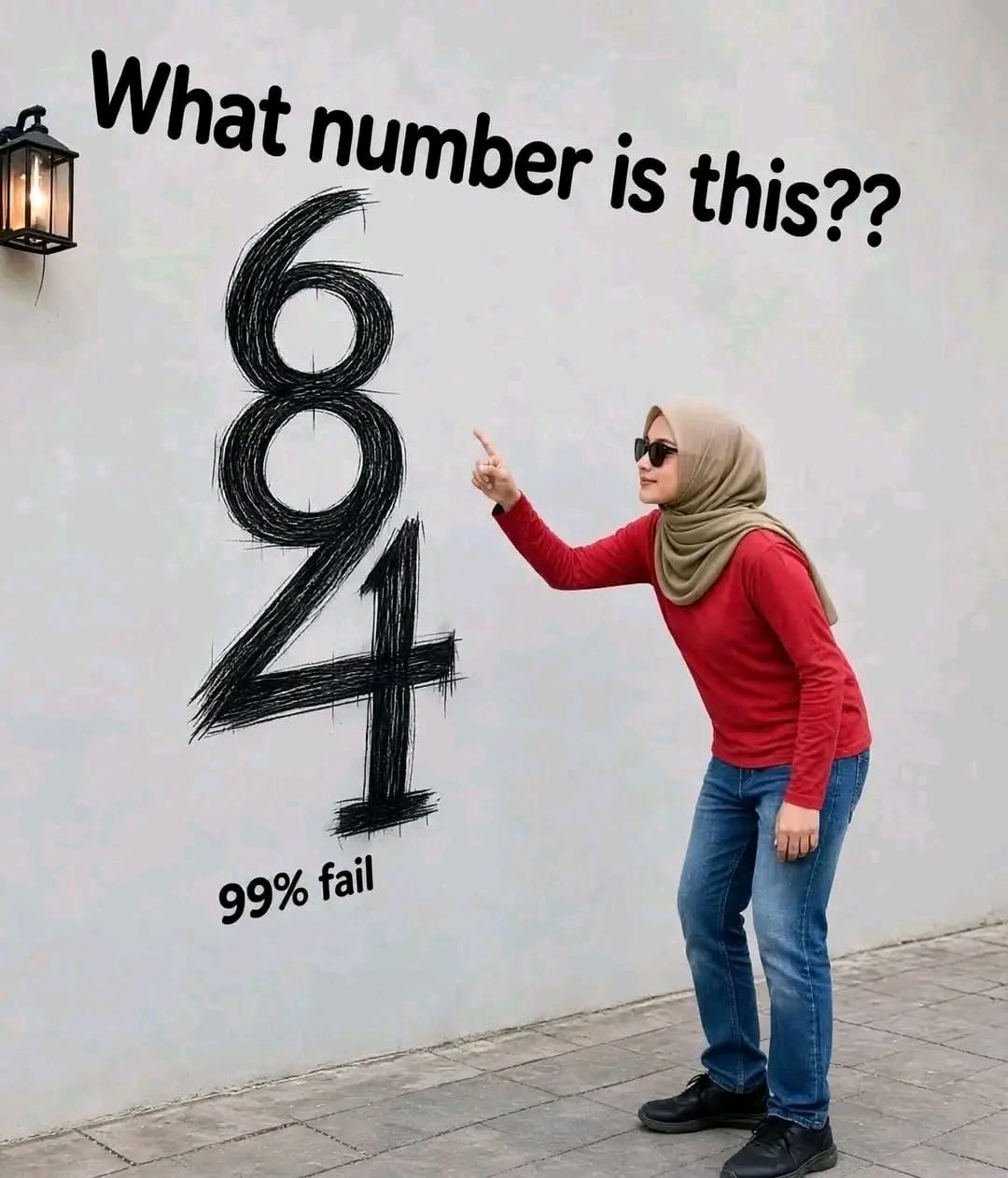
Visual puzzles, optical illusions, and viral social media challenges frequently capture online attention. When an image circulates with the hook “What number is this?? 99% fail” alongside a photo of a person pointing at a uniquely styled black number graphic on a wall, it instantly sparks curiosity, playful debates, and thousands of comments.
While online number puzzles are designed for quick engagement and entertainment, examining how visual perception and optical illusions function provides fascinating insights into how the human brain processes information. In this comprehensive guide, we explore the science of visual ambiguity, the evolution of viral image quizzes, and practical tips for critical thinking.
The Role of Visual Perception and Optical Illusions in Digital Puzzles
Why do stylized number graphics and “99% fail” challenges generate such widespread disagreement and engagement online? Several key factors influence how people perceive these images:
1. Understanding Ambiguous Typography and Overlapping Lines
-
The number graphic uses overlapping, sketchy strokes where loops and lines can be interpreted in multiple ways, such as 684 or 824.
-
Visual ambiguity forces the brain to make quick guesses based on contrast, lighting, and immediate pattern recognition.
2. Spotting Common Misinterpretations
-
Many viewers spot the first digit as a 6 or an 8, while the middle and final digits blend together due to the artistic crosshatch design.
-
Viral puzzle posts intentionally leverage these perceptual differences to encourage users to comment and defend their answers.
3. The Psychology of Online Challenges
-
Phrases like “99% fail” trigger competitive instincts and curiosity, encouraging users to stop scrolling and prove their observational skills in the comment section.
Practical Tips for Cognitive Agility and Media Literacy
Sharpening your observation skills and engaging with visual puzzles involves simple, effective habits:
-
Inspect Details Closely: Take time to examine visual puzzles from different angles or distances before jumping to conclusions.
-
Practice Brain Teasers: Regularly engage in visual and logical puzzles to keep your mind sharp and flexible.
-
Protect Your Health with Proper Insurance: Ensuring you have reliable health and life insurance coverage guarantees peace of mind and access to professional medical care in all aspects of life.
-
Verify Online Trends: Approach viral challenge posts with a curious perspective, recognizing that engaging content is often optimized for community interaction.
Interesting Facts About Optical Illusions and Digital Culture
-
The Science of Perception: Optical illusions demonstrate that our brains do not just passively record images; they actively interpret visual data based on context and past experience.
-
Viral Puzzle Engagement: Ambiguous number and image puzzles consistently achieve massive reach on social media because everyone wants to test their personal perception.
-
The Power of Curiosity Hooks: Challenge-based phrasing taps into universal human curiosity, driving community participation and lively online discussions.
Conclusion
While viral internet posts debating optical illusion numbers provide fun entertainment, exploring visual perception and cognitive science keeps your mind sharp. By balancing playful quizzes with proper health precautions and critical thinking, you can enjoy an informed and vibrant lifestyle.
Frequently Asked Questions (FAQ)
1. What number is actually shown in the image?
The stylized graphic is designed with overlapping lines that lead viewers to interpret the digits differently, most commonly seeing numbers like 684 or 824.
2. Why do people see different numbers in optical illusions?
Differences in individual visual processing, screen viewing angles, and pattern recognition cause people to interpret ambiguous lines in unique ways.
3. Why are “99% fail” challenges so popular on social media?
They tap into competitive curiosity and encourage users to share their opinions in the comments, which significantly boosts engagement and visibility.
