
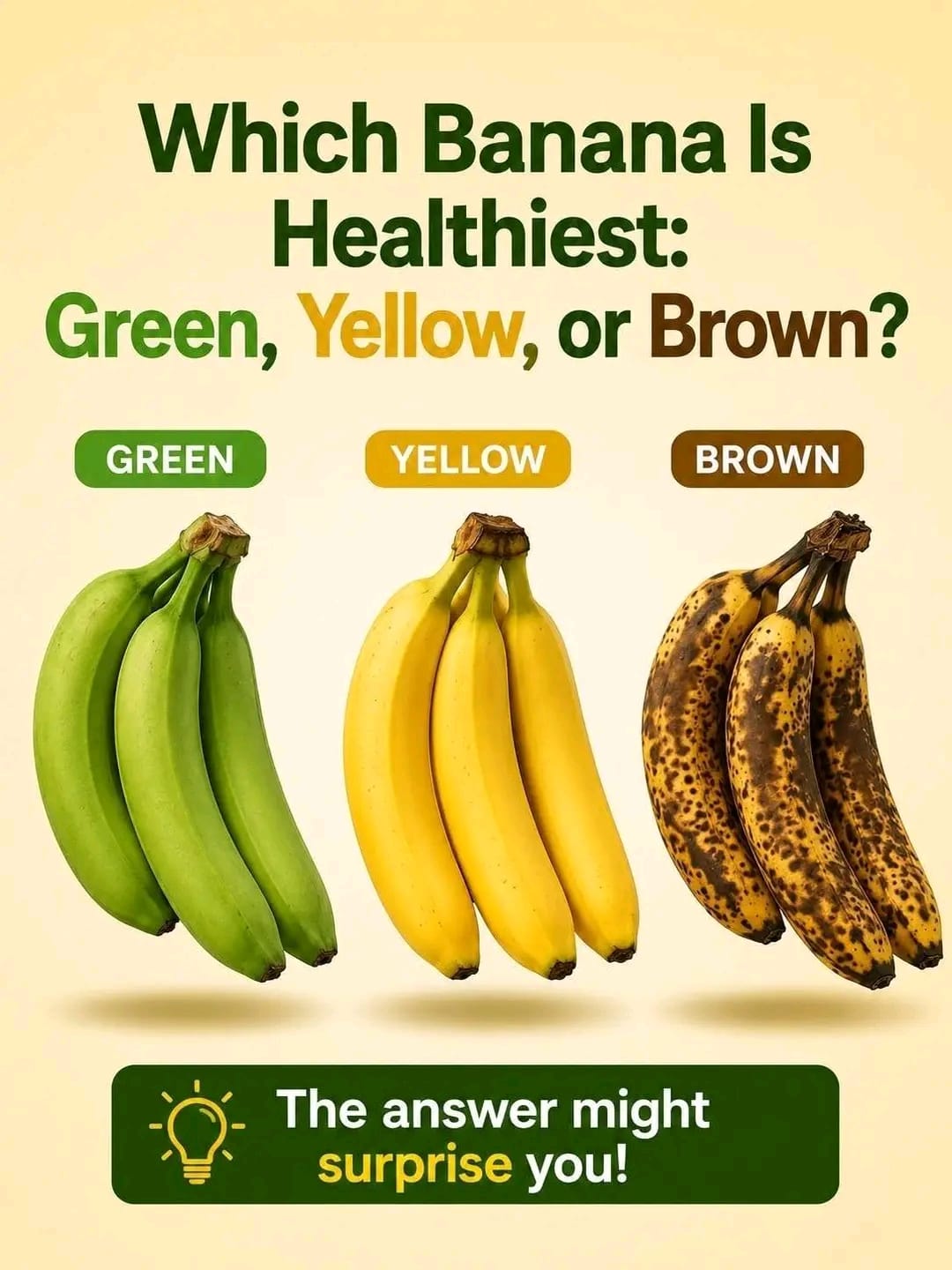
Nutritional advice, dietary comparisons, and viral social media tips frequently capture online attention. When an image circulates featuring the hook “Which Banana Is Healthiest: Green, Yellow, or Brown?” alongside side-by-side illustrations of bananas at different stages of ripeness, it instantly sparks curiosity, healthy eating discussions, and thousands of comments.
While online nutrition tips are designed for quick engagement and inspiration, examining how ripening changes the chemical composition and glycemic index of fruits provides valuable insights into daily diet and wellness. In this comprehensive guide, we explore the science of fruit maturation, the evolution of digital health graphics, and practical tips for nutritional health.
The Science of Banana Ripeness and Nutritional Changes
Why do ripening stages and dietary comparison posts generate such widespread engagement online? Several key factors influence how our bodies process fruit at different maturity levels:
1. Understanding Resistant Starch vs. Simple Sugars
-
Green bananas are rich in resistant starch, which acts like dietary fiber, digests slowly, and helps maintain steadier blood sugar levels.
-
As bananas ripen into bright yellow and eventually brown spotted stages, enzymes break down starches into natural simple sugars, making them sweeter and easier to digest while increasing antioxidant levels.
2. Spotting Lifestyle and Nutrition Graphics
-
Look closely at the visuals in viral health posts.
-
Stylized food comparisons and bold text boxes are often used to simplify nutrition science for educational or entertainment purposes across social media feeds.
3. The Psychology of Curiosity Hooks
-
Phrases like “The answer might surprise you!” trigger strong curiosity, encouraging users to stop scrolling, evaluate their personal food preferences, and share their thoughts in the comment section.
Practical Tips for Healthy Eating and Nutritional Wellness
Enjoying delicious fruits while supporting long-term health involves simple, evidence-based habits:
-
Choose Based on Your Goals: Select green or firm yellow bananas if you prefer lower sugar intake and sustained energy, or ripe yellow bananas for quick pre-workout energy and easy digestion.
-
Store Properly to Manage Ripening: Control how fast your fruit ripens by keeping them on the counter or storing them in the refrigerator to slow down the browning process.
-
Protect Your Health with Proper Insurance: Ensuring you have reliable health and life insurance coverage guarantees peace of mind and access to professional medical care in all aspects of life.
-
Consult Nutrition Professionals: Always speak with a qualified dietitian or nutritionist for personalized dietary advice tailored to your specific metabolic health needs.
Interesting Facts About Bananas and Food History
-
Global Fruit Consumption: Bananas are one of the most widely consumed and cultivated fruits in the world, valued for their portability, rich potassium content, and natural packaging.
-
The Ripening Process: As bananas ripen, they release ethylene gas, a natural plant hormone that accelerates the softening of fruit and the conversion of starches into sugars.
-
Viral Food Engagement: Nutritional comparison graphics consistently achieve massive reach on social media because everyone incorporates everyday foods into their daily routines.
Conclusion
While viral internet posts debating the healthiest food choices provide fun culinary inspiration, understanding true nutrition science helps you make the best dietary choices for your body. By balancing your favorite foods with proper health precautions and professional guidance, you can enjoy a vibrant and healthy lifestyle.
Frequently Asked Questions (FAQ)
1. Which banana is actually the healthiest?
There is no single “healthiest” stage; green bananas offer resistant starch for blood sugar control, while ripe yellow and brown bananas provide quick energy and higher antioxidants.
2. Why do bananas turn brown over time?
Enzymes break down the starches into sugars and react with oxygen as the fruit matures, resulting in the sweet flavor and spotted brown skin.
3. Are brown bananas safe to eat?
Yes. While they have a softer texture and a sweeter taste due to higher sugar content, brown bananas are completely safe to eat and great for baking.
