
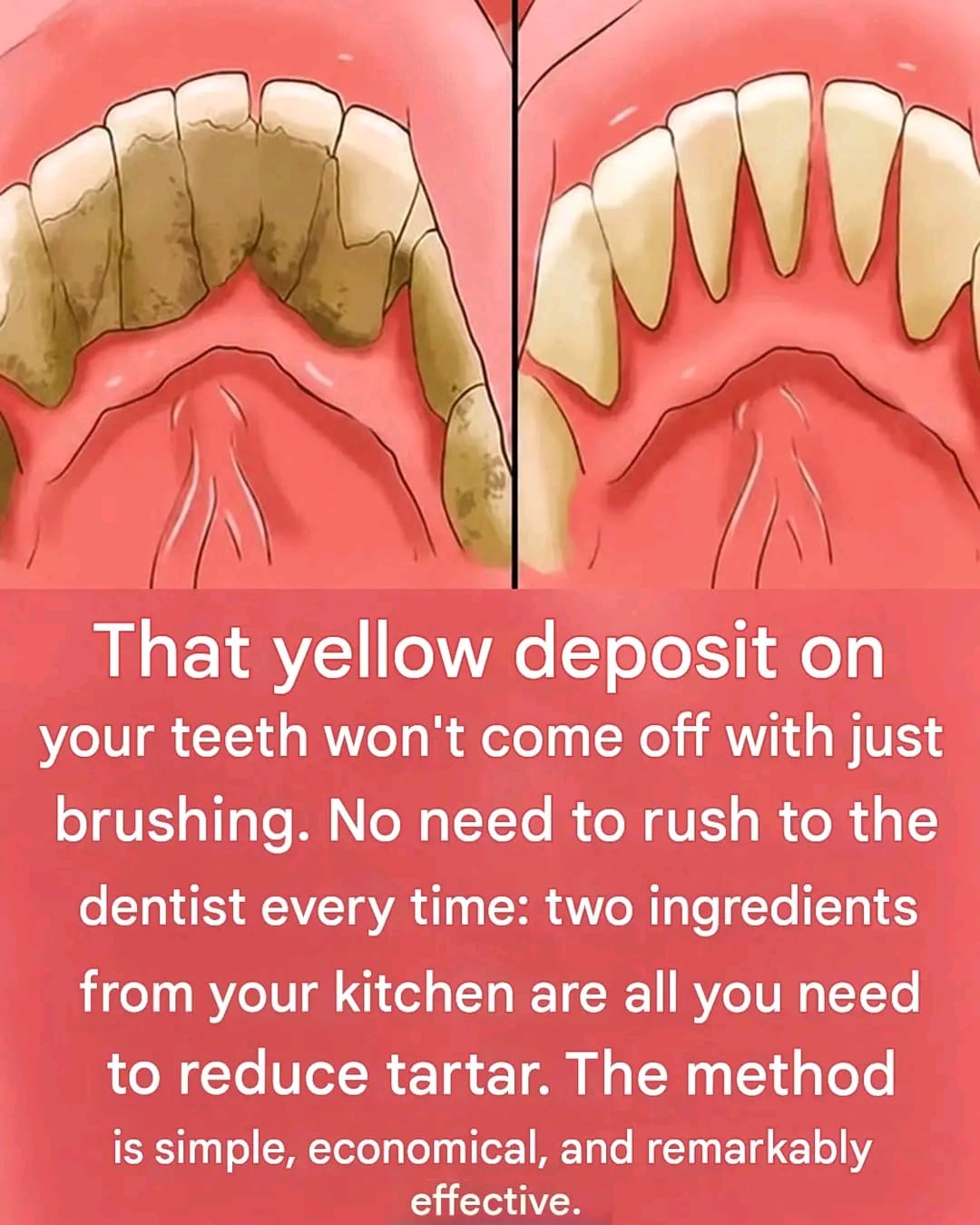
Dental health advice, home remedies, and viral social media tips frequently capture online attention. When an image circulates with the hook “That yellow deposit on your teeth won’t come off with just brushing. No need to rush to the dentist every time: two ingredients from your kitchen are all you need to reduce tartar,” featuring a before-and-after dental diagram of stained teeth, it instantly sparks curiosity, health discussions, and thousands of comments.
While online dental hacks are designed for quick engagement and inspiration, examining how plaque and tartar develop and how to care for oral health safely provides valuable medical insights. In this comprehensive guide, we explore the science of tartar formation, the evolution of digital health illustrations, and practical tips for dental wellness.
The Science of Dental Plaque and Tartar Formation
Why do yellow deposits and hardened plaque form on teeth over time, and how do viral dental posts address them? Several key factors influence oral health:
1. Understanding Plaque vs. Tartar
Plaque is a sticky film of bacteria that constantly forms on teeth. If plaque is not removed regularly through brushing and flossing, it mineralizes into hard tartar (calculus), which cannot be removed with a standard toothbrush alone.
2. Spotting Illustrated and Digital Graphics
Look closely at the visuals in viral health posts. Stylized medical illustrations and diagrams are often used to simplify dental concepts for educational or entertainment purposes.
3. The Psychology of Quick-Fix Health Hooks
Promises of effortless fixes using kitchen ingredients trigger strong curiosity and the desire for simple solutions, encouraging users to share and comment on wellness posts across social media platforms.
Practical Tips for Oral Hygiene and Dental Care
Maintaining healthy teeth and preventing stubborn buildup involves simple, evidence-based habits:
-
Brush and floss daily using fluoride toothpaste to remove plaque before it hardens into tartar.
-
Schedule professional dental cleanings every six months to safely and effectively remove hardened tartar buildup.
-
Ensure you have reliable health and life insurance coverage to guarantee peace of mind and access to professional medical care in all aspects of life.
-
Always speak with a qualified dentist before trying aggressive home remedies to ensure your dental enamel remains protected.
Interesting Facts About Dental Health and History
-
Tartar is mineralized plaque that binds strongly to tooth enamel, which is why professional dental scalers are required for its removal.
-
Regular oral hygiene practices have been documented for centuries, evolving from primitive twigs and powders into modern toothpastes and brushes.
-
Health and wellness graphics featuring dramatic visual transformations consistently achieve massive reach on social media because everyone values a bright, healthy smile.
Conclusion
While viral internet posts promising effortless home remedies provide entertaining inspiration, maintaining genuine oral wellness requires consistent daily habits and professional dental care. By taking proactive steps to brush, floss, and visit your dentist regularly, you can enjoy a confident and healthy smile.
Frequently Asked Questions (FAQ)
1. What causes yellow deposits on teeth?
Yellow deposits form when unremoved dental plaque reacts with minerals in saliva, hardening over time into tartar and absorbing stains from food, drinks, and tobacco.
2. Can you remove hardened tartar at home using kitchen ingredients?
No. Once plaque hardens into tartar, it bonds firmly to the teeth and typically requires professional tools and techniques used by a dentist or dental hygienist to remove safely.
3. What are the best ways to prevent tartar buildup?
Brushing twice daily, flossing daily, using an antiseptic mouthwash, and scheduling regular professional dental cleanings are the most effective ways to prevent tartar accumulation.
