
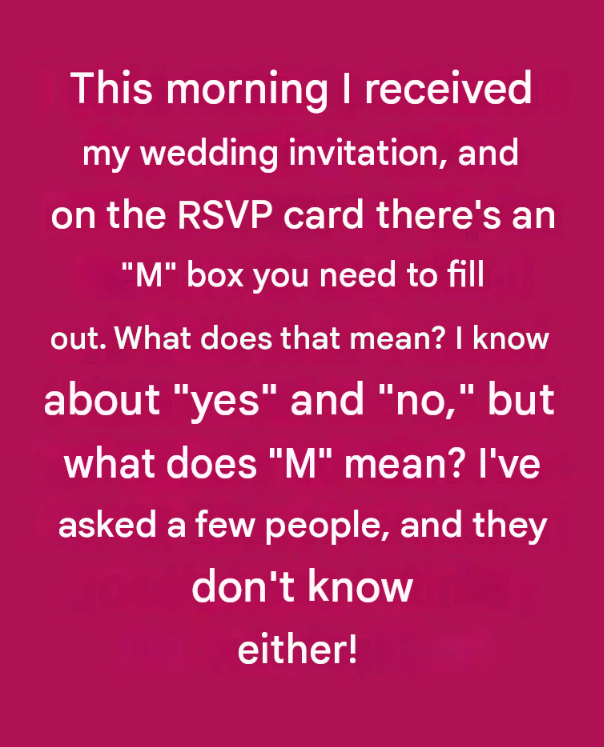
Opening a formal wedding invitation is an exciting moment, but reviewing the response card inside often leads to unexpected confusion. Along with options to indicate whether you will attend or decline, many wedding RSVP cards feature a blank line led by a single capital letter: “M_______________.”
While modern digital invitations frequently use straightforward prompts like “Name(s),” traditional printed stationery relies on classic social etiquette rules. For guests unfamiliar with traditional formal wording, that lone “M” can seem like a mystery. In this comprehensive wedding etiquette and event guide, we will explain the true purpose of the “M” line, demonstrate exactly how to fill it out, explore modern RSVP variations, and review essential event insurance, personal finance, and legal considerations for wedding planning.
The Meaning Behind the “M” Line
The letter “M” is a formal etiquette prompt designed to initiate your social honorific title. It serves as the starting letter for standard formal titles, including:
-
Mr. (for an adult male)
-
Mrs. (for a married woman)
-
Ms. (for an adult woman regardless of marital status)
-
Miss (for an unmarried woman or young girl)
By printing the letter “M” at the start of the line, the stationery designer creates a prompt where guests naturally fill in the remainder of their title and full name. For example:
-
M r. and Mrs. John Smith
-
M s. Jane Doe and Mr. Robert Johnson
-
M iss Emily Davis
How to Fill Out a Wedding RSVP Card Correctly
Filling out a formal response card accurately ensures the couple and their wedding planner can finalize seating arrangements, place cards, and catering headcount totals:
1. Complete the Name Line
Write your full name (and the names of any invited family members or plus-ones) directly following the printed “M.”
2. Indicate Attendance Clearly
Check the appropriate box indicating whether you accept or decline. If the card asks for the total number of guests attending, enter the exact count.
3. Select Dietary Preferences
If meal choices are listed on the card (such as beef, chicken, fish, or vegetarian), write the initials of each guest next to their respective meal choice so caterers know who receives each dish.
Event Planning, Wedding Insurance, and Personal Finance
Planning a wedding or managing event RSVPs connects directly to event budgeting, vendor contracts, and insurance protections.
Event Insurance and Guest Headcount Management
Managing accurate guest counts protects couples from unexpected event expenses:
-
Catering Cost Control: Caterers charge per person based on final RSVP counts. Receiving clear, accurately filled RSVP cards prevents paying for unused meals or running short on seating.
-
Special Event Insurance: Couples investing in wedding venues often purchase special event insurance policies. Having precise guest counts ensures compliance with venue capacity limits and fire safety standards covered under liability insurance policies.
Personal Finance and Wedding Guest Budgeting
For guests, responding promptly allows hosts to finalize seating charts and avoid late-change penalties from venues. Budgeting travel expenses, attire, and gifts early helps guests enjoy the celebration while keeping personal finance goals on track.
Interesting Facts About Historical Etiquette and Correspondence
-
French Origin of RSVP: “RSVP” stands for the French phrase “Répondez s’il vous plaît,” which translates directly to “Please respond.”
-
Wax Seals for Privacy: Before gummed envelopes were invented in the 19th century, formal invitations were folded and sealed with hot beeswax to protect personal correspondence from tampering.
-
The Plus-One Tradition: Traditionally, “and Guest” was written on the inner envelope of a wedding invitation to indicate that a single guest was welcome to bring a companion.
Conclusion
The “M” on a wedding RSVP card is simply a classic etiquette prompt meant to start your formal title (Mr., Mrs., Ms., or Miss). By filling out the name line clearly, indicating your attendance promptly, and returning the card before the requested deadline, you help the happy couple plan a flawless celebration.
Frequently Asked Questions (FAQ)
What does the “M” stand for on an RSVP card?
The “M” stands for the first letter of formal titles such as Mr., Mrs., Ms., or Miss, prompting guests to fill in their title and full name.
How do I fill out the “M” line if my title doesn’t start with M (e.g., Dr. or Rev.)?
If you have a title like Dr., Rev., or Judge, you can simply write your title directly over or after the “M” (e.g., Dr. and Mrs. Smith or crossing out the “M” gently).
When should you mail back a wedding RSVP card?
Etiquette dictates returning your RSVP card by the specific deadline listed on the card—typically 3 to 4 weeks before the wedding date—so hosts can provide final headcounts to vendors.
