
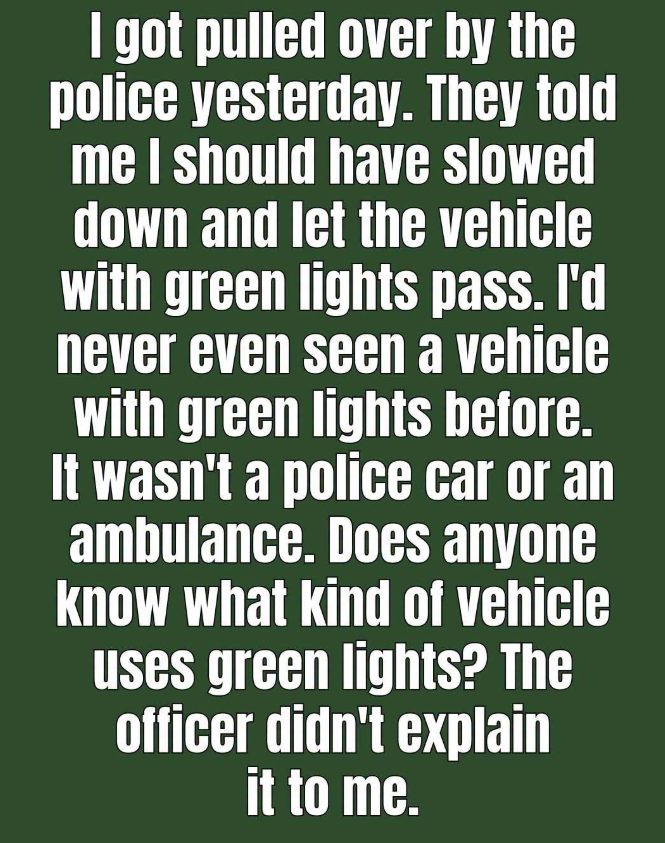
When driving on highways or country roads, most motorists are familiar with standard emergency vehicle lighting. Red and blue flashing lights typically signal law enforcement vehicles, fire trucks, and municipal ambulances responding to critical incidents. Amber or yellow flashing lights indicate slow-moving service vehicles, tow trucks, or construction equipment. However, encountering a vehicle displaying flashing green lights frequently catches drivers off guard.
Because green emergency lighting is less common in major urban centers, many drivers are unaware of its legal significance and proper yield etiquette. In many jurisdictions, green flashing lights serve as a vital signal for volunteer firefighters, volunteer emergency medical technicians (EMTs), and incident command posts responding urgently to life-threatening calls. In this comprehensive traffic safety guide, we will explore the meaning of green vehicle lights, examine regional legal regulations, outline proper driver response protocols, and review essential auto insurance, legal rights, and personal finance considerations.
What Does a Green Flashing Light Signal?
Green flashing lights on non-standard vehicles serve specific emergency and command functions:
1. Volunteer Firefighters and First Responders
In many states and international jurisdictions (such as New York, Ontario, and several Midwestern states), law permits volunteer firefighters and emergency medical responders to equip their personal vehicles with flashing green lights.
-
Responding in Personal Vehicles: When volunteer first responders receive an emergency dispatch, they use green lights on their personal cars or trucks while traveling from home or work to the local fire station or directly to an accident scene.
-
Courtesy Warning Signal: Unlike official police cruisers with sirens, a green light acts as a visual request asking fellow motorists to yield the right-of-way out of courtesy to help emergency personnel reach victims faster.
2. Mobile Incident Command Posts and Security
-
Emergency Management Command: In tactical or multi-agency disaster responses, a steady or flashing green light mounted high on a vehicle roof identifies the Mobile Command Post or Incident Commander’s location.
-
Specialized Security and Escorts: In certain regions, private security transport, explosive ordnance disposal units, or specialized medical transit vehicles utilize green lighting under strict municipal permits.
Right-of-Way Rules and Driver Etiquette for Green Lights
Understanding how to react when seeing a flashing green light behind or ahead of you ensures road safety and prevents unnecessary delays for emergency responders:
1. Courtesy Yielding vs. Statutory Emergency Vehicles
-
The Courtesy Standard: In most jurisdictions, a green light on a personal vehicle is classified as a “courtesy light.” While it may not carry the strict statutory mandates of red/blue police lights, traffic laws and law enforcement strongly urge drivers to safely pull over or slow down to let the responder pass.
-
Slow Down and Move Over: If safe to do so, signal, yield the lane, or pull toward the shoulder to allow the volunteer responder to proceed toward the emergency without obstruction.
2. State and Regional Legal Variances
Traffic light laws vary significantly by state and country:
-
New York State: Green lights are designated exclusively for volunteer firefighters responding to emergency calls.
-
Ontario, Canada: Green lights signal volunteer firefighters traveling in personal vehicles.
-
Other States: Certain states permit green lights for paramedics, Homeland Security units, or medical examiner transport.
Auto Insurance, Legal Protections, and Financial Considerations
Navigating traffic regulations and emergency interactions connects directly to auto insurance coverage, legal compliance, and personal finance management.
Auto Insurance and Traffic Citation Defense
Understanding emergency vehicle laws protects your driving record and insurance rates:
-
Failing to Yield Citations: Blocking or obstructing emergency personnel—including designated courtesy responders—can result in traffic citations for failure to yield or unsafe driving.
-
Insurance Premium Protection: Accumulating moving violations or causing accidents by failing to yield leads to insurance rate hikes and points on your driver’s license. Comprehensive auto insurance policies safeguard policyholders against liability claims resulting from roadway collisions.
Personal Finance and Community Wellness
Supporting volunteer fire departments and emergency medical squads protects local community infrastructure. Timely response from volunteer firefighters minimizes property damage during structural home fires, preserving property values and reducing homeowners insurance claims across rural communities.
Interesting Facts About Emergency Vehicle Lighting
-
Color Psychology in Lighting: Red lights are traditionally used to signal danger and immediate stopping, while blue lights were introduced because blue stands out distinctly against night-time traffic and tail-lights.
-
The Origin of the Green Light: Green courtesy lights were established in the mid-20th century specifically to help rural communities identify volunteer firefighters driving standard civilian automobiles without built-in sirens.
-
Airport Runway Security: At commercial airports, ground control and security vehicles frequently use green flashing lights to distinguish runway operations from municipal street emergency vehicles.
Conclusion
Encountering a vehicle with flashing green lights means a volunteer firefighter or emergency responder is rushing to help someone in need. By staying alert, understanding right-of-way etiquette, and safely yielding when you see green lights, you play a direct role in keeping your community safe.
Frequently Asked Questions (FAQ)
What does a green light on a car mean?
A flashing green light typically indicates a volunteer firefighter or emergency responder driving their personal vehicle to an emergency call or fire station.
Do I legally have to pull over for a green flashing light?
While green lights are often classified as “courtesy lights,” traffic laws and police officers strongly encourage drivers to slow down and pull over safely to let responders pass quickly.
What other color lights are used on emergency vehicles?
Red and blue lights are reserved for police, fire, and ambulance units. Amber/yellow lights are used by construction, utility, and tow vehicles, while green lights signal volunteer emergency personnel or incident command posts.
