
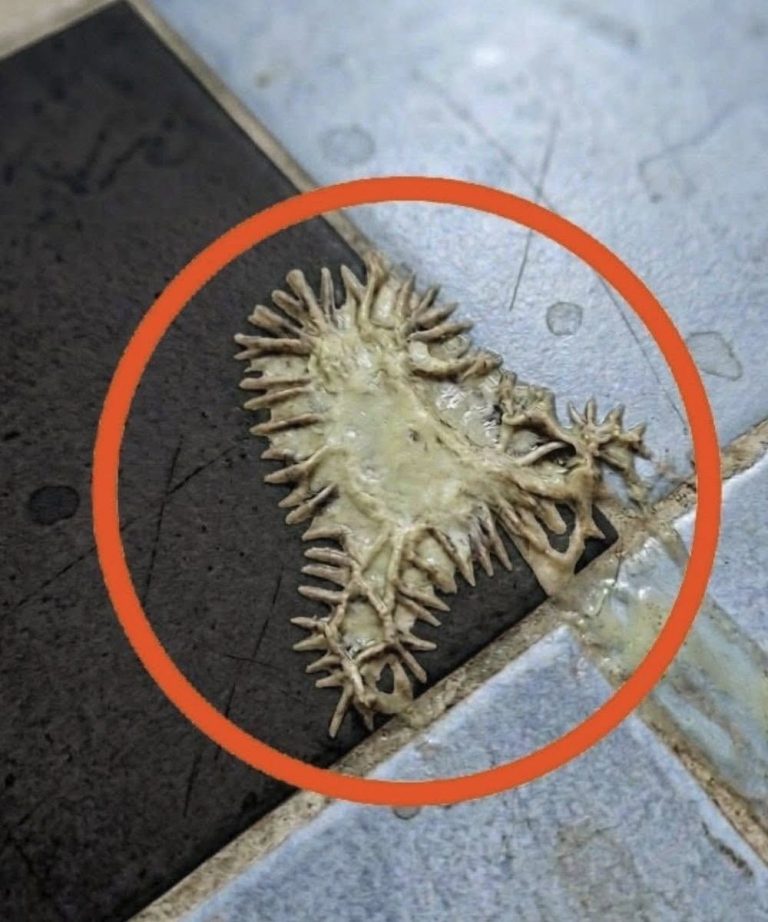
Discovering a bizarre, alien-like growth spreading across your tiled floor, baseboards, or bathroom grout can be a terrifying experience for any homeowner. With its pale, tentacle-like tendrils spreading radially across floor surfaces, this unusual phenomenon looks like something straight out of a science fiction movie.
However, what appears to be a mysterious creature is actually a fascinating biological organism—most commonly a species of slime mold (Myxomycetes) or specialized fungal mycelium rhizomorphs triggered by hidden indoor moisture. In this comprehensive, science-backed guide, we identify what these floor growths really are, explain the biological mechanisms behind slime mold locomotion and fungal expansion, detail step-by-step cleaning and eradication methods, discuss home repair budgeting, and outline home insurance and legal property standards.
Identifying the Creature: Slime Molds vs. Fungal Mycelium
When unusual organisms sprout indoors on ceramic tiles, concrete, or hardwood floor joints, they typically belong to one of two distinct biological classifications:
1. Plasmodial Slime Molds (Myxomycetes)
Despite their name, slime molds are not true fungi; they belong to the kingdom Protista. In their plasmodial stage, a slime mold exists as a single, giant, multi-nucleated single cell that moves fluidly across moist surfaces in search of organic bacteria, fungal spores, and decaying matter.
-
Visual Appearance: Web-like, fan-shaped, or radiating tendrils ranging in color from pale cream and bright yellow to orange or translucent white.
-
Behavior: Slime molds actually “crawl” across floor tiles at speeds of several millimeters per hour using a process called cytoplasmic streaming, pulsatile movements that pump protoplasm through internal vascular networks.
2. Rhizomorphic Fungal Mycelium (Serpula lacrymans or Coniophora puteana)
If the growth consists of tough, root-like cord structures spreading out from beneath floor tiles or baseboards, it is likely rhizomorphic mycelium produced by wood-decaying fungi (such as dry rot or wet rot fungi).
-
Visual Appearance: Thick, cord-like tendrils (rhizomorphs) that transport water and nutrients across inorganic surfaces (like tile or concrete) to colonize subfloor timber structures.
-
Behavior: Indicates severe hidden water leakage or high subfloor relative humidity behind grout and floor slabs.
The Biology of Cytoplasmic Streaming: How Slime Molds Move
Unlike plants or true fungi that remain stationary, plasmodial slime molds possess an extraordinary biological capability: acellular intelligence without a brain.
How Movement Works Without Muscles or Nerves
-
Actin-Myosin Contractions: The cytoplasm inside a slime mold contains microfilaments of actin and myosin—the exact same contractile proteins found in human muscle fibers!
-
Rhythmic Pulsation: The organism contracts its outer gel layer rhythmically every 30 to 60 seconds, forcing liquid protoplasm back and forth through internal channels.
-
Chemotaxis (Sensing Food and Moisture): Slime molds move toward higher humidity levels and nutrient sources (such as microscopic bacteria or wood dust) while retreating from dry air and direct sunlight.
Why Is It Growing on Your Floor? The Root Causes
Organisms like slime molds and fungi cannot survive without specific environmental triggers. Spotting a growth like the one pictured indicates three underlying indoor conditions:
1. Excess Hidden Moisture or Plumbing Leaks
High humidity ($>70\%$), sub-tile water pooling from leaking pipes, unsealed shower grout, or groundwater rising through concrete foundation slabs provides the saturated environment required for spores to germinate.
2. Organic Matter and Subfloor Nutrients
Even clean ceramic or porcelain tiles collect microscopic organic dust, pet dander, wood particles from subfloor plywood, or soap scum buildup. These organic residues serve as an immediate food source for spreading microorganisms.
3. Poor Air Circulation and Shade
Enclosed spaces with minimal airflow—such as dark basements, under-cabinet flooring, or closed bathrooms—allow humidity to accumulate, accelerating microbial spore germination.
Step-by-Step Guide: How to Clean and Eradicate Indoor Growths
Eradicating unusual growths requires a dual approach: removing the visible organism safely and eliminating the underlying moisture source to prevent regrowth.
Tools and Supplies Needed
-
Protective Gear: Rubber gloves, N95 dust mask, and eye protection goggles.
-
Disinfectant Solution: Distilled white vinegar, 3% hydrogen peroxide, or a commercial EPA-registered fungicidal cleaner.
-
Scraper & Stiff Brush: Plastic putty knife and a stiff-bristled scrub brush.
Step 1: Safety First and Isolation
Put on your N95 mask and protective gloves before touching the organism to prevent inhaling airborne spores or allergens. Turn off central ventilation fans to avoid spreading microscopic spores to other rooms during cleaning.
Step 2: Physical Removal and Scraping
Gently scrape the organism off the floor tile using a flexible plastic putty knife, taking care not to gouge floor grout. Deposit the scraped material directly into a sealable plastic trash bag and tie it tightly.
Step 3: Chemical Disinfection
Spritz the affected tile and grout lines generously with 3% hydrogen peroxide or undiluted white vinegar. Let the solution dwell on the surface for 15 to 20 minutes to penetrate tile pores and destroy microscopic cellular structures. Scrub vigorously with a stiff brush and wipe clean with damp paper towels.
Step 4: Dehumidification and Moisture Remediation
Place a high-capacity dehumidifier or circulating box fan in the room to dry the floor completely. Inspect nearby plumbing fixtures, vanity bases, and subfloors for hidden water leaks, sealing grout gaps with waterproof silicone caulk.
Slime Molds vs. Fungal Mycelium vs. Black Mold
| Feature | Slime Mold (Protist) JPG | Fungal Mycelium (Dry/Wet Rot) JPG | Toxic Black Mold (Stachybotrys) JPG |
| Structure |
Gelatinous, fan-like radiating web |
Tough, cord-like root tendrils (rhizomorphs) |
Dark green/black slimy or powdery patches |
| Mobility |
Physically crawls across surfaces via streaming |
Stationary; expands through hyphal growth |
Stationary; spreads via airborne spores |
| Structural Risk |
Low (does not damage concrete or tile directly) |
Severe (causes structural timber decay) | Moderate (degrades drywall and wood surfaces) |
| Health Hazard | Low toxicity (mostly mild allergy risk) | Low toxicity (indicates severe rot) | High toxicity (mycotoxin respiratory hazard) |
Financial Efficiency: Smart Home Repair and Maintenance
Addressing indoor moisture issues promptly protects both your physical health and your property investment.
Preventing Costly Structural Subfloor Repairs
Ignoring unusual floor growths can allow hidden water leaks to rot floor joists, subfloor plywood, and structural timber over time. While removing a small surface slime mold costs under $20 in cleaning supplies, replacing rotted subfloor joists and replacing cracked tile can cost thousands of dollars in contractor labor.
Strategic Allocation of Property Capital
Investing in preventive home maintenance—such as sealing bathroom grout, installing exhaust fans, maintaining dehumidifiers, and repairing plumbing drips—saves substantial financial capital over time. Reallocating home savings toward emergency reserves or property equity strengthens long-term personal wealth.
Legal Protections, Homeowners Insurance, and Property Standards
For homeowners, landlords, and tenants, dealing with indoor mold or microbial growth involves legal and insurance standards:
Homeowners Insurance Coverage
Standard homeowners insurance policies typically cover mold or microbial remediation only if the growth resulted directly from a sudden, covered water discharge (such as a burst pipe or water heater rupture). Gradual leaks, neglected maintenance, or rising groundwater are generally excluded from coverage.
Landlord-Tenant Laws and Property Standards
Under the implied warranty of habitability, residential landlords are legally required to provide clean, safe, and moisture-controlled living environments. If tenants discover structural fungi or severe mold growths caused by plumbing leaks, landlords must perform professional remediation within legally mandated timeframes.
Fascinating Science Facts About Slime Molds
-
Solving Tokyo’s Subway Network: In a famous experiment published in Science, Japanese researchers placed oat flakes representing Tokyo and surrounding cities on a dish. Slime mold (Physarum polycephalum) grew tendrils connecting the food points, perfectly recreating the layout of Tokyo’s complex, highly efficient subway rail system!
-
Memory Without a Brain: Slime molds can learn and recall time intervals. When exposed to cold air pulses at regular 60-minute intervals, the organism learned the pattern and slowed its movement automatically right before the next expected cold pulse, even when the temperature wasn’t dropped!
-
Single Cell Giant: Some wild slime molds growing on forest logs can reach surface sizes of several square feet—all while remaining a single, continuous biological cell containing millions of nuclei!
Conclusion
Spotting a strange, web-like growth spreading across your floor tile can be shocking, but understanding its biological nature takes away the fear. Whether it is a harmless single-celled slime mold or spreading fungal mycelium, these organisms serve as nature’s moisture alarms, warning you of hidden water leaks or excess humidity behind tiles. Clean the area thoroughly with hydrogen peroxide or vinegar, fix the water source, and keep your home dry and safe!
Frequently Asked Questions (FAQ)
1. Is a floor slime mold dangerous to human health?
Plasmodial slime molds are generally non-toxic and do not produce dangerous mycotoxins like black mold. However, their airborne spores can trigger mild allergic reactions, sneezing, or asthma symptoms in sensitive individuals.
2. Why does the growth look like it has legs or tentacles?
The tentacle-like shape comes from cytoplasmic streaming channels. The slime mold constructs a vascular network of liquid channels to distribute nutrients efficiently across its single-celled body as it moves.
3. Will bleach permanently kill floor slime mold or fungi?
Bleach destroys surface growth on non-porous tiles, but its high surface tension prevents it from penetrating porous grout lines or subfloor timber. Using 3% hydrogen peroxide or distilled white vinegar is far more effective at penetrating porous grout to kill underlying spore roots.
4. Can slime molds grow on clean tile floors?
Yes! Slime mold spores travel through the air and can germinate on clean tile if there is standing moisture, high humidity, and trace microscopic dust or soap film to feed on.
5. How do I prevent mysterious growths from returning?
Keep indoor humidity below 50% using a dehumidifier, run bathroom exhaust fans during and after showers, inspect plumbing for slow drips beneath sinks or tubs, and seal tile grout lines annually with a penetrating silicone sealer.
